
This page has been translated from Japanese. If anything is unclear, please get in touch.
Autumn region guide

Chubu in Autumn

Setting the Scene

What autumn feels like

You'll find that Chubu in autumn is just mind blowing, and that is not an overstatement. The combination of the Japan Alps, deep river valleys, historic mountain villages, and a foliage season that works its way down from the high peaks through the lowlands over the course of several weeks makes for just a very diverse and memorable experience. Just like for the rest of the country, the first visual signs of autumn coming can be seen up in the mountains, in this case as soon as late September in the highest areas before coming down through October and into November across the valleys, forests, and rural communities.

With that, you can guess that the temperature follows the same path. The alpine areas turn cold quickly once autumn sets in, with crisp mornings and cold evenings arriving well before the lowlands feel much of a shift. The coastal prefectures of Aichi and Shizuoka remain warm and comfortable well into October, making the contrast between the two ends of the region even more pronounced than in other seasons. Knowing this, it would be best to pack a few extra layers for those more chill times, but anyone spending any meaningful amount of time higher up should be prepared for temperatures that drop sharply once the sun goes down, and for conditions that can shift from clear and calm to wet and cold within the space of an afternoon.
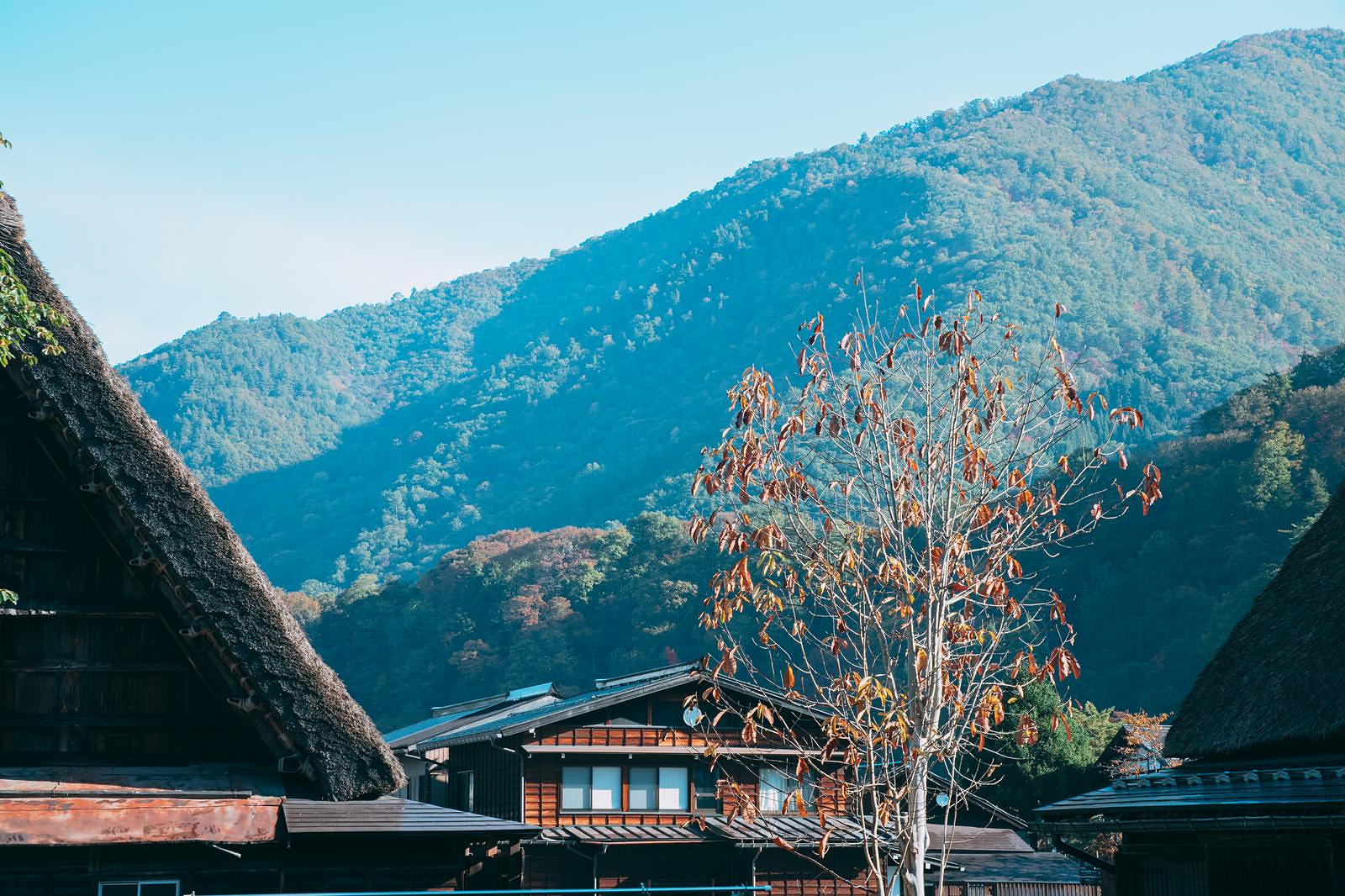
Thatched roofs of Shirakawa-go below forested autumn mountains in Gifu

In terms of traffic, this is when Chubu starts to fill up. The historic village of Shirakawa-go in Gifu, which sits in a valley surrounded by forested mountain slopes, becomes particularly sought after during peak foliage. The combination of the traditional thatched architecture and the autumn scenery behind it has made it one of the best known images associated with rural Japan. Similarly with spring though, booking in the most popular spots can get pricy and it's not always guaranteed that you'll get what you want, so booking ahead is always a good idea. Alternatively, you could move your dates before or after the peak period and get views that are still considerably beautiful with some more breathing room.

Beyond the capital

Where to go in autumn

Autumn in Chubu is when its mountains really pay off. Chubu runs from the lowland cities on the Pacific coast up to the 3,000 metre peaks of the Northern and Southern Alps, so the highest slopes turn first in late September, the colour reaching the valleys and gorges over six weeks or more, which gives it one of the longest and most varied foliage seasons in the country. The spots below span that whole range.

Alpine Route · Toyama and Nagano

Tateyama Kurobe Alpine Route (立山黒部アルペンルート)

A 37 kilometre mountain crossing where the colour peaks at different elevations across September, October and November before the route closes for winter.

The Tateyama Kurobe Alpine Route is a 37 kilometre mountain crossing between Toyama and Nagano, over the top of the Tateyama range, linked by six different modes of transport. Its autumn draw is that the colour peaks at different heights across different weeks, so the season stretches over two months as it works its way down. It starts up at Murodo, the highest point at 2,450 metres, from mid to late September, one of the earliest foliage spots in the country. It reaches the Midagahara wetland, a Ramsar listed alpine plateau threaded with boardwalk and dotted with thousands of small ponds, through October. Further down, it reaches Kurobe Dam, the tallest in Japan, by early November. From there you can sometimes catch all three different stages at once, with snow on the peaks, foliage on the slopes and green below. The whole route then closes on the 1st of December and stays shut until spring, so the autumn weeks are the last of it before the snow takes over.

General information
AddressMurodo, Ashikuraji, Tateyama, Nakaniikawa District, Toyama 930-1406
AccessFrom Toyama Station by Toyama Chiho Railway to Tateyama Station on the Toyama side, or about 105 minutes by bus from Nagano Station to the Ogizawa entrance on the Nagano side, with no private cars allowed on the route itself
EntryBoarding passes required, with fares varying by section and a full Tateyama to Kurobe Dam round trip around ¥16,000, and a one way traverse to Ogizawa around ¥13,000
HoursRoute open from mid April to 30 November, closed in winter, information centre hours vary by season
ParkingFree parking at Tateyama Station, around 900 spaces
Phone+81 76 481 1500 (Tateyama Kurobe Information Center, 8:30 to 16:30)
Tatamidaira · Nagano and Gifu

Mount Norikura Tatamidaira (乗鞍岳畳平)

The highest bus stop in Japan at 2,702 metres, where the alpine vegetation turns weeks before the lowlands and private cars have been banned since 2003.

The shuttle bus up to Tatamidaira on Mount Norikura winds up through the foliage from late September into early October, running up the Norikura Echo Line on the Nagano side and the Norikura Skyline on the Gifu side, the two roads meeting at the Tatamidaira plateau, the highest bus stop in Japan at 2,702 metres. Private cars have been banned from both roads since 2003, so buses, taxis and bicycles are the only way up, which keeps the plateau quieter than most alpine spots even on peak autumn weekends. The vegetation around the summit, dwarf pine, larch and low alpine grasses, turns weeks ahead of the lowlands. From the terminal, it's about a ninety minute walk to the Kengamine summit, one of the easiest 3,000 metre peaks in Japan to reach. After that the roads close for the year, at the end of October, and stay shut until spring.

General information
AddressNyukawacho Iwaidani, Takayama, Gifu 506-2254
AccessShuttle bus only, from Norikura Kogen on the Nagano side or from Hirayu Onsen via Honokidaira on the Gifu side, with no private cars on either mountain road
EntryShuttle bus fare, with advance booking recommended
HoursMountain roads open from mid May to 31 October, closed November to mid May
ParkingPark and ride at Norikura Kogen or Honokidaira, no parking at Tatamidaira
Asuke · Aichi

Korankei (香嵐渓)

Around 4,000 maples on Mount Iimori lit nightly through November, above the vermilion Taigetsukyo Bridge and the Tomoe River.

The maples covering Mt. Iimori at Korankei Gorge (香嵐渓) are lit from sunset to 9pm every night from November 1 to 30, with the red and orange leaves above the vermillion Taigetsukyō Bridge and the dark Tomoe River below making the night walk along the gorge one of Aichi's main autumn experiences. The roughly 4,000 maples on the hillside date to 1634 when the 11th priest of Kōjakuji Temple at the foot of the mountain planted the original trees. The Korankei Maple Festival (in its 70th edition in 2025) adds weekend evening events to the standard illumination, including around 1,000 bamboo lanterns lining the path to Kōjakuji Temple, around 800 wishing candles set along the riverbank, and stage performances of taiko drumming and yosakoi dancing on selected days. Entry to the gorge is free. The historic Asuke merchant townscape running alongside the gorge was designated Aichi's first Important Preservation District for Groups of Traditional Buildings in 2011 and is worth combining with the gorge in a single visit. From Nagoya, the gorge is reached by Meitetsu train to Toyotashi Station and a Meitetsu Bus to the Korankei stop in around an hour total.

General information
AddressIimori, Asukecho, Toyota, Aichi 444-2424
AccessFrom Nagoya by Meitetsu train to Toyotashi Station, then a Meitetsu bus to the Korankei stop, around one hour in total
EntryFree
HoursOpen anytime, with the autumn illumination nightly through November from sunset to 9pm
ParkingPaid parking around the gorge, very busy at peak foliage
Phone+81 565 62 1272
Kofu · Yamanashi

Shosenkyo Gorge (昇仙峡)

A granite gorge of cliffs and oddly shaped rocks on the edge of Kofu, with the colour at its best from early to mid November.

Shosenkyo Gorge (昇仙峡) in northern Kofu in Yamanashi Prefecture is widely cited as Japan's most beautiful gorge and is designated a National Special Place of Scenic Beauty, with the 4 kilometre walking path along the Arakawa River running through granite formations and forest that turns red and orange at peak in early to mid November. The named rocks along the path include the 180 metre Kakuenpo pillar that serves as the symbol of the gorge and the Ishimon stone gateway, with the 30 metre Sengataki Waterfall at the top of the walk listed among Japan's 100 best waterfalls. The Shosenkyo Ropeway runs from the upper end of the gorge near the waterfall up to Panorama-dai Station at 1,058 metres in 5 minutes, with the Ukifuji Plaza viewpoint at the top giving views of Mount Fuji and the Southern Alps across the autumn coloured slopes on clear days. The lower section of the gorge path is closed to cars on weekends from May to November, making weekend autumn visits the easiest time to walk the route. Kofu Station is around 1.5 hours from Tokyo on the JR Chuo Line, with the local Green Line bus running from Kofu to the gorge bus stops.

General information
AddressTakanaricho, Kofu, Yamanashi 400-1214
AccessFrom the south exit bus terminal at Kofu Station, stop 4, by bus to Shosenkyo-guchi (about 30 minutes, ¥710), the Green Line stop (about 40 minutes, ¥1,000) or Takigami (about 60 minutes, ¥1,090)
EntryGorge free, ropeway around ¥1,500 round trip
HoursGorge open anytime, ropeway 9:00 to 17:30
Phone+81 55 287 2158
Narai · Nagano

Narai-juku (奈良井宿)

A preserved Nakasendo post town stretching about a kilometre, its wooden buildings set against the surrounding forest as it turns.

Narai-juku (奈良井宿) is the longest surviving post town on the Nakasendo, the old Edo period highway that ran between Kyoto and Edo (modern Tokyo), with preserved wooden merchant houses, inns and lacquerware shops running along a single street in the Kiso Valley in Shiojiri City in Nagano Prefecture. The town sits in a narrow mountain valley with forested slopes rising on both sides of the street, and the maples and other deciduous trees turning red and orange from mid October into early November give the historic townscape an autumn backdrop that the greener months do not. Narai was the wealthiest of the 11 Kiso Valley post towns during the Edo period and was nicknamed "Narai of a Thousand Houses" for its prosperity, with the surviving street still home to soba restaurants, sake shops, Kiso lacquerware artisans, and small Edo period merchant residences like the Nakamura House (¥300 admission). JR Chuo Line local trains run direct from Matsumoto in around 50 minutes (limited express trains do not stop at Narai Station), with the station at the north end of the preserved street. The shops mostly close by late afternoon, so morning and early afternoon are the best windows.

General information
AddressNarai, Shiojiri, Nagano 399-6303
AccessJR Chuo Line to Narai Station, with the post town directly at the station
EntryFree to walk
ParkingCars restricted inside the preservation district, with parking at Michi-no-Eki Narai-juku and Narai Station
Phone+81 264 34 3160
Agematsu · Nagano

Nezame no Toko (寝覚の床)

A stretch of pale granite blocks carved by the Kiso River, reached by a short scramble down from the temple approach.

Nezame no Toko (寝覚の床, "Bed of Awakening") is a stretch of pale granite rock formations along the Kiso River in Agematsu in the Kiso Valley in Nagano Prefecture, where the river has carved the bedrock over thousands of years into flat platforms and box shaped slabs that contrast with the emerald green water flowing between them. The site was designated a nationally protected Place of Scenic Beauty in 1923 and the white rock against the green water is the standard image. The surrounding gorge walls are covered in maple and oak that turn red and orange in October and November, with the autumn colour reflected in the slower stretches of the river. The standard viewpoint is from Rinsen-ji Temple on the cliff above the gorge, with stairs leading down to the rocks where visitors can walk across the platforms. The rocks can be slippery, so sturdy shoes are recommended. The adjacent Bijutsu Art Park along the riverside has sculptures and picnic spots. JR Agematsu Station on the JR Chuo Main Line is around 5 minutes by bus or 20 to 30 minutes on foot from Nezame no Toko, with Agematsu around 50 minutes from Matsumoto and 1.5 hours from Nagoya.

General information
AddressAgematsu, Kiso District, Nagano 399-5607
AccessNear Agematsu Station on the JR Chuo Line in the Kiso valley
Entry¥200 through the temple approach
HoursOpen anytime, daylight recommended for the rock scramble
ParkingParking next to the entrance gate
Phone+81 264 52 1133
Autumn moments

Seasonal experiences and events

Now that you have a sense of how the season runs here, these are the highlights and experiences worth building an autumn visit around.

Prefecture map

Seasonal culture

Seasonal food & atmosphere

Autumn in Chubu is the season when the region's food identity is at its most confident and most varied. The mountain interior produces an extraordinary range of foraged and harvested ingredients as the forests turn colour and the growing season reaches its conclusion, while the coastlines on both sides of the region deliver some of their most prized seasonal catches. It is a region that rewards eating seriously in autumn and the range of what is available across its different landscapes and prefectures makes it one of the finest seasons to travel through Chubu with food as a priority.

信州そば新そば (Shinshu Soba Shin Soba)

New season buckwheat soba

The first soba pressed from the new autumn buckwheat, at its most fragrant across Nagano.

Shinshu shin soba

新そば (shin soba) is the first soba made from buckwheat harvested that same autumn, and in Nagano it is treated as an event with a date rather than a product on a shelf. The buckwheat comes in through September and October, and noodles pressed from the new grain have a green tint, a sweeter smell and a softer bite that soba cut from stored flour does not have. Restaurants put a 新そば sign in the window the week they change over, and the good ones tell you which field the grain came from. The preparation to order is ざる (zaru), cold noodles with dipping sauce, because anything hot or heavily sauced buries the thing you came for. Nagano also does 戸隠そば (Togakushi Soba), served in small coiled bundles on a woven bamboo tray, and 高遠そば (Takato Soba), eaten with grated daikon and miso rather than a soy based dip.

松茸 (Matsutake)

Matsutake mushrooms

Nagano's pine forests, the benchmark for matsutake in Japan, through September and October.

Matsutake gohan and dobin mushi

Matsutake from Nagano is the reference point the rest of the country is measured against, and 信州まつたけ (Shinshu matsutake) on a menu is doing the same work as a vineyard name on a wine list. The mushrooms push up through red pine forest as the mountains cool in September and October, on a schedule that shifts by weeks from one year to the next. Nagano's treatment leans on the two preparations that keep the aroma intact. These are 土瓶蒸し (dobin mushi), a clear dashi steamed in a small clay teapot with the mushroom, a prawn and a sprig of mitsuba, poured into the lid and drunk before anything is eaten, and 焼き松茸 (yaki matsutake), grilled whole over charcoal and pulled apart by hand rather than cut. Restaurants in the Kiso valley and around Ueda build a whole autumn menu on it and take it off the board by early November.

栗 (Kuri)

Chestnuts

Harvested through September and October, and turned into the chestnut confectionery of eastern Gifu.

Kuri gohan and kuri kinton

Chestnuts are harvested through September and October across the highlands of Nagano and Gifu, where the cool nights suit them, and Chubu's distinction is what happens to them afterwards. 栗きんとん (Kuri Kinton) is the regional sweet, steamed chestnut mashed with a little sugar, nothing else added, then twisted in a cloth into a small pointed dome. It belongs to 中津川 (Nakatsugawa) and 恵那 (Ena) in eastern Gifu, where the long established confectioners make it only while the harvest lasts and sell out daily, and each shop's version is slightly different because the only variable is the chestnut. The same towns also make 栗粉餅 (kurikomochi), mochi buried under loose chestnut crumb. 栗ご飯 (Kuri Gohan) is eaten here as everywhere, but the confectionery is what people travel for.

松本一本ねぎ (Matsumoto Ippon Negi)

Matsumoto single stalk leek

A thick single stalk leek from the Matsumoto area, sweet and soft once the autumn cold sets in.

Grilled, in nabe and sukiyaki

Matsumoto ippon negi is a regional speciality of Nagano that comes into season through autumn. Grown in the Matsumoto basin the leeks are larger and sweeter than standard varieties, with a thick white stalk and a tenderness that develops through the cool autumn growing conditions. They are used in hot pots, grilled whole and dressed simply with miso, or incorporated into the mountain cooking of the region in preparations that let the quality of the ingredient speak for itself. Finding them fresh at a market in Matsumoto through the autumn harvest season is a small but worthwhile experience.

戻り鰹 (Modori Gatsuo)

Returning bonito

The autumn bonito running back south down the Pacific coast, richer and fattier than the spring catch.

Katsuo tataki

Returning bonito arrives back along the Pacific coast of Shizuoka in autumn as the fish migrate south after spending the summer in the northern waters. The autumn bonito is a fundamentally different eating experience from the lean, clean hatsu gatsuo of spring, having spent the summer feeding in the rich northern waters the fish returns south with a layer of fat that gives the flesh a rich, deeply flavoured quality that autumn eating in Japan is particularly well suited to. It is eaten as sashimi, often with a generous amount of grated ginger and spring onion, and the quality available fresh off the Shizuoka coast in autumn is exceptional.

りんご (Ringo)

Apples

Nagano's autumn apple harvest, with Fuji, Shinano Gold and other varieties coming in through the season.

Fresh, pressed and baked

Apples are harvested across Nagano through autumn and the prefecture is Japan's second largest apple producing region after Aomori. The cool highland climate produces apples of excellent quality and the variety available through the harvest season, Fuji, Shinano Sweet, Shinano Gold, and others, reflects the depth of the prefecture's apple growing tradition. Roadside stalls and farm shops across Nagano sell freshly picked apples through October and November and eating them straight from the source in autumn makes the quality difference immediately clear.

Plan your trip

Book your stay in Chubu

Search accommodation across Chubu, from Nagano mountain towns to Kanazawa and the cities of the Japan Alps. Compare options across the major booking platforms.

AdultsAges 18 or above
2
ChildrenAges 0–17
0
Book with
Pick a site. Your dates and details are carried over so you can check prices and book there.

Ready to plan your Chubu trip?

Browse itineraries built around Chubu in autumn, from the alpine heights of the Tateyama Kurobe route to the maple valley of Korankei.

View Chubu Itineraries →