General Feeling of the prefecture
Autumn is widely regarded as the best time to visit Kansai, and the region earns that reputation comfortably. The oppressive heat of summer retreats through September into something far more manageable, and by October the days are crisp, clear, and pleasant to be out in. Kyoto's temples, moss gardens, and forested hillsides turn deep red and gold from mid November, and the combination of historic architecture against autumn foliage is as good as it sounds. It is also, predictably, the most crowded the region gets outside of peak cherry blossom season, so the same planning considerations apply.
Temperatures through autumn follow a steady downward curve. October sits comfortably in the mid to high teens across most of the region, warm enough during the day but noticeably cooler in the evenings. November cools quickly and by the end of the month the nights are properly cold, particularly in Kyoto's basin where cold air settles after dark. Layering covers most situations well, a mid layer for evenings becomes useful from mid October onwards, and a warmer coat is worth having by November. The season is largely dry and settled which makes it one of the easier times of year for weather.
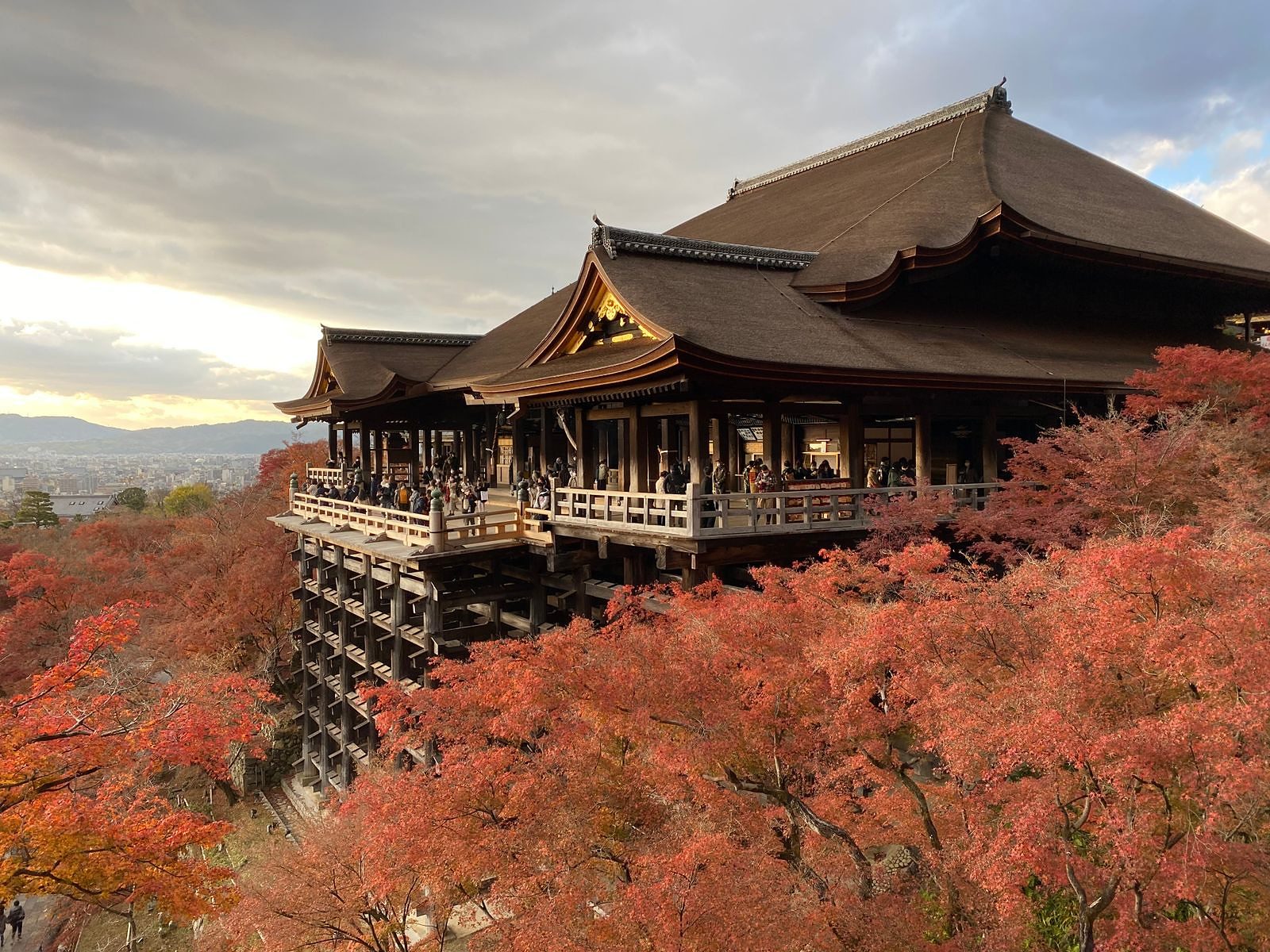
The outer prefectures come into their own in autumn in a way that is easy to overlook when Kyoto dominates the conversation. The mountainous interior of Wakayama along the Kumano Kodo pilgrimage routes, the rural valleys of Hyogo, and the forested hills of Mie all carry strong autumn colour with considerably less foot traffic than the Kyoto basin. For travellers who have already done the headline Kansai experience or who simply prefer fewer crowds, these areas offer a rewarding and often more personal autumn without straying far from the region's core.
Accommodation in Kyoto during peak foliage, typically the third and fourth weeks of November, books out far in advance and commands premium prices. Staying in Osaka and making day trips into Kyoto is a practical and often more affordable alternative that many experienced Kansai visitors default to. Outside of that peak window the pressure eases considerably, and the weeks on either side of absolute peak colour still offer a strong autumn experience with more flexibility and better value.
Exploring the Kansai Region
Autumn in Kansai is the season that draws the most visitors to the region and for good reason, the combination of Kyoto's extraordinary concentration of historic temple and shrine settings with the autumn foliage that covers their gardens, forested hillsides, and mountain approaches gives the city and its surroundings a seasonal depth that no other destination in Japan can match. The wider Kansai region adds further layers beyond Kyoto with the mountain temple complex of Koyasan, the forested gorges of Osaka, and the mountain shrines of Nara all delivering autumn experiences that are specific to their settings and worth seeking out alongside the more celebrated Kyoto destinations.
Seasonal Experiences and Events in Autumn
Now that you have a sense of how the season runs here, these are the highlights and experiences worth building an autumn visit around.
Prefecture map
Seasonal Food & Everyday Atmosphere
Autumn in Kansai is when the mountain basins behind Kyoto and Kobe do their best work. Matsutake come out of the Tanba pine forests, the black soybean fields open on a fixed date in October, the persimmon orchards colour the Nara lowlands, and Kyoto's pickle makers start the winter varieties as the turnips come in.