This page has been translated from Japanese. If anything is unclear, please get in touch.
Autumn region guide

Kanto in Autumn

Autumn across Japan draws in crowds for its famous foliage, and the Kanto region in particular offers a wide variety to choose from. From the golden ginkgo lined streets of Tokyo to the fiery maple valleys of Nikko and the tranquil lakes around Hakone, you can experience the natural beauty whilst also still enjoying the convenience of the city.

Setting the Scene

What autumn feels like

To the relief of many once summer has finished up, what comes next is autumn. Temperatures ease down from the intense heat you would feel in August and into something a lot more comfortable through October and November, especially with the humidity dropping down too, making it far more pleasurable to be out and about again. For many travellers it sits alongside spring as the most comfortable and enjoyable time to visit.

The autumn scenery comes later in Kanto compared to the northern prefectures, with the season typically peaking roughly around mid to late November and even sticking around into early December in some areas. For many reading this, more than likely Tokyo will be on your list and what you can see there is beautiful, but the other prefectures such as Tochigi and Gunma up in the mountain forests to the temple and shrine grounds scattered across the region would make for something slightly more spectacular. Now, if you're travelling from those northern prefectures down south, depending on your timing, you could be lucky enough to follow the change in scenery as it progresses.
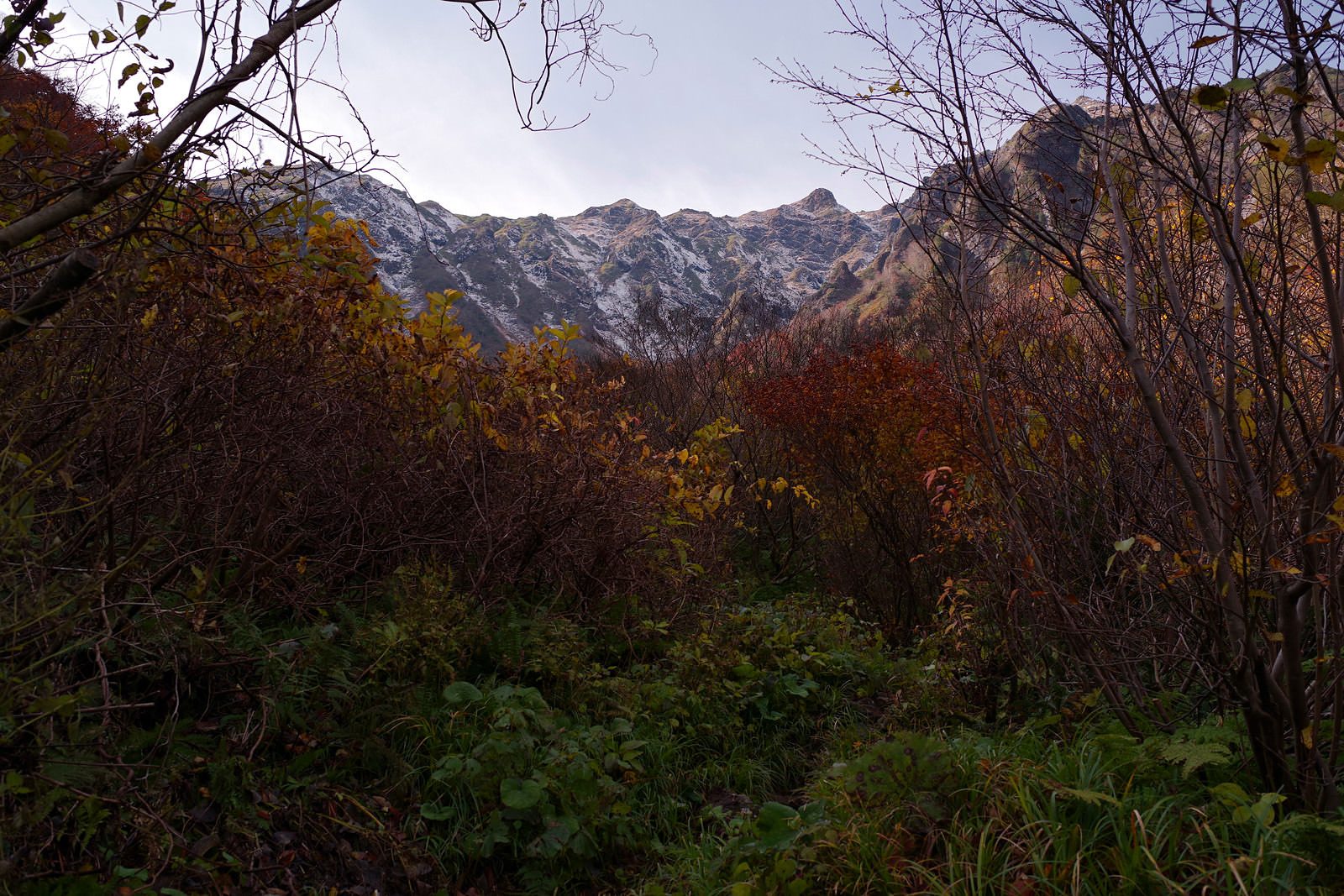
Autumn forest below the rocky peaks of Mount Tanigawa in Gunma

Clothing for Kanto during this season does vary. September typically does retain a fair bit of the heat and humidity from summer and still packing light clothes would be appropriate early in the season, but by October packing warmer clothes becomes useful and November evenings turn cold, particularly in the outer prefectures and elevated areas.
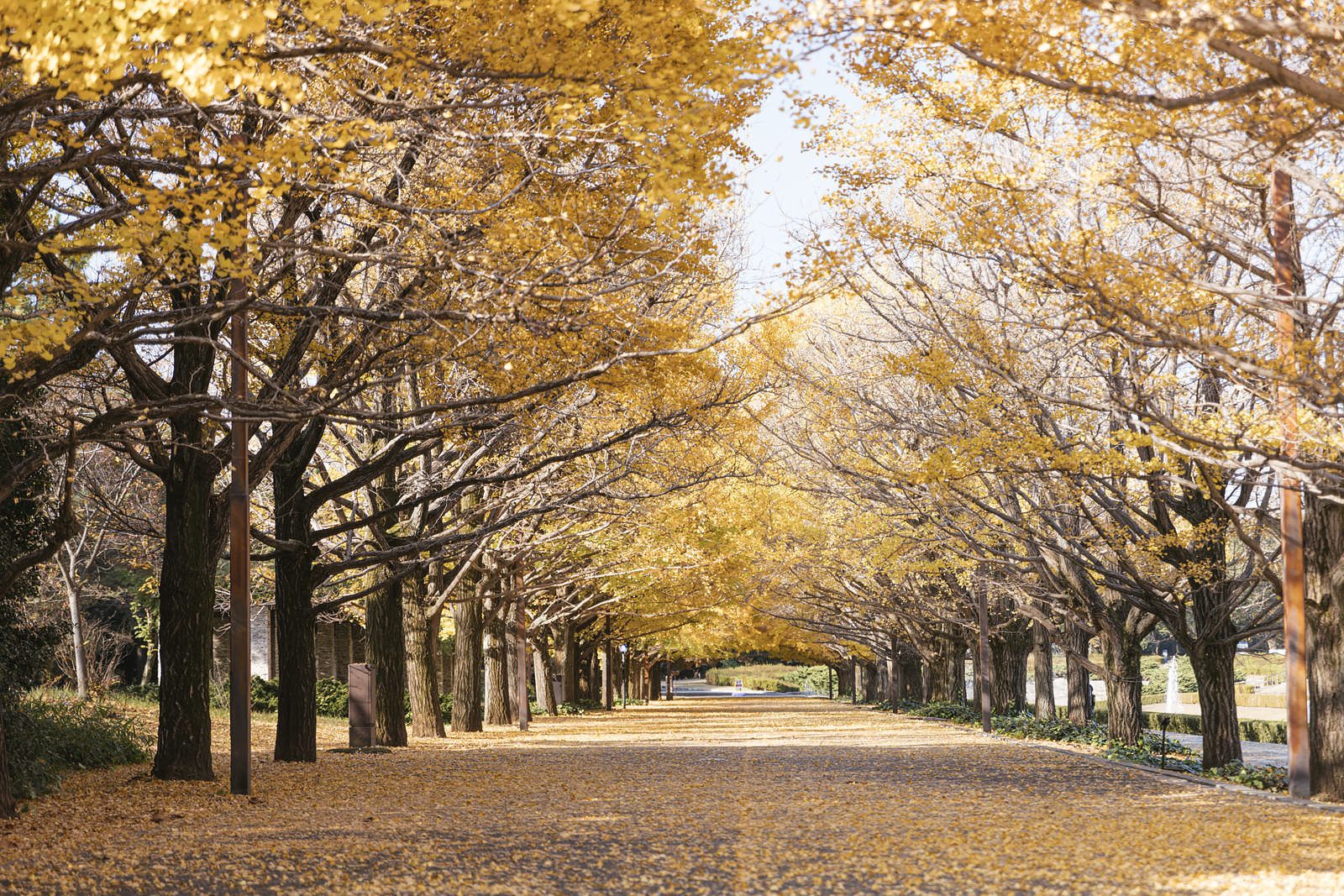
A golden avenue of ginkgo trees at Showa Kinen Park in Tokyo

Now while there are still crowds that build up during the peak of autumn in central Tokyo, it's not quite to the level that you would see during cherry blossom season in spring. Also, the outer prefectures to Tokyo again take far fewer visitors while having some amazing scenery in the region.

Beyond the capital

Where to go in autumn

Autumn in Kanto produces some of the finest foliage experiences in Japan and what's on offer across the region, from the highland mountains of Tochigi and Gunma to the temple gardens of Kamakura and the coastal park of Ibaraki, makes it worth getting out beyond central Tokyo. The colour arrives earlier at higher elevations and works its way down through October and into November.

Hitachinaka · Ibaraki

Hitachi Seaside Park Miharashi Hill (国営ひたち海浜公園 見晴らしの丘)

Around 40,000 kochia bushes turn from green to crimson across Miharashi Hill, with the deepest red in mid to late October.

The kochia at Hitachi Seaside Park (国営ひたち海浜公園) in Hitachinaka City in Ibaraki Prefecture do not change colour all at once. Across roughly three weeks in October, the 40,000 shrubs covering Miharashi Hill shift from late summer green through orange to deep crimson red, and some people visit twice across the month to catch the difference between the two ends of the transition. The 70 to 80 centimetre rounded plants cover a 2.3 hectare slope that reaches 58 metres above the Pacific Ocean, and on a clear day when the hill is fully red (mid October, around the 17th to 20th in recent years), it stands as a wall of red above the blue Pacific. The lower slopes are planted with around 2.36 million cosmos in full bloom during the same weeks, with buckwheat flowers alongside. After the late October bronze stage, the kochia is harvested in early November to make room for the spring nemophila. The park holds the Kochia Carnival across these weeks, with the kochia, cosmos and buckwheat all out together and food stalls on the hill. The park is around 1 hour 30 minutes from Tokyo on the JR Joban Line Limited Express to Katsuta Station, with adult admission at ¥450.

General information
Address605-4 Onuma, Mawatari, Hitachinaka, Ibaraki 312-0012
AccessJR Joban Line Limited Express Hitachi or Tokiwa from Tokyo or Ueno to Katsuta Station (about 80 to 90 minutes), then an Ibaraki Kotsu bus about 15 to 20 minutes to the West Gate
Entry¥450 adults in the regular season, ¥700 during the peak kochia season, free for junior high students and younger
Hours9:30 to 17:00, with seasonal variations, closed some Tuesdays
ParkingPaid parking at the West, South and Seaside gates, ¥520 a day
Phone+81 29 265 9001
Nikko · Tochigi

Nikko Iroha Slope, Lake Chuzenji and Kegon Falls (日光 いろは坂・中禅寺湖・華厳の滝)

The 48 hairpin turns of the Irohazaka road climb to Lake Chuzenji and the 97 metre Kegon Falls, with colour from mid to late October.

The autumn colour on Iroha-zaka (いろは坂) does not peak everywhere at the same time. The top of the road around Lake Chuzenji (中禅寺湖) turns in mid October, and the bottom catches up in early November, because the top is much higher and gets cold first. The road has 48 hairpin curves named after the 48 syllables of the old Japanese alphabet, with one road going up the mountain and a separate one coming back down. It is listed as one of Japan's 100 Best Roads. Lake Chuzenji at the top is one of the highest lakes in Japan and is surrounded by forested mountains. Kegon Falls (華厳の滝) is a 97 metre waterfall that starts from where the lake spills out, and is one of Japan's three best known waterfalls. You can look at it for free from the upper platform or pay to take the lift down to get a closer view from below. Weekend autumn traffic on Iroha-zaka can turn a twenty minute drive into a wait of several hours, so you're better off going up early in the morning and heading back down before mid afternoon. Buses run from JR Tobu Nikko Station up to Chuzenji Onsen across the autumn season.

General information
Address2479-2 Chugushi, Nikko, Tochigi 321-1661 (Kegon Falls)
AccessFrom Tobu Nikko or JR Nikko Station, a Tobu bus bound for Chuzenji Onsen or Yumoto Onsen (about 45 to 50 minutes) climbs the Irohazaka road. Get off at Chuzenji Onsen for the lake and Kegon Falls
EntryThe Irohazaka road and the upper view of Kegon Falls are free. The lower observation deck reached by elevator is ¥570 return
HoursKegon Falls open daily. The observation deck elevator 8:00 to 17:00
ParkingPaid parking near Kegon Falls and around Lake Chuzenji
Phone+81 288 55 0030
Ome · Tokyo

Mount Mitake (奥多摩 御岳山)

A 929 metre sacred mountain reached by cable car, with Musashi Mitake Shrine, the Rock Garden and foliage from late October into November.

Mount Mitake (御岳山) is a 929 metre mountain in the Okutama area of western Tokyo and has more to do in autumn than the more famous Mount Takao closer to central Tokyo, with an active mountain shrine on the summit, a small village of pilgrim lodgings around the shrine, and a simple waterfall and moss loop trail behind it. The cable car from the base saves the bulk of the climb, leaving a 20 to 30 minute walk through the summit village up to Musashi Mitake Shrine (武蔵御嶽神社), which has been a place of mountain worship for around 2,000 years and is dedicated to a wolf deity (so dogs are welcome at the shrine, and can ride the cable car for ¥120). The maple and other forest trees turn red and gold from late October into mid November. The Rock Garden loop from the shrine drops down through a moss covered forested valley with a stream, passing Nanayo Falls and Ayahiro Falls (the priests' waterfall training site) before climbing back up to the shrine in around an hour and a half. JR Chuo Line trains run from Shinjuku to Ome in around 75 minutes, then the Ome Line to Mitake Station and a short bus to the cable car station.

General information
AddressMitakesan, Ome, Tokyo 198-0175
AccessJR Chuo Line to Ome, then the JR Ome Line to Mitake Station (about 90 minutes from Shinjuku), then a Nishi Tokyo bus about 10 minutes to Takimoto, then the Mitake Tozan cable car to Mitakesan Station
EntryThe mountain is free. The cable car is ¥600 one way, around ¥1,130 return
HoursCable car 7:30 to 18:30, about every 30 minutes
ParkingPaid parking at Takimoto near the lower cable car station
Phone+81 428 78 8121
Hachioji · Tokyo

Mount Takao (高尾山)

A mountain close to central Tokyo, with a cable car, the temple Yakuoin and maple colour from mid November into early December.

Mount Takao (高尾山) is the closest autumn foliage spot to central Tokyo, and the maples around the summit and along the trail down through Yakuoin Temple are at their peak from mid November to early December. Getting there is easy, as the Keio Line runs direct from Shinjuku to Takaosanguchi Station in around 50 minutes for ¥430, and from there the cable car takes you most of the way up, leaving around 30 to 40 minutes more walking to the summit. During these weeks the mountain also holds the Mount Takao Autumn Leaves Festival (late October to mid December for the wider festival period), with taiko drumming, folk dancing, a brass band and food stalls at the plaza outside Kiyotaki cable car station. Higher up, at the Jūicchōme teahouse on the mountainside, you'll find masu sake in wooden cups and Tokyo kokeshi carving demonstrations. Once you're near the top, look west on a clear day and Mount Fuji comes into view from the Momiji-dai (Maple Viewing Platform) just past the summit, since autumn's dry air makes the mountain far easier to see than in summer. For food along the way, try the goma sesame dango at Gomadokoro Gongen-chaya near Yakuoin, and a bowl of tororo soba back near the station.

General information
AddressTakaomachi, Hachioji, Tokyo 193-0844
AccessKeio Line Limited Express from Shinjuku to Takaosanguchi Station (about 50 minutes). The trailhead is a short walk from the station
EntryThe mountain is free. The cable car or chairlift is ¥490 one way and ¥980 return
HoursCable car from 8:00, with seasonal closing times in the late afternoon
ParkingPaid parking near Takaosanguchi Station
Official infoTakao Tozan Railway
Kamakura · Kanagawa

Kamakura Engakuji and Meigetsu-in (鎌倉 円覚寺・明月院)

Two Kita-Kamakura Zen temples, Engakuji and the round windowed Meigetsu-in, with maple colour from late November into early December.

Engaku-ji (円覚寺) and Meigetsu-in (明月院) in Kita-Kamakura are the two main autumn temple stops on the north side of Kamakura City in Kanagawa Prefecture, both within easy walking distance of Kita-Kamakura Station and both at their peak from late November into early December. Engaku-ji is the second ranked of the Kamakura Five Great Zen Temples (founded in 1282 by the regent who repelled the Mongol invasions) and sits in a forested valley directly behind the station, with maples and zelkovas turning red and gold above the historic temple buildings. Meigetsu-in is a 10 minute walk further down Meigetsuin Street and is best known for the Window of Enlightenment, a circular window in the main hall that frames the inner garden behind it. The temple is better known for the other half of its year. About 2,500 ヒメアジサイ (Hime-ajisai) line the approach and turn a uniform blue that has become known as 明月院ブルー (Meigetsu-in Blue), which is what earns it the nickname あじさい寺 (Ajisai-dera / Hydrangea Temple) and draws the queues in mid June. The inner garden behind the main hall is normally closed and opens only twice a year (June for the ハナショウブ (Hanashobu / Japanese iris) and late November to early December for the autumn leaves) so the maples through the window are a brief, once a year sight, and autumn is the quieter of the two seasons here. JR Yokosuka Line trains run from Tokyo Station to Kita-Kamakura in around an hour. Each temple charges ¥500 entry, ¥300 for primary and middle school children at Meigetsu-in, with an extra ¥500 for the Meigetsu-in inner garden during the autumn opening.

General information
Address409 Yamanouchi, Kamakura, Kanagawa 247-0062 (Engakuji)
AccessJR Yokosuka Line to Kita-Kamakura Station (about 50 minutes from Tokyo). Engakuji is a minute from the station and Meigetsu-in about a 10 minute walk
EntryEngakuji ¥500, Meigetsu-in ¥500 with an additional ¥500 for the inner garden during the autumn opening
HoursEngakuji 8:30 to 16:00, Meigetsu-in 9:00 to 16:00
Phone+81 467 22 0478
Hakone · Kanagawa

Hakone Sengokuhara Pampas Grass Fields (箱根 仙石原すすき草原)

A hillside of silver and gold pampas grass on the slopes of Sengokuhara, at its best from late September into early November.

The pampas grass fields at Sengokuhara (仙石原すすき草原) sit on the western slope of Mount Hakone, and unusually for autumn in Japan the draw here is not red maple leaves but a single grass species across an open meadow. From late September into early November the grass turns from summer green to a shimmering gold and silver, as the seed heads mature and catch the autumn light. It grows to around adult height at peak, and a single wide walking path runs straight through the field from the lower entrance up to a viewpoint at the top of the slope. The grass looks best in the late afternoon and at sunset, when the low light catches the silver tips and turns the whole meadow gold. Now, getting there is easy. From Hakone-Yumoto Station, a Hakone Tozan bus toward Togendai or Gotenba takes around 30 minutes, with a short walk from the Sengoku or Sengoku-kogen bus stop. Entry is free, with paid parking by the field and free seasonal lots nearby from September to November.

General information
AddressSengokuhara, Hakone, Ashigarashimo District, Kanagawa 250-0631
AccessFrom Hakone-Yumoto Station, a Hakone Tozan bus on the Togendai line about 30 minutes to the Sengoku-kogen stop, then a short walk, also reachable from Gora
EntryFree
HoursOpen at any time
ParkingPaid parking by the field, plus free temporary lots nearby from September to November
Phone+81 460 85 7410 (Hakone Town tourism division)
Autumn moments

Seasonal experiences and events

Now that you have a sense of how the season runs here, these are the highlights and experiences worth building an autumn visit around.

Prefecture map

Seasonal culture

Seasonal food & atmosphere

Autumn in Kanto brings a run of rich, deeply flavoured ingredients, the harvest arriving from the surrounding prefectures and the catch coming in from the coast as the water cools. Tokyo pulls the best of it in, and it's a good time of year to eat your way through the city.

栗 (Kuri)

Chestnuts

Harvested through September and October around Kasama in Ibaraki, then sold roasted on the street.

Kuri gohan, mont blanc and tenshin amaguri

Chestnuts are an autumn staple across Japan and a large share of them come from Kanto. The harvest runs through September and October, much of it from Ibaraki, which grows close to a quarter of the national crop around 笠間 (Kasama) and the towns next to it. What distinguishes Kanto's chestnut season is that it is an urban one. 栗ご飯 (Kuri Gohan), chestnut rice, is the classic domestic dish, the sweet nuttiness working with the earthy fragrance of new season rice. Then the mont blanc arrives in every patisserie and cafe window in Tokyo through autumn, and 天津甘栗 (tenshin amaguri), chestnuts roasted in hot gravel and sold in paper bags from street stalls, turn up outside stations from October. Gifu turns its chestnuts into confectionery. Kanto eats them out of a bag on the way home.

さつまいも (Satsumaimo)

Sweet potato

Ibaraki and Chiba's harvest, and the stone roasted yaki-imo vans that follow it into the city.

Yaki imo, stone roasted

Sweet potato comes into harvest through autumn across Ibaraki and Chiba, the two largest growing areas in the country, and Kanto's version of the season is a street one. The flesh is dense and sweet and caramelises as it roasts, and 焼き芋 (Yaki Imo), whole potatoes roasted slowly over hot stones, is sold from vans and stalls across Tokyo from the first cold week onwards, usually announced by a recorded call rather than a sign. Varieties matter here. 紅はるか (Beni Haruka) and 紅あずま (Beni Azuma) are the ones on the labels, the first sweeter and wetter, the second drier and more floury. It also goes into tempura, into soups, and into a long list of autumn sweets. Kagoshima grows more of it and turns most of the crop into shochu. Kanto eats it hot out of foil.

梨 (Nashi)

Japanese pear

Picked from late summer into early autumn across Chiba, Ibaraki and Tochigi.

Crisp and juicy, eaten fresh

Nashi is harvested from late summer into early autumn across Chiba, Ibaraki and Tochigi, all major growing areas, with Chiba the biggest producer in Japan. The fruit is large, crisp and juicy, with a clean sweetness that carries over from the late summer heat into the cooler days of early autumn. It is eaten fresh, and the best of the harvest is sold straight from farm shops and roadside stalls across the growing areas, where the range and freshness on offer are better than what reaches the city markets.

銀杏 (Ginnan)

Ginkgo nuts

Gathered under Tokyo's ginkgo avenues as the leaves turn yellow.

Grilled, or in chawanmushi

Ginnan fall from Tokyo's ginkgo lined streets and parks through autumn, as the avenues turn gold. The nuts themselves are small, jade green, and slightly bitter with a waxy texture and a flavour that is subtle and distinctive. They are roasted and eaten as a snack, skewered and grilled at izakayas, or used as a garnish in 茶碗蒸し (Chawanmushi), savoury egg custard. Ginnan freshly roasted at a Tokyo izakaya in autumn is easy to overlook but worth seeking out.

Plan your trip

Book your stay in Kanto

Search accommodation across Kanto, from Tokyo city hotels to Hakone onsen ryokan and Kamakura inns. Compare options across the major booking platforms.

AdultsAges 18 or above
2
ChildrenAges 0–17
0
Book with
Pick a site. Your dates and details are carried over so you can check prices and book there.

Ready to plan your Kanto trip?

Browse itineraries built around Kanto in autumn, from Nikko's maple lined lakes and waterfalls to the silver pampas grass fields of Hakone.

View Kanto Itineraries →