
A Warmer, Later Autumn
Autumn arrives in Kyushu later than in the northern regions and moves through the island at a leisurely pace that suits its generally warmer climate. The foliage season gets going properly through November, with the northern prefectures seeing colour earlier and the far south holding onto the green of summer well into the month. It is not a region that produces the intense, concentrated foliage displays of Tohoku or the alpine areas of Chubu, but the colour it does offer sits against a landscape of volcanic peaks, river valleys, and rural countryside that gives it a distinct character.
Temperatures through autumn are comfortable across most of the island. October is warm and pleasant, generally sitting in the low to mid twenties across the lowland areas, warm enough that light clothing remains appropriate for much of the day with just a layer added for evenings. November cools steadily and by the end of the month the northern prefectures are cool, sitting in the low to mid teens, while the far south stays noticeably warmer. The season is largely settled and dry across most of Kyushu once the typhoon risk that carries through September has passed, making October in particular one of the most reliable and easy months to travel the island.
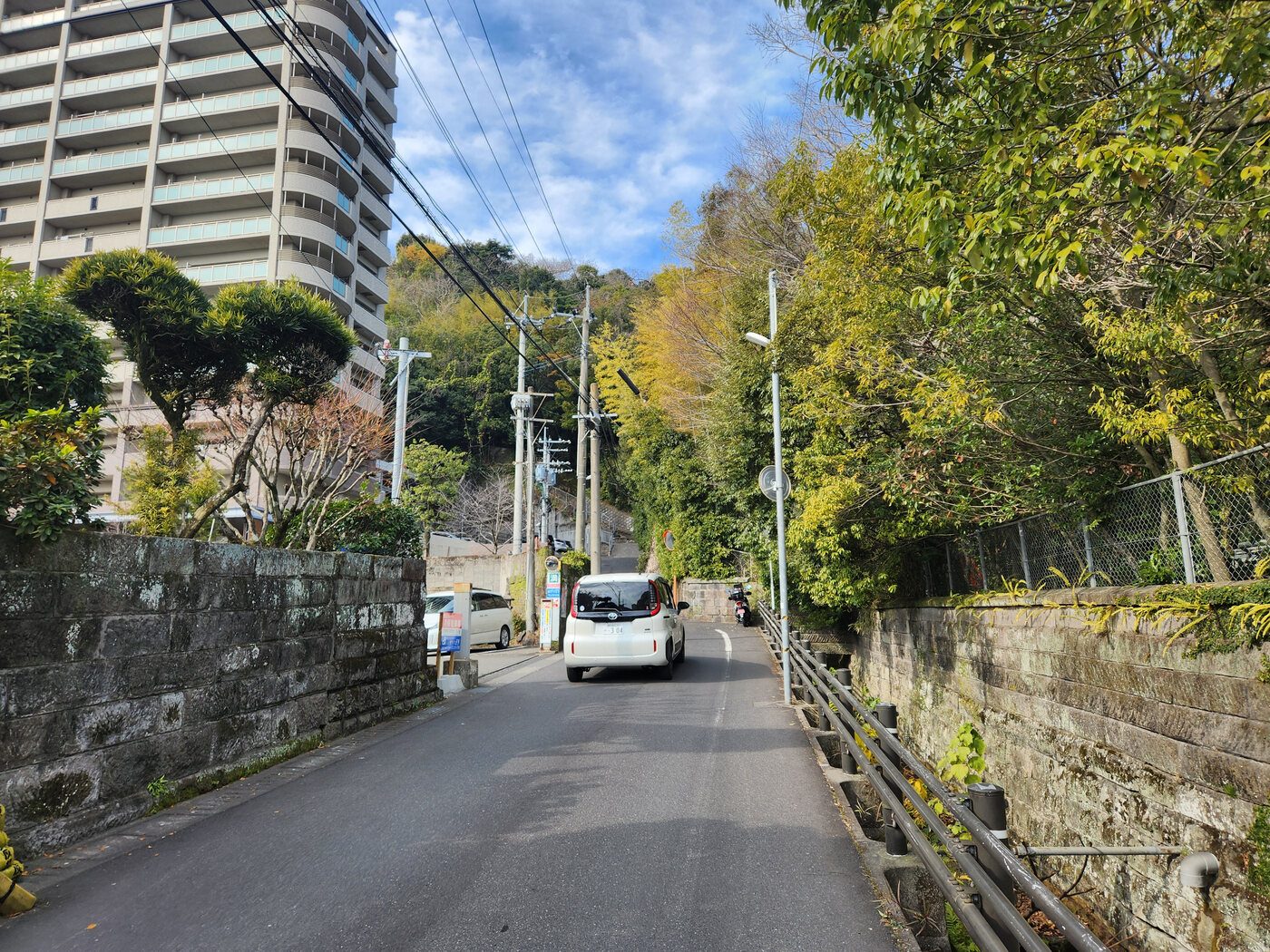
The volcanic areas of the island take on a particular appeal in autumn. The highland areas around Mount Aso in Kumamoto and the Kirishima range in Kagoshima sit above the lowland warmth and cool more quickly into the season, producing stronger foliage colour against a backdrop of volcanic craters and wide open highland views that few other parts of Japan can offer in the same combination. These areas are worth prioritising in autumn for travellers who want something beyond the conventional temple and castle circuit that defines autumn sightseeing in other regions.
Kyushu stays manageable through autumn without the booking pressure that affects more popular foliage destinations elsewhere. Fukuoka draws consistent visitor numbers as one of Japan's most liveable and well regarded cities, but outside of the urban centres accommodation is available and the island's natural and cultural sites are accessible without much competition. It is a relaxed and rewarding season on an island that handles its tourism well at any time of year.
Okinawa in Autumn
Autumn in Okinawa is a season of transition that takes longer to arrive than anywhere else in Japan. While the northern regions are well into their foliage season by October, Okinawa is still warm and humid through much of the month, with temperatures on the main island sitting in the high twenties and the subtropical heat taking its time to ease. The shift toward cooler, more settled conditions happens gradually through November and into December, and by the time Okinawa's autumn feels like autumn in any conventional sense the rest of Japan has already moved well into winter. It is a season that rewards patience and an understanding that the islands operate on their own timeline.
The typhoon season that carries through summer extends into October across the Okinawa archipelago, and this is the most significant practical consideration for early autumn travel to the islands. October typhoons are less frequent than those of August and September but they do occur, and the outer islands in particular can experience disruption to ferry services and travel between islands that affects itineraries in ways that are difficult to predict or plan around. By November the typhoon risk has largely passed and the weather settles into the dry, clear conditions that make late autumn one of the more underrated times to visit, warm enough for the water in the earlier part of the month, settled and reliable, and significantly quieter than the summer peak.
The outer islands benefit from the autumn shoulder season more noticeably than the main island. Ishigaki, the Kerama Islands, and the smaller Yaeyama group see visitor numbers drop from the summer peak through October and November, and accommodation that was booked out months in advance in July becomes available with considerably less competition. The water clarity and marine life that draw divers and snorkellers to the outer islands remain strong through autumn, and the combination of good conditions and reduced crowds makes it a practical and rewarding time to focus on the more remote parts of the archipelago.
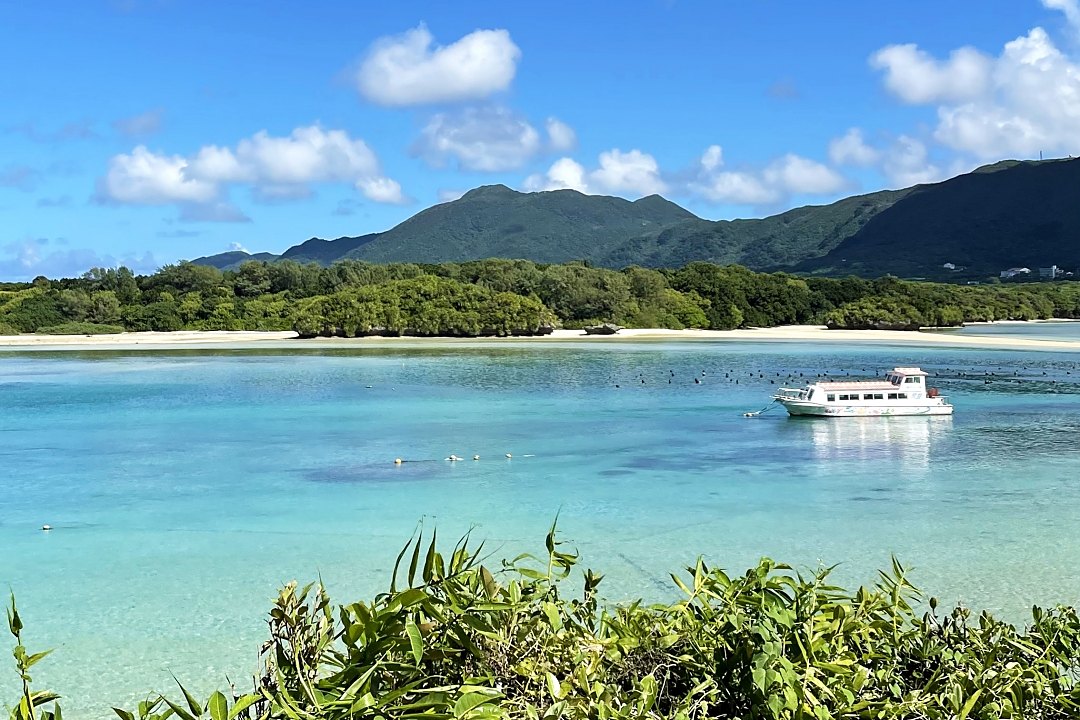
Packing for Okinawa in autumn requires a broader range than summer. Light clothing and swimwear remain appropriate through October on the main island and outer islands, but a mid layer becomes useful for November evenings as temperatures begin to ease and the air loses some of its summer weight. A reliable rain layer is worth having through the earlier part of the season given the residual typhoon risk, transitioning to a lighter waterproof as the season settles. The overall pace of the islands in autumn is more relaxed than summer and the experience of moving through the archipelago feels less pressured and more considered as a result.
Exploring Kyushu
Autumn in Kyushu is a season of gorges, volcanic highlands, and the particular quality of light that the cooler months bring to a landscape that spends the rest of the year under the full intensity of the southern Japanese sun. The colour change arrives later here than in the northern regions and works through October and into November across the mountain areas of the interior, giving the season a relaxed and unhurried character that suits the pace of travel on an island that rarely feels as crowded as the more visited regions of Honshu.
Yabakei Gorge (耶馬渓)
A wooded river gorge inland from Nakatsu, its maples turning through November along walking and cycling routes.
Yabakei (耶馬渓) in Nakatsu City in Oita Prefecture is one of Japan's "Three Great Odd Views" alongside Myogi Mountain in Gunma and Kankakei on Shodoshima, a nationally designated Place of Scenic Beauty, and is also listed by Visit Oita as one of Japan's three great autumn foliage destinations alongside Nikko and Arashiyama. The gorge system spans around 32 kilometres north to south and 36 kilometres east to west across the Yamakuni River basin, formed from the river cutting through welded volcanic tuff from a major eruption near Mount Kuju a million years ago, and was named by the late Edo period historian Rai Sanyo in 1818. It divides into four areas, 本耶馬渓 (Hon-Yabakei), 深耶馬渓 (Shin-Yabakei), 裏耶馬渓 (Ura-Yabakei) and 奥耶馬渓 (Oku-Yabakei), of which Shin-Yabakei consistently produces the most vivid colour against the rock formations. The Hitome Hakkei viewpoint there takes in eight separate rock formations at once including Meoto Iwa, Mount Gunen and Eboshi Iwa, with the surrounding maples and oaks at peak in red, orange and gold from late October to mid November, and soba restaurants and accommodation clustered around the viewpoint. Each autumn the gorge is lit in the evenings from 5pm to 9pm free of charge at 渓石園 (Keisekien) in the Yabakei Dam Memorial Park and along the ひさしもみじ (Hisashi Momiji) maple avenue near Hitome Hakkei, with a 耶馬渓ダムもみじウォーキング (Yabakei Dam Momiji Walking) event at the Yabakei Aqua Park in early November. The Ao no Domon ("Blue Tunnel") in the Hon-Yabakei section is 342 metres long, of which 144 metres is tunnel proper, hand carved through a cliff with a chisel and hammer over 30 years in the 18th century by the Buddhist monk Zenkai to give travellers safe passage where they had previously been forced across a dangerous cliff face above the river. Hitome Hakkei is around 90 minutes by Oita Transport Bus from JR Nakatsu Station, and the 36 kilometre Yabakei Cycling Road built on the former Yabakei railway line runs through the gorge with a 22 kilometre bicycle only section, with bicycles rentable at the Yabakei Cycling Terminal. With the whole area in red and yellow, early November is the time to explore it.
Takachiho Gorge (高千穂峡)
A deep V shaped gorge below columnar cliffs, rowed by rental boat past the Manai Falls, with colour in November.
Takachiho Gorge (高千穂峡) in Takachiho Town in northern Miyazaki Prefecture is a 7 kilometre volcanic gorge where the Gokase River has carved through columns of basalt that formed when a pyroclastic flow from Mount Aso cooled rapidly in place around 90,000 years ago, leaving sheer cliff walls of 80 to 100 metres rising on either side of the river. The maples and other deciduous trees growing from the cliff faces turn red and gold from mid November into early December, with the autumn colour reflected in the green water of the river below. The 17 metre Manai Falls dropping into the gorge from a notch in the basalt is the most photographed landmark in the gorge and is listed among Japan's 100 most beautiful waterfalls. Rental rowboats run from the boat dock at the gorge to the foot of the falls for ¥4,100 to ¥5,100 per 30 minute slot (max 3 adults per boat), with online reservation through the Takachiho Tourist Association website required and weekend slots in October and November selling out within minutes of opening. The gorge is a 30 to 40 minute walk from Takachiho Bus Center, which is around 3 hours by direct bus from Kumamoto.
Mount Aso Daikanbo Observation Point (阿蘇山 大観峰)
A ridge top lookout over the Aso caldera and its grasslands, the slopes turning through autumn.
Daikanbo (大観峰) is the centrepiece autumn viewpoint of Aso-Kuju National Park, the 936 metre highpoint of the northern caldera rim above Aso City in Kumamoto Prefecture with a 360 degree panorama across one of the largest volcanic calderas in the world (and the largest inhabited one). The grasslands of the caldera floor turn from green to gold and brown across October and November, with the active Nakadake crater's steam plume visible above and the Five Peaks of Aso forming what is said to be the silhouette of a sleeping Buddha across the caldera (Mount Nekodake as the head, Nakadake as the smoking belly button). Late autumn mornings give the best chance of the year for the unkai (sea of clouds) phenomenon, when low clouds settle inside the caldera and the peaks float above the cloud layer. The caldera formed from massive eruptions over 90,000 years ago, with Aso Shrine on the floor of the caldera over 2,000 years old and dedicated to the deity believed to have drained the original caldera lake. Daikanbo is a 10 minute walk from free parking along the Milk Road, and from JR Aso Station the Sanko Bus toward Tsuetate runs to the Daikanbo-iriguchi stop in 35 minutes for ¥550.
Mount Unzen Nita Pass (雲仙岳 仁田峠)
A mountain pass on the Shimabara Peninsula, its ropeway rising over slopes that turn in late October and November.
Mount Unzen on the Shimabara Peninsula in Nagasaki Prefecture is an active volcanic complex made up of around eight peaks, with the central Fugendake erupting 1990 to 1995 in one of the most destructive Japanese volcanic events of the late 20th century and producing the new Mount Heisei-Shinzan lava dome that today stands as the highest point on the massif. Nita Pass (仁田峠) at 1,080 metres on the flank of the volcano is the standard autumn viewpoint, with the maples and dōdan azaleas on the slopes designated a National Natural Monument as the Fugendake Autumn Foliage Forest and turning red and gold from late October into mid November. The 3 minute Unzen Ropeway runs from Nita Pass up to Mount Myokendake Station and a 5 minute walk leads to the Myokendake summit observatory at 1,300 metres, with views across the Ariake Sea, Amakusa Islands and (on clear days) Mount Aso visible to the northeast. The Unzen Onsen hot spring town on the lower flank of the volcano is the standard overnight base, with hot spring "hells" venting steam from the ground around the town. From JR Isahaya Station, Shimatetsu Bus runs to Unzen in around an hour with a 15 minute taxi from there to Nita Pass.
Exploring Okinawa
Autumn in Okinawa is the season that the islands handle best for independent and unhurried exploration. The summer crowds and the typhoon risk that define August and September have largely passed by October, the water remains warm enough for swimming and diving through much of the season, and the comfortable temperatures that settle across the archipelago through October and November make moving between the main island sites and the outer islands more pleasant than the heat of summer allows. The spots below reflect both the cultural and natural range of what Okinawa offers in a season that is underrated as a time to visit.
Yanbaru National Park (やんばる国立公園)
Subtropical evergreen forest across the north of Okinawa Island, home to the Okinawa rail and other endemic wildlife.
Yambaru National Park covers the subtropical evergreen forest at the northern end of Okinawa's main island, spread across the villages of Kunigami, Ōgimi and Higashi, and was inscribed as a UNESCO World Natural Heritage Site in July 2021 alongside Amami-Ōshima, Tokunoshima and Iriomote for the density of endemic species in its forests. The headline endemic is the Yanbaru kuina (Okinawa Rail), a flightless bird found nowhere else on earth, with the endangered Okinawa Woodpecker and the Yanbaru long armed scarab beetle also unique to the area. The forest stays green through autumn rather than turning the colours of the mainland, but October and November are the most comfortable months to walk it, with the summer heat, humidity and typhoon risk past and the wildlife at its most active in the cooler air. The 25.7 metre Hiji Falls (比地大滝) at the end of a 1.5 kilometre trail through the forest (¥500 entry) is the tallest waterfall on the main island. 辺戸岬 (Cape Hedo), the northern tip of the island, and the 茅打バンタ (Kayauchi Banta) cliffs just south of it look out over the open sea. The 503 metre Mount Yonaha (与那覇岳) is the highest point on the main island and a challenging 6 kilometre hike for keen walkers. The park is around two hours by car from Naha, with rental car essential as public transport is sparse.
Miyako Island (宮古島)
A flat coral island south of the main island, known for clear water and bridges out to its smaller neighbours.
Miyako Island sits around 300 kilometres southwest of the Okinawa main island, a flat platform of raised coral with no rivers running off it to carry silt into the sea, which is the reason the water around it stays as clear as it does. 与那覇前浜ビーチ (Yonaha Maehama Beach) on the southwestern coast runs for around 7 kilometres of white sand shelving gently into shallow turquoise water. The 3.5 kilometre 伊良部大橋 (Irabu Bridge), the longest toll free bridge in Japan, crosses to neighbouring Irabu Island with the reef visible on both sides along its whole length. Autumn is when the water is at its best. The typhoon season eases through October, the sea holds its summer warmth into November, and the plankton that clouds the shallows in high summer has passed, so visibility on the reefs is at its clearest of the year with the July and August crowds gone. Swimming stays comfortable into November, and walking or cycling between the beaches and the bridges is far easier than it is in the heat. The island is reached by air to Miyako Airport from Naha or the mainland, and two to three days gives time for the beaches, the bridge and a day out on the reef.
Sefa Utaki (斎場御嶽)
A UNESCO listed sacred grove of the Ryukyu religion, set in rock and forest above the southeast coast.
Amamikyu, the creation goddess of the Ryukyuan religion, is said to have first descended to Okinawa at Kudaka Island ~5 kilometres off the Chinen Peninsula in southern Okinawa, and Sefa Utaki (斎場御嶽) on the cliff above the sea overlooking Kudaka was developed by the Ryukyu Kingdom as the country's most sacred site for ceremonies honouring her. The grounds were inscribed as a UNESCO World Heritage Site in 2000 as part of the Gusuku Sites and Related Properties of the Kingdom of Ryukyu and named a National Historic Site in 2018. Six Ibi (sacred areas) sit along a forest path of uneven Ryukyu limestone rocks, with the Sangui (三庫理) chamber the most photographed, a triangular space formed by two massive leaning limestone rocks that frames Kudaka Island across the sea. The Sangui interior is currently off limits after a corner of the rock walls collapsed in the early modern period, so visitors view the chamber from outside. Autumn is the most comfortable time to walk the steep stone path, with the summer heat past. Hours are 9:00 to 18:00 March to October, with tickets sold until 17:15 and last entry at 17:30, and 9:00 to 17:30 November to February, with tickets to 16:45 and last entry at 17:00. The site closes twice a year for rest days set by the lunar calendar, the first three days of the fifth and tenth lunar months, which fall on different Gregorian dates each year. Admission rises from ¥300 to ¥600 for adults on October 1, 2026, with school children going from ¥150 to ¥300. Drainage repair work also affects the autumn 2026 season. Through to November 1, 2026 part of the stone path and several of the prayer sites in the upper grounds are closed while normal admission still applies, and from November 2, 2026 to January 5, 2027 visitors can go only as far as the Ujoguchi entrance gate, with the Sangui and the rest of the upper grounds shut and admission free for that period. Check the Nanjo City site before travelling, because it is the accessible area rather than the opening hours that changes. Bus 38 from Naha Bus Terminal runs to the Sefa Utaki Iriguchi stop in around an hour.
Shuri Castle (首里城)
The royal castle of the Ryukyu Kingdom above Naha, its main hall under reconstruction after the 2019 fire.
Shuri Castle (首里城) in the Shuri district of Naha was the royal palace and administrative centre of the Ryukyu Kingdom for 450 years from 1429 to 1879, with vermilion architecture combining Chinese palatial design and Japanese castle defensive structure to reflect the kingdom's role as a maritime trading bridge between China, Japan, Korea and Southeast Asia. The site has been destroyed five times in its history, most recently in the October 2019 fire that consumed the Seiden main hall and seven adjacent structures rebuilt in 1992. Reconstruction of the Seiden is scheduled to complete in autumn 2026 under the "Visible Reconstruction" theme, which has kept the rebuilding open to public view throughout, so a visit before then takes in the timber frame, the roof tiling and the lacquer work in progress rather than a finished hall. The Shureimon Gate at the entrance, built by King Sho Sei in the early 16th century and carried on Japan's commemorative ¥2,000 note, survived the fire and stands as it did. The wider site has been registered since 2000 as part of the UNESCO World Heritage Gusuku Sites and Related Properties of the Kingdom of Ryukyu, though only the stone walls and the foundations from before 1945 carry the designation, since the buildings are all postwar reconstructions. Autumn is the most comfortable season to walk it, with the summer heat gone and the climb between the gates and across the open courtyards no longer draining. Admission to the paid area is ¥400, and the Yui Rail monorail reaches Shuri Station with a 15 minute walk to the entrance.
Experiences in Kyushu
These are the autumn experiences and events worth building an autumn visit around:
Experiences in Okinawa
These are the autumn experiences and events worth building an autumn visit around:
Prefecture map
Food in Kyushu
Autumn in Kyushu is one of the more comfortable and rewarding seasons to eat through the island. The heat and humidity of summer retreats through September and the cooler, settled conditions of October and November make moving around and eating well easy. The island's agricultural areas bring in their harvest, the coastal waters deliver key seasonal catches, and a few ingredients that are specific to Kyushu's regional food identity come into their peak through the season.
Returning bonito
The autumn run past Kagoshima, and Makurazaki, the port that turns it into katsuobushi.
戻り鰹 (Modori Katsuo) passes back down the Pacific side of Kyushu between September and November, fat from a summer feeding in northern waters, and Kyushu's relationship with the fish is different from Kochi's. Kochi sears it and eats it. Kagoshima dries it. 枕崎 (Makurazaki) on the southern tip of the Satsuma peninsula is one of the two towns that supply most of Japan's 鰹節 (katsuobushi), the dried and smoked bonito that dashi is made from, and the process there takes months. The fish is boiled, boned, smoked over oak for weeks until it is hard enough to ring when struck, then in the case of 本枯節 (honkarebushi) left to grow a mould that pulls the last of the moisture out. You can watch it being shaved to paper thinness in the shops in town. The fresh autumn fish is eaten as sashimi and tataki as well, but the dried version is what the region is for.
Sweet potato
Kagoshima's autumn crop, the Anno-imo of Tanegashima, and the shochu the rest of it becomes.
Sweet potato is Kagoshima's crop before it is anyone else's, grown in the volcanic ash soil of the south where the drainage suits it, and the prefecture is the largest producer in the country. Two things separate it from the Kanto harvest. The first is 安納芋 (Anno Imo), a variety from 種子島 (Tanegashima) that is wetter and sweeter than mainland sweet potatoes and goes almost custardy when roasted, cured for weeks after digging before it is sold. The second is that most of the crop is not eaten at all. It is distilled into 芋焼酎 (Imo Shochu), and autumn is when the new season spirit appears, unfiltered and cloudy, sold as 新焼酎 (shin shochu) from the distilleries across the prefecture. Kanto roasts its sweet potatoes and sells them from a van. Kagoshima ferments most of them and drinks the result.
Kabosu
Oita's green citrus, squeezed over everything on the table from the first autumn fish onwards.
かぼす (Kabosu) is a green citrus the size of a golf ball, and Oita grows 97 percent of the national crop, around 4,430 tonnes a year. The trees flower in May and the fruit takes roughly a hundred days to come good, so picking opens in early August and runs through autumn, with the fully ripened yellow fruit arriving later in the year. It is not eaten. It is squeezed, over grilled fish, into ponzu, over nabe, into shochu, and in Oita it arrives on the table as a matter of course in the way a lemon wedge does elsewhere, cut in half rather than in wedges. The pairing to seek out is kabosu over autumn 関さば (Saba) or grilled saury, where the sharp green acidity does the work that no bottled sauce manages. The fruit also carries a Ministry of Agriculture Geographical Indication.
Goto udon
Hand stretched camellia oil noodles, boiled at the table and dipped in flying fish broth.
五島うどん (Goto Udon) is the hand stretched noodle of the 五島列島 (Goto Islands), made with camellia oil, which gives it a smoother surface and a firmer bite than most. It is eaten in the じごく炊き (Jigokudaki) style, cooked in a pot of boiling water at the table and dipped into あごだし (ago dashi), a broth made from flying fish specific to the islands. October and November are quiet months on the islands, so it is an easy time to sit down to a pot at the port without a queue.
Food in Okinawa
Autumn in Okinawa is less about dramatic seasonal change and more about a gradual shift in pace. The intense heat of summer begins to ease, but the climate remains warm and subtropical, allowing many summer ingredients to continue into the season. At the same time, the atmosphere becomes more relaxed, and the food reflects that balance, still bright and fresh, but with a slightly more grounded and steady character. It is a region with a distinct culinary identity, and autumn offers a softer, more approachable way to experience it.
Log grown dried shiitake
Oita's autumn akiko harvest, grown on felled oak logs over a two year cycle.
乾しいたけ (Hoshi Shiitake) is about a third of a different thing from the fresh mushroom, and Oita produces roughly a third of Japan's entire supply. The method is 原木栽培 (genboku saibai), growing on logs rather than in sawdust blocks. Broadleaf trees, usually くぬぎ (kunugi) or こなら (konara) oak, are felled in November and left to dry with the leaves still on, cut into metre lengths in January, drilled and inoculated with spawn between January and March, then stood in the forest for two years while the mycelium works through the wood. Only then are the logs moved to the fruiting ground, and the mushrooms come up twice a year, 春子 (haruko) in spring and 秋子 (akiko) in autumn. Drying is what concentrates the flavour, which is why the dried mushroom, not the fresh one, is the base of so much Japanese stock. The autumn harvest is the one to buy from the producers in Kunisaki and Ono.
Kibinago sashimi
Kagoshima's small silver herring, opened by hand and fanned into a chrysanthemum, fattest in autumn.
きびなご (Kibinago) is a small silver herring that Kagoshima eats as sashimi, and the reason it belongs to autumn is condition rather than availability. The fish is landed through the year off the Satsuma and Osumi coasts and around the islands, but the agriculture ministry's own record of the dish notes that the spring fish carry eggs while the autumn fish have firmer flesh and more fat on them, which is the ones you want raw. It is too small to fillet with a knife, so it is opened by hand. The head is folded down, a finger goes in to take out the gut and gills, the body is opened along the backbone and the bone and dorsal fin come away, then it is rinsed in salt water and patted dry. The opened fish are laid in a ring as 菊花造り (kikka zukuri), a chrysanthemum, and eaten with vinegared miso rather than wasabi and soy. Mixed with shredded daikon it becomes みそなます (miso namasu).
Shikuwasa citrus
Okinawa's small green citrus, picked from August into autumn around Ogimi in the north.
シークヮーサー (Shikuwasa) is a small, thin skinned Okinawan citrus, sharper and more floral than a lime, and the harvest is split by what the fruit is for. The green fruit, 青切り (aogiri), is picked in August and September when the citric acid is at its highest, which is the cooking and squeezing fruit. From October to December the crop goes for juice, which is most of what leaves the island. Only from January is it sweet enough to eat as fruit. 大宜味村 (Ogimi Village) in the far north of the main island is the centre of it, and the roadside stands and the village co-op there sell the green fruit by the bag through early autumn. It goes over grilled fish and pork, into 沖縄そば, into vinegar dressings, and into a glass with shochu or awamori. The peel is used as well as the juice, grated over a dish the way yuzu zest is on the mainland.