Confirm your email to unlock saving, sharing and exporting. We sent a link when you signed up.
Autumn region guide
Shikoku in Autumn
Autumn suits Shikoku. The colour comes in stages, starting high on Ishizuchi and Tsurugi in October and working down into the Iya Valley and the river gorges by November, with the gardens on the Inland Sea coast holding on into early December. Getting around takes more planning than it does on the mainland, and that is the trade for having most of it to yourself.
Regional character
General Feeling of the prefecture
Shikoku sits south of Chugoku across the Inland Sea, smaller and quieter than the mainland, without the crowds that fill Kyoto an hour or two north. The views most definitely deliver and the season is long, but you have to want to go, and being less popular than other destinations, the numbers never really get out of hand.
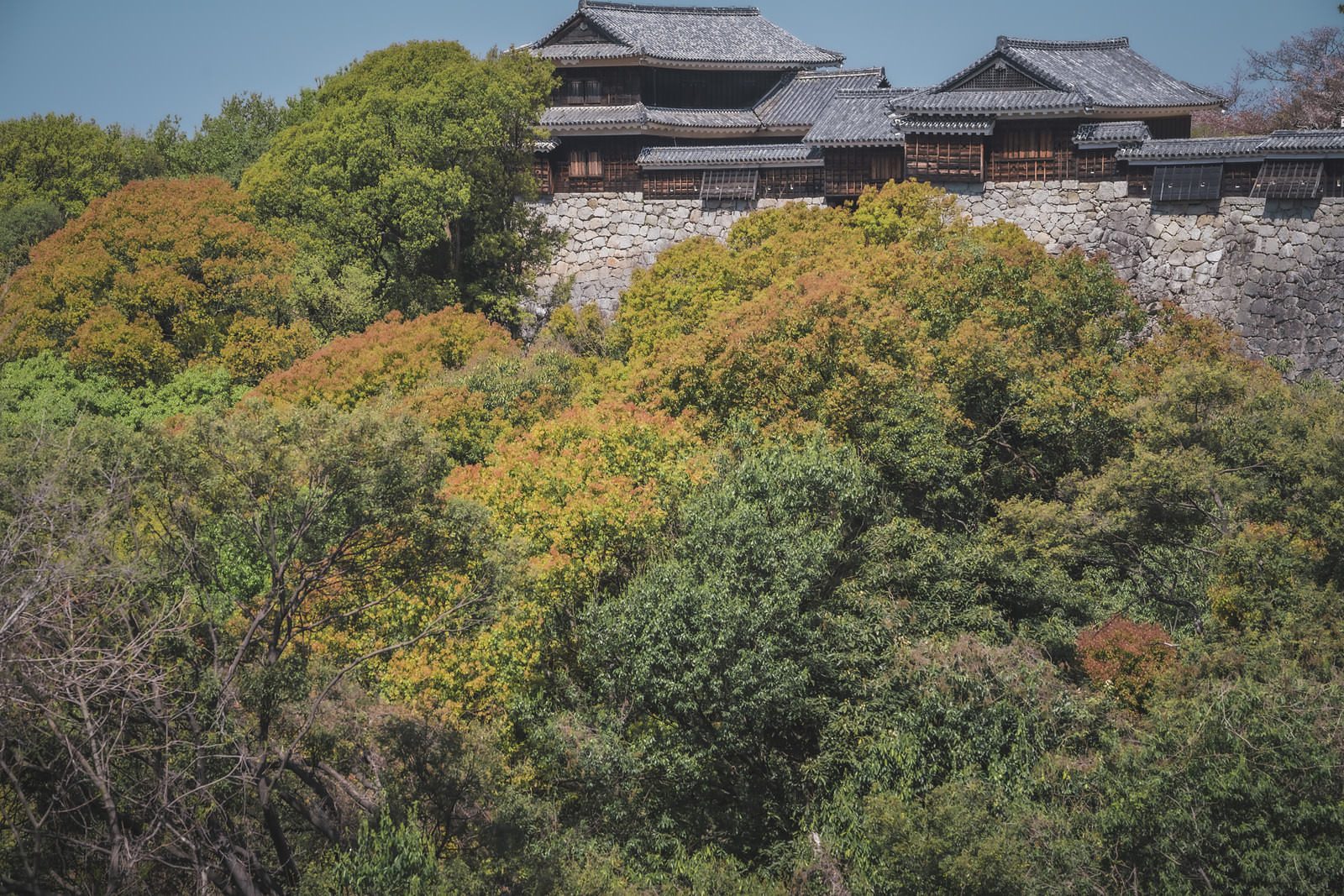
The Shikoku Mountains stretch east to west through the middle, separating the Inland Sea coast in the north from the Pacific coast in the south. The north coast along the Seto Inland Sea is mild and unusually dry, one of the sunniest and least rainy parts of the country, while the south coast on the Pacific around Kochi is warmer but far wetter, with more than double the rainfall. The best of the views in autumn lies in the mountains between them, and it comes in stages. The high peaks turn first through October, starting from Ishizuchi, the highest in western Japan at 1,982m, then the gorges follow in November. Iya Valley and the Oboke and Koboke gorges on the Yoshino River are the best places to go. Down on the coast, Ritsurin Garden in Takamatsu and the grounds of Matsuyama Castle hold on into early December.
The one thing to plan around is early autumn on the Pacific side. Typhoon season runs into October and southern Shikoku catches more than its share, so Kochi and the south coast can be wet and unsettled through September and into October. By November it has usually passed and you get clear, cool days.
Now, getting around takes a little more planning than other areas. Trains don't come as often, and the good stuff is often a bus or a drive from the nearest station. However, it can work in your favour as once you do get to these "hard to reach" places in mid November, you can enjoy it with no booking worries, no queue for the boat, and so on.
Beyond the capital
Exploring the Shikoku Region
Autumn in Shikoku rewards heading inland rather than sticking to the coastal circuits. The Shikoku Mountains of Tokushima and Kochi and the Ishizuchi range in Ehime colour across October and November, and the gorges, the high peaks, and the gardens and old towns below them sit close enough together to cover in a compact itinerary.
Saijo · Ehime
Mount Ishizuchi (石鎚山)
A sacred 1,982 metre peak in Ehime, its upper slopes turning early, often by early to mid October.
Mount Ishizuchi (石鎚山) in Saijo City in Ehime Prefecture is the highest peak in western Japan at 1,982 metres and one of Japan's Seven Sacred Mountains, used for Shugendo mountain ascetic training since the 7th century and still climbed today by white clad pilgrims during the annual Oyama-biraki mountain opening festival from July 1 to 10. The Ishizuchi Shrine complex has four sanctuaries up the mountain, with the Kuchi-no-Miya main shrine at the base, the Chugu Joju-sha middle shrine at the ropeway upper station, the Tsuchigoya Front Shrine, and the Chojo-sha summit shrine at the top. The climbing season runs from July 1 through late October and the autumn peak falls from mid October to early November when the maples and other deciduous trees on the lower slopes turn red and gold. The Ishizuchi Ropeway runs from the base station up to Sancho Joju Station near Joju Shrine in around 8 minutes, with the summit a further 3 hour walk that passes the Tameshi practice chain and then the First, Second and Third Chains used historically for ascetic training. Stair detours run around all of them. From JR Iyo-Saijo Station, Setouchi Buses run to the ropeway in around an hour.
General information
AddressMount Ishizuchi, Kamiukena District, Ehime, with the ropeway base at Nishinokawa, Saijo
AccessFrom Iyo-Saijo Station, a Setouchi bus to the Ishizuchi Tozan Ropeway base, then the ropeway to Joju Station at 1,300 metres
EntryMountain free, the Ishizuchi Tozan Ropeway around ¥2,200 round trip
HoursRopeway daytime, roughly 8:40 to 17:00 with seasonal variation
A vine suspension bridge over the Iya gorge, its planks spaced wide above the river, framed by colour in late October and November.
The Iya Valley (祖谷渓) in western Tokushima Prefecture served as a refuge for members of the defeated Taira (Heike) clan after the Genpei War of 1180 to 1185, with the surviving vine bridges in the valley said to have been built with vines that could be cut if their enemies approached. Of the 13 vine bridges that once crossed the Iya River, three remain in use today. The main Iya Kazurabashi is 45 metres long and suspended 14 metres above the river, woven from kiwi vines reinforced with hidden steel cables and rebuilt every three years as one of Japan's Three Strange Bridges and an Important Cultural Property. The deeper Oku-Iya Kazurabashi is a pair of bridges nicknamed Husband and Wife, in the eastern part of the valley near Mount Tsurugi. The steep wooded gorge walls turn red and orange at peak from early to mid November along the main bridge area, with the Oku-Iya peak slightly earlier from end of October to early November because of its higher elevation. The Oku-Iya bridges close from December to March. Iya Kazurabashi is reached by Shikoku Kotsu Bus from JR Oboke Station in around 30 minutes. Crossing fee is ¥550 for adults.
A 1,955 metre peak in central Tokushima, reached by a short chairlift from Minokoshi, with grassland and beech turning through October.
A short chairlift ride from Minokoshi at the foot of Mount Tsurugi (剣山) in central Tokushima Prefecture saves most of the climb up the mountain, leaving a walk of 30 to 45 minutes to the summit along wooden boardwalks through dwarf bamboo and alpine vegetation. The summit at 1,955 metres is a gently rounded plateau, unusual among Japanese mountains for being treeless and walkable rather than a rocky peak, with views all round across the Shikoku Mountains and on clear days as far as Mount Ishizuchi and the Kii Peninsula. The Mount Tsurugi Autumn Foliage Festival runs the full month of October each year as the dwarf bamboo, mountain ash and other alpine vegetation turn red and gold across the slopes. Mount Tsurugi is the second highest peak in western Japan after Ishizuchi and one of Japan's 100 famous mountains, with Shugendo ascetic practice on the slopes for over a thousand years. Otsurugi Shrine sits on a rocky outcrop on the trail with a sacred water spring nearby. Bus access from JR Awa-Ikeda Station runs via Kubo to Mi-no-Koshi, operating weekends and holidays from April to November, and is paired well with the Iya Valley vine bridges in a single Tokushima weekend.
AccessFrom Sadamitsu Station, a bus to Minokoshi at the foot of the mountain, then the chairlift
EntryMountain free, the chairlift around ¥1,900 round trip
HoursChairlift 9:00 to 16:30, seasonal
Phone+81 883 62 2772
Takamatsu · Kagawa
Ritsurin Garden (栗林公園)
A large strolling garden in Takamatsu, its maples reflected in the ponds at their peak in late November, with an evening light up.
The maple leaves at Ritsurin Garden (栗林公園) in Takamatsu in Kagawa Prefecture turn red and gold at peak in late November, reflected in the six ponds at the heart of the garden against a backdrop of Mt. Shiun rising to the west as the borrowed scenery of the design. The garden took around 100 years to complete through the early Edo period and was the private villa garden of the Takamatsu Domain lords from 1745 until the Meiji restoration opened it to the public in 1875, with 13 landscaped hills, around 1,400 pine trees and three landmark pines including the Neagari Goyomatsu that started as a bonsai gift from the 11th Shogun in 1833. The Kikugetsu-tei teahouse on the south pond serves matcha and seasonal sweets on tatami for ¥800 including tea, with the view across the pond toward Mt. Shiun the standard image of the garden in autumn. An annual evening illumination runs for around 10 days during the autumn foliage peak. Ritsurin Garden was designated a Special Place of Scenic Beauty in 1953 and is the largest cultural heritage garden in Japan to hold the designation. JR Ritsurin-Koen-Kitaguchi Station is a 3 minute walk from the north gate.
The mountain ruins of a copper mine worked for nearly three centuries, reached by guided microbus, with the stonework set among autumn colour.
A guided microbus tour from the Minetopia Besshi facility in Hadeba at the foot of the mountain runs up to the Tonaru Zone (東平) of the former Besshi Copper Mine in Niihama in Ehime Prefecture, with the narrow winding road only accessible to the small tour bus and the destination a mountain mining town abandoned for 50 years and slowly reclaimed by forest. The site, at 750 metres, holds the ruins of company housing, the former ore storage building, the 222 step incline staircase and the former ropeway terminal from when the town was the headquarters of the Besshi Copper Mine between 1916 and 1930 and was home to around 3,700 people. The Besshi Copper Mine operated for 283 years from 1691 to 1973 and accounted for around a quarter of Japan's national copper output at its 17th century peak. Autumn foliage on the surrounding mountain slopes turns red, orange and gold in October and November against the corroded brick and stone of the ruins, which are nicknamed the "Machu Picchu of the East". The Tonaru Historical Museum uses dioramas and photographs to show life on the mountain. Hadeba is 10 minutes by car from JR Niihama Station. Tonaru is closed Mondays and December to February.
AccessFrom Niihama Station, a bus or taxi to Minetopia Besshi, where the Tonaru zone tour departs
EntryMinetopia facility entry, with the Tonaru guided tour charged separately
Hours9:00 to 17:00
Phone+81 897 43 1801
Autumn moments
Seasonal Experiences and Events in Autumn
Now that you have a sense of how the season runs here, these are the highlights and experiences worth building an autumn visit around.
Prefecture map
Seasonal culture
Seasonal Food & Everyday Atmosphere
Autumn is the easiest season to eat well across Shikoku, and the four prefectures pull in four different directions. Kochi gets its bonito back off the Pacific with the fat on it, Ehime brings in the taro and the first of the citrus, Tokushima digs its sweet potatoes out of the sand at the mouth of the Yoshino River, and Kagawa lands its olive fed yellowtail from the middle of September. None of it is fussy food, and most of it is eaten close to where it is grown or caught.
戻り鰹 (Modori Gatsuo)
Returning bonito
Kochi's autumn bonito, back down the coast with the fat on it, seared over a straw fire.
Straw seared tataki, September to November
Bonito passes Kochi twice a year and the autumn fish is the fatter one. 戻り鰹 (Modori Gatsuo) is the catch heading back south down the Kuroshio between September and November, rich and soft, where the 初鰹 (Hatsu Gatsuo) of March to May is lean and clean. Both are eaten as たたき (tataki), seared hard over a straw fire so the outside chars and the middle stays raw, and Kochi takes it with salt rather than the ponzu used elsewhere. The straw burns fast and hot and the searing is done in the open, so it is worth watching as much as eating. 久礼大正町市場 (Kure Taishomachi Market) in Nakatosa is the fishing town version, a small covered market beside the port the boats come into. ひろめ市場 (Hirome Market) in Kochi City is the easy one, a hall of stalls with shared tables.
芋炊き (Imotaki)
Imotaki
Ehime's taro hotpot, cooked and eaten out on the riverbank at Ozu from late August to mid October.
Riverside taro hotpot
Imotaki is 里芋 (satoimo, taro) simmered with chicken, konjac and fried tofu, and in Ehime it is eaten outdoors on the riverbed rather than at a table. 大洲 (Ozu) is where it started, with the custom recorded there for more than 350 years and the riverside version running as an organised event since 1966. The 2026 season on the 肱川 (Hijikawa) runs from 28 August to the middle of October at the Hijikawa riverside ground, opening with the 初煮会 (first pot) on 28 August and a 観月会 (moon viewing) night on 25 September, both selling bowls at ¥500. The rest of the season is booked through the restaurants in town that take part, and they set the pots and the seating up on the bank for you. Other towns across Ehime run their own imotaki through September and October. Take a jacket, the river turns cold once the sun goes down.
鳴門金時 (Naruto Kintoki)
Naruto Kintoki sweet potato
Tokushima's sweet potato, grown in the sand at the mouth of the Yoshino River.
Roasted, in tempura and in sweets
鳴門金時 (Naruto Kintoki) is the sweet potato grown in the sandy coastal fields around 鳴門 (Naruto), 松茂 (Matsushige) and 北島 (Kitajima) where the Yoshino River meets the sea, and the prefecture counts it as one of its four brand ingredients alongside sudachi, Naruto wakame and Awa-o chicken. Digging runs from summer into autumn and stored potatoes are shipped on through the winter, so autumn is when the new crop is about. The skin is deep red, the flesh pale yellow, the texture floury, and the sweetness stays clean rather than turning syrupy. Eat it as 焼き芋 (yaki imo) from a stall as the weather cools, in tempura, or worked into wagashi and cakes, which is how most of Tokushima's souvenir counters sell it.
オリーブハマチ (Olive Hamachi)
Olive hamachi
Kagawa's farmed yellowtail, raised on olive leaf and sold from the middle of September.
Mid September to early January
オリーブハマチ (Olive Hamachi) is Kagawa's brand of farmed yellowtail, raised on feed mixed with powdered olive leaf from the island groves. The prefecture created it in 2008 to mark 80 years of yellowtail farming in Kagawa, and the polyphenol in the leaf slows the browning of the cut flesh, which is why it is served raw so often, as sashimi or as づけ丼 (zuke don), marinated and laid over rice. The season opens in the middle of September and runs to early January, with the fish at its best from October to December, and the larger grade sold later on is called オリーブぶり (Olive Buri). Takamatsu and the port towns along the Inland Sea coast are the easy places to find it, and it sits on the same menus as the olive fed beef and pork the prefecture also raises.
みかん (Mikan)
Mandarins
Ehime's citrus season opening, picked off stone terraces above the sea.
From mid September, sweeter as the season goes on
温州みかん (Unshu Mikan) is the most widely grown of Ehime's citrus and the crop comes in from around the middle of September into December, the early fruit greener skinned and sharper, the later fruit sweeter. Much of it grows on stone terraces cut into the slopes above the water in the 西宇和 (Nishiuwa) area around Yawatahama and on the Inland Sea islands, where the fruit takes sun from above, off the sea and back off the stone walls, which growers in Ehime call the three suns. The prefecture grows more than 40 kinds of citrus in all and the calendar runs almost the whole year, so autumn is the opening of it rather than the whole of it. Roadside stands and orchard picking through October and November are the easy way in.
Plan your trip
Book your stay in Shikoku
Search accommodation across Shikoku, from Takamatsu and Matsuyama city hotels to Iya Valley ryokan and Kochi riverside inns. Compare options across the major booking platforms.
Ready to plan your Shikoku trip?
Browse itineraries built around Shikoku in autumn, from the foliage ridges of Mount Ishizuchi to the vine bridges of the Iya Valley.