
This page has been translated from Japanese. If anything is unclear, please get in touch.
Spring region guide

Chubu in Spring

Setting the Scene

General Feeling of the prefecture

What makes Chubu worth visiting in spring is the variety of experiences you can get from it. The Japan Alps that run through the centre of the region create a divide between the Pacific side, which warms early and cherry blossoms come into bloom, and the mountain interiors and Japan Sea facing prefectures that experience winter considerably longer, with snow still on the ground higher up while the lower levels are fully green.

To put that in more detail, Aichi and Shizuoka in the south are close to the Pacific warmth and see cherry blossoms in late March to early April, broadly in step with Tokyo. Further north and inland into Nagano, Gifu, and Toyama the season runs later, sometimes by several weeks in the higher valleys, and cherry blossoms against a backdrop of snow capped peaks is not an unusual sight in April. However, by May the whole region has fully moved into spring.
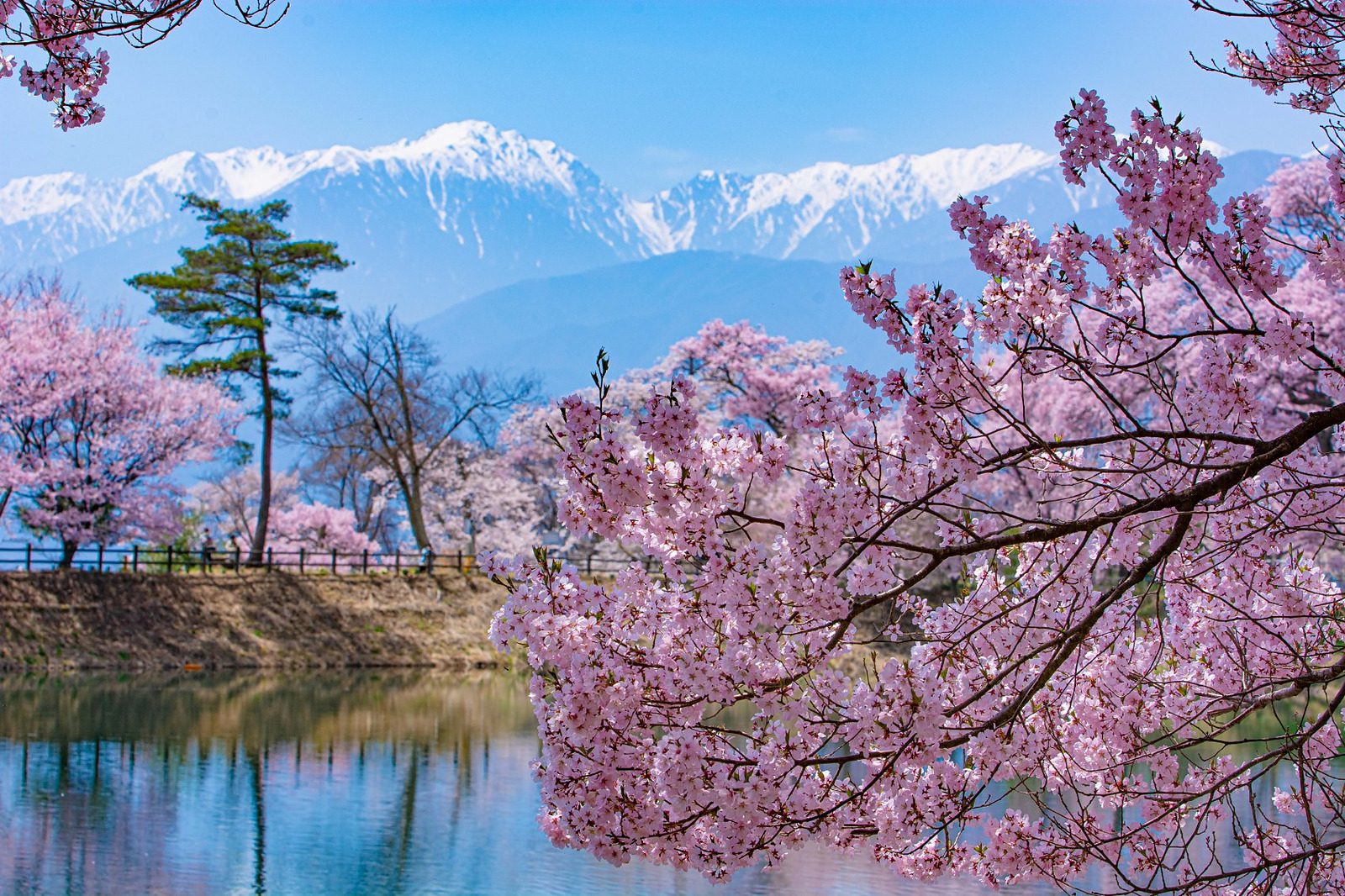
Cherry blossom below the snowy Alps at Rokudo no Tsutsumi in Ina

Again, because where you are and when you're there make a difference to what the weather would be like, it does take just a bit of extra consideration for what to pack. Layers like jackets or thermals are recommended and anyone planning to walk in the mountains or explore the more remote highland villages needs footwear that can handle uneven and potentially wet terrain.

Chubu is quite a large region with a lot of mountainous terrain so there are times when getting around can prove to be a little tricky. You can get around the major coastal cities with no problem, connecting Nagoya and Shizuoka quickly, but for the mountainy areas you're better off exploring with a combination of regional rail and rental car. But, it's definitely worth the hassle as some of the most extraordinary spring scenery in the region are in those areas. Spring is not Chubu's busiest season overall, though specific spots draw significant attention during peak blossom and the mountain areas begin to see visitors pick up from late April as conditions improve and accessibility opens up.

Beyond the capital

Exploring the Chubu Region

Spring in Chubu is one of the most varied and rewarding seasons to travel through the region. The combination of cherry blossoms in historic castle towns and preserved Edo era villages, the opening of the highland valleys after their winter closure, and the views of Mount Fuji across the flower fields and pine groves of Yamanashi and Shizuoka gives the season a range and depth that few other regions in Japan can match across the same period.

Kakamigahara · Gifu

Shinsakaigawa Hyakujuro Cherry Avenue (新境川堤の百十郎桜)

More than 1,000 Somei Yoshino arch over both banks of the Shinsakai River, first given by a local kabuki star in the early 1930s.

The embankments of the 新境川 (Shinsakai River) in Kakamigahara City in Gifu Prefecture carry one of the longest cherry corridors in the Tokai region, with more than 1,000 Somei Yoshino lining both banks and volunteers extending the planting year by year along around 13 km of the river. The trees are known locally as 百十郎桜 (Hyakujuro Zakura) after 市川百十郎 (Ichikawa Hyakujuro), a kabuki actor born in the area who became one of the best known performers in the Tokai region and later toured with his own troupe. In 1931 and 1932, as the new river channel was completed, he donated 1,200 cherry trees to line it in memory of the people who had died during its construction. Almost all of the original trees were cut for firewood and charcoal during the war, and more than a thousand were replanted afterwards, which is the avenue that blooms today. It is listed among 日本さくら名所100選 (Japan's Top 100 Cherry Blossom Spots). The 各務原市桜まつり (Kakamigahara City Cherry Blossom Festival), held for the 50th time from 28 March to 5 April in 2026, centres on 各務原市民公園 (Kakamigahara Civic Park) beside the river, with a stage programme, a market of local produce and ぼんぼり (bonbori / paper lantern) illumination along the banks in the evening. The red bridges over the river give the classic view, with the branches meeting above the water from both sides. Shiminkoen-mae Station on the Meitetsu Kakamigahara Line sits right beside the park, so the avenue makes an easy half day from Gifu or Nagoya. Walking the banks in early April, when the first petals start to fall onto the water, is the time to go.

General information
AddressNaka Monzen-cho, Kakamigahara-shi, Gifu-ken (Kakamigahara Civic Park)
AccessNext to Shiminkoen-mae Station on the Meitetsu Kakamigahara Line, reached from Meitetsu Gifu Station, or about 4 km by car from Kakamigahara IC on the Tokai Hokuriku Expressway
EntryFree
HoursOpen at all times, with paper lantern illumination in the evenings during the festival, 28 March to 5 April in 2026
ParkingAround 500 spaces at the civic park and Manabi no Mori car parks, plus temporary car parks during the festival, with traffic restrictions around the venue
Phone+81 58 383 9925
Matsumoto · Nagano

Matsumoto Castle (松本城)

A black walled National Treasure keep from the 1590s, one of twelve surviving original castles, ringed by moat and garden.

Matsumoto Castle (松本城) in Matsumoto City in Nagano Prefecture is one of Japan's 12 surviving original castle keeps and one of only five designated National Treasures alongside Himeji, Hikone, Inuyama and Matsue, with the oldest five tiered, six storied keep in the country, built between 1593 and 1594. The castle's black exterior earned it the nickname 烏城 (Karasu-jo / Crow Castle), and the combination of the black keep, the surrounding moat, the 300 cherry trees of four varieties including Somei Yoshino and weeping cherry along the outer walls and moats in pink bloom from early to mid April, and the snow capped 北アルプス (Northern Alps) visible beyond is one of the most recognised spring images in Japan. The 国宝松本城夜桜まつり (National Treasure Matsumoto Castle Night Cherry Blossom Festival) begins 3 days after the official declaration of blooming and runs for 8 days, falling on April 2 to 9 in 2026, with the keep and the 本丸庭園 (Honmaru Garden) illuminated from 6:30pm to 9pm on weeknights and to 10pm on Fridays and Saturdays. The 光の回廊 (Hikari no Kairo / Corridor of Light) installation along the outer moat runs for 10 days. The Honmaru Garden is open free of charge at night through the festival, with 箏 (koto), 尺八 (shakuhachi) and 雅楽 (gagaku / ancient court music) performed at the 月見櫓 (Tsukimi Yagura / Moon Viewing Turret), and a tea ceremony area and hanami dango stalls set up in the garden. JR Matsumoto Station is a 15 minute walk from the castle, around 2.5 hours from Tokyo Shinjuku Station on the JR Azusa Limited Express. Going in early April on a clear evening, when the keep and the Alps are both visible above the lit blossom, is the visit to plan for.

General information
Address4-1 Marunouchi, Matsumoto-shi, Nagano-ken
AccessApproximately 15 minutes on foot from Matsumoto Station on the JR Chuo Main Line
EntryPark free, castle keep ¥1,300 for adults by paper ticket or ¥1,200 by e-ticket, ¥400 for elementary and middle school students
Hours8:30 to 17:00, last entry 16:30, extended to 8:00 to 18:00 during Golden Week and summer, closed December 29 to 31
ParkingPaid car parks nearby, no dedicated parking at the castle itself
Phone+81 263 32 2902
Shirakawa · Gifu

Shirakawa-go (白川郷)

A World Heritage village of gassho-zukuri thatched farmhouses in the Shokawa Valley, still lived in by around 100 families.

Around 100 families still live in the gassho-zukuri thatched farmhouses of Ogimachi (荻町) in Shirakawa-go in the Shokawa River Valley in Gifu Prefecture, with the village registered as a UNESCO World Heritage Site in 1995 jointly with Gokayama in neighbouring Toyama Prefecture. The gassho-zukuri style (translating as "constructed like hands in prayer") features steeply pitched thatched roofs designed to withstand the heavy winter snowfall of the Shokawa Valley, with some of the farmhouses over 250 years old and built without nails. April and May are the village's spring window, when the valley emerges from the deep snow it is best known for and 山菜 (sansai / mountain vegetables) can be foraged in the surrounding forest as the cover retreats. Cherry blossoms bloom from mid April to early May, later than in Tokyo or Kyoto, with tulips and rapeseed also flowering and koinobori carp streamers flying above the rice paddies in May, when some traditional farmhouses open their paddies to visitors for 田植え (rice planting). The Ogimachi Castle Ruins Observation Deck (荻町城跡展望台) on the hillside above the village is a 15 to 20 minute walk uphill from the village centre and gives the panoramic view across the farmhouses, the cherry blossoms, and the snow capped peaks of the sacred Mt. Hakusan range. A free shuttle bus also runs to the deck. From Takayama Nohi Bus Center the bus to Shirakawa-go takes around 50 minutes, with similar buses also running from Kanazawa in around 75 minutes.

General information
AddressShirakawa-mura, Ono-gun, Gifu-ken
AccessApproximately 50 minutes by bus from Takayama Station on the JR Takayama Main Line to the Shirakawago bus stop
EntryFree to enter the village, with admission charged at individual gassho-zukuri house museums
HoursOpen to day visitors, designated parking 8:00 to 17:00 with last entry 16:30, night access for overnight guests only
ParkingSeseragi Park Parking Area, around 200 spaces, ¥2,000 per car, around 5 minutes walk to the village, tourist vehicles not allowed inside
Phone+81 5769 6 1311
Takayama · Gifu

Takayama Old Town (高山古い町並み)

Edo period merchant streets along the Miyagawa River in the Hida mountains, with sake breweries and morning markets.

The red Nakabashi Bridge (中橋) over the Miyagawa River in Takayama (高山) in Gifu Prefecture is the central spring image of the town, with cherry trees lining both sides of the river around it and the elaborate floats of the Takayama Spring Festival (Sanno Matsuri) parading across it on April 14 and 15 each year. The festival floats are nationally designated cultural assets and the festival is one of Japan's most beautiful annual events, coinciding with the cherry blossom peak in the mountainous Hida region in mid to late April, around two to three weeks after Tokyo. The Sanmachi District in the centre of town is a designated Preservation District for Groups of Traditional Buildings, with three streets of machiya townhouses running north to south on the east side of the Miyagawa River, most dating from the Edo period (1600 to 1868). Kami-Sannomachi is the main street through the district, lined with sake breweries, hoba miso shops and Hida beef sushi stalls. Two morning markets run daily, the Miyagawa Market along the river and the Jinya-mae Market at the former local government office Takayama Jinya. JR Takayama Station is around 2.5 hours from Nagoya on the JR Limited Express Hida, with the Sanmachi District a 15 minute walk from the station.

General information
AddressTakayama-shi, Gifu-ken
AccessApproximately 2 hours 20 minutes by limited express train from Nagoya Station on the JR Takayama Main Line to Takayama Station, then approximately 10 minutes on foot to the old town
EntryFree to walk the preserved streets, with admission charged at individual merchant house museums
HoursStreets open at all times, with shops generally open from around 9:00 to 17:00
ParkingPaid municipal car parks nearby, no parking within the district
Phone+81 577 32 3333
Inuyama · Aichi

Inuyama Castle (犬山城)

One of twelve surviving original keeps, on a hill above the Kiso River, among the oldest in Japan.

Inuyama Castle (犬山城) on a hill above the Kiso River in Inuyama City in Aichi Prefecture is one of Japan's twelve surviving original castle keeps and one of only five designated National Treasures alongside Himeji, Matsumoto, Hikone and Matsue, with the original wooden tower dating to 1537 making it among the oldest extant in the country. The castle was built by Oda Nobuyasu, uncle of the famous warlord Oda Nobunaga, and changed hands repeatedly among the Oda, Toyotomi, Tokugawa, Ikeda and Ishikawa clans during the Sengoku period before settling with the Naruse family at the start of the Edo period. The castle was privately owned by the Naruse family until 2004. Cherry blossoms bloom along the Kiso River below the castle and across the castle grounds from late March to early April, with the Inuyama Festival on the first weekend of April adding 13 yama floats, each ten metres tall, and karakuri mechanical puppets that have given the event its UNESCO Intangible Cultural Heritage designation. The view from the top floor of the castle takes in the Kiso River, the Nobi Plain, and on clear days Mt. Ontake and Gifu Castle in the distance. From Nagoya Station, the Meitetsu Inuyama Line runs to Inuyama-Yuen Station in around 30 minutes, with a 15 minute walk to the castle.

General information
Address65-2 Kitakoken, Inuyama-shi, Aichi-ken
AccessApproximately 5 minutes on foot from Inuyama-Yuen Station on the Meitetsu Inuyama Line, or approximately 20 minutes by train from Nagoya on the same line
Entry¥550 for adults, ¥110 for children under 14
Hours9:00 to 17:00, last admission 16:30, closed December 29 to 31
ParkingSeveral paid car parks near the castle, crowded on weekends and holidays
Phone+81 568 61 1711
Spring moments

Seasonal Experiences and Events in Spring

Now that you have a sense of how the season runs here, these are the highlights and experiences worth building a spring visit around:

Prefecture map

Seasonal culture

Seasonal Food & Everyday Atmosphere

Spring in Chubu is one of the most diverse and rewarding seasons to eat through the region. The geography that makes Chubu so visually varied, the Japan Alps, the Pacific coastline, the Japan Sea facing prefectures, and the fertile river valleys between them, produces an equally varied range of seasonal ingredients that reflect where they come from in ways that are immediate and distinctive.

桜えび (Sakura Ebi)

Sakura shrimp

Translucent pink shrimp from Suruga Bay, fished commercially only off Shizuoka, raw or fried as kakiage.

Raw as sashimi or fried as kakiage

桜えび (Sakura Ebi) are fished commercially in only one place in the world, Suruga Bay off Shizuoka, where the water drops to 2,500 metres close inshore and the shrimp rise at night. There are two seasons, spring from late March to early June and a shorter autumn one, and the fishery is run by a cooperative that pools the catch and closes it when numbers fall, which is why the volume moves so much year to year. Fresh, they are eaten raw as sashimi, translucent and sweet. Fried, they go into 桜えびのかき揚げ (Sakura Ebi Kakiage), a fritter that concentrates the flavour and is the version most people meet first. The sight worth timing a visit for is the drying. The whole catch is spread out on gravel banks along the Fuji River at Yui and Ōigawa on clear spring days, turning several hectares of riverbed pink.

ホタルイカ (Hotaru Ika)

Firefly squid

Toyama Bay in spring, when the squid come into the shallows and light up the water at night.

Boiled with vinegar miso, sashimi, or tempura

ホタルイカ (Hotaru Ika) come into Toyama Bay in spring to spawn, and because the seabed shelves steeply almost to the shoreline they arrive in water shallow enough to see them in. The squid carry light producing organs along the arms and body, and a net hauled at night comes up glowing blue. Boats out of Namerikawa run before dawn viewing trips from late March to early May, and the town has a museum devoted to the animal. The eating is the other half. The squid are more strongly flavoured and briny than ordinary squid, boiled whole and dressed with 酢味噌 (sumiso), eaten as sashimi when the boat has just come in, or fried in tempura. They are small enough to eat in one, and the ink and the innards are part of it rather than something removed.

白エビ (Shiro Ebi)

White shrimp

Toyama Bay's other shrimp, almost transparent, with the season opening on 1 April.

Sashimi, tempura, or over rice

白エビ (Shiro Ebi) are almost transparent in the water and turn faintly pink once landed, which is where the local nickname, the jewel of Toyama Bay, comes from. They live in the deep trenches that run close to the Toyama shore and are fished commercially at scale nowhere else in Japan, with the season opening on 1 April and running through to late autumn, so spring is when they reappear rather than the whole of it. They are tiny and have to be peeled by hand, which is most of the reason they cost what they do. Eaten as sashimi they are clean and sweet with almost no shrimp bite to them, and 白エビ丼 (Shiro Ebi Don), a bowl of them over rice, is the dish to order in Toyama City. The tempura and kakiage versions are easier to find and the sweetness concentrates in the heat.

ます寿司 (Masu Zushi)

Trout sushi

Toyama's pressed trout sushi, tied to the spring river trout season, sold in round wooden boxes.

Pressed sushi in a round wooden box

Trout sushi is one of Toyama's signature regional foods and is directly tied to the spring river trout season when the fish are caught in the rivers flowing down from the Japan Alps into the Japan Sea. Seasoned trout is pressed over vinegared rice and wrapped in bamboo leaves in a circular wooden mould, producing a dish that is as visually distinctive as it is flavourful. It has been made in Toyama for centuries and is one of those regional specialities that is inseparable from the identity of the prefecture. Buying it fresh in Toyama in spring, when the trout is at its seasonal peak, is a very different experience from the packaged version available as a souvenir elsewhere.

初鰹 (Hatsu Gatsuo)

First bonito of the season

The first bonito of the year off the Shizuoka coast, prized in spring and often eaten as tataki.

Often seared as tataki

First bonito of the season arrives off the Pacific coast of Shizuoka in spring as the fish migrate north along the Kuroshio Current and the first catch of the year is a seasonal food event people wait for. The spring bonito is leaner and cleaner in flavour than the rich, fattier autumn variety, and it is traditionally eaten as sashimi with grated ginger and spring onion rather than wasabi, a preparation that suits the lighter character of the fish. There is a Japanese saying that suggests it is worth pawning your wife's kimono to eat the first bonito of the season, which gives some indication of how seriously the arrival of hatsu gatsuo has been taken historically.

わさび (Wasabi)

Fresh wasabi

Fresh wasabi from Shizuoka's spring fed farms, grated to order and unlike the tube paste.

Freshly grated to order

Fresh wasabi is closely identified with Shizuoka prefecture, and spring is when awareness of it is highest as the season brings visitors to the wasabi farms of the Izu Peninsula and the Abe River valley where it is grown in clear, cold mountain water. Fresh wasabi grated at the table on a sharkskin grater has a heat and fragrance that is completely different from the tube or powder version used everywhere else. It is bright, aromatic, and complex rather than simply sharp, and the difference is significant enough that experiencing real wasabi in Shizuoka in spring changes how you think about the ingredient permanently. It is used across sashimi, soba, and a range of local dishes in the region and finding it fresh is easy in the areas where it is grown.

Plan your trip

Book your stay in Chubu

Search accommodation across Chubu, from Nagano mountain towns to Kanazawa and the cities of the Japan Alps. Compare options across the major booking platforms.

AdultsAges 18 or above
2
ChildrenAges 0–17
0
Book with
Pick a site. Your dates and details are carried over so you can check prices and book there.

Ready to plan your Chubu trip?

Browse itineraries built around Chubu in spring, from castle cherry blossoms to the snow lined valleys of the Japan Alps.

View Chubu Itineraries →