This page has been translated from Japanese. If anything is unclear, please get in touch.
Spring region guide

Chugoku in Spring

Now you might think of Hiroshima when you think of Chugoku and while that is the region’s most famous city, with plenty to do in spring such as seeing around 750,000 tulips at the Sera Kogen Farm in bloom and visiting Itsukushima Shrine on Miyajima Island, there are actually a lot of different places to explore. So, the next time you’re planning a spring trip to Japan, consider adding some of these other Chugoku destinations to your itinerary.

Setting the Scene

General Feeling of the prefecture

Chugoku doesn't announce itself the way Kansai or Kanto does, and that is a significant part of its appeal. Spring arrives across the region with the same beauty as anywhere else in Japan but without the weight of global expectation that follows the more celebrated destinations. The blossom seasons, the flower fields, and the coastal landscapes of both the San'yo and San'in sides unfold at their own pace and largely on their own terms. For travellers who have already experienced Japan's headline spring destinations or who simply prefer a quieter entry point into the country, Chugoku offers something that is increasingly difficult to find elsewhere.

The two coastlines that define Chugoku's geography give spring a different texture depending on which side of the region you are on. The San'yo coast facing the Seto Inland Sea benefits from a sheltered, mild climate that makes it one of the earlier parts of the region to warm up. Cherry blossoms arrive here in late March to early April, the sea sits calm and glittering between islands, and the overall atmosphere is gentle and unhurried. The San'in coast to the north facing the Japan Sea is cooler and slower to shake off winter, with spring arriving noticeably later and the landscape holding onto a rawer, more windswept character well into April. Both sides are worth experiencing and together they give Chugoku a range that a single coastal orientation could never provide.
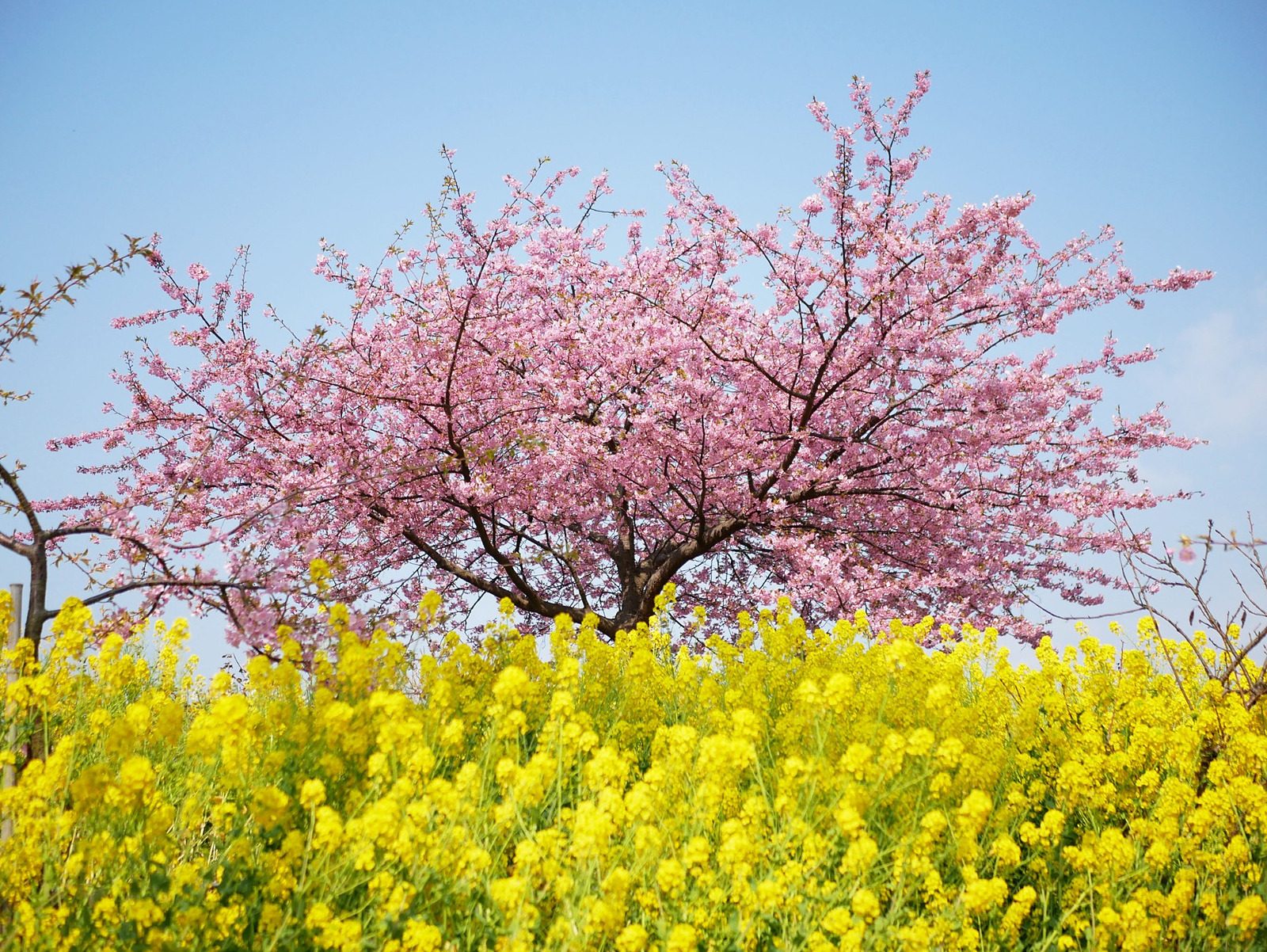
Kawazu cherry and rapeseed flowers on Kasado Island

Temperatures reflect that divide between north and south through spring. The San'yo side warms quickly and by May is comfortably mild, while the San'in coast remains cool and occasionally unsettled through much of April. Layering remains sensible across the region through the earlier part of the season, with a waterproof layer worth having particularly on the Japan Sea side where spring weather can be changeable. By May the whole region has settled into comfortable travelling conditions and the combination of mild temperatures, long days, and relatively low tourist numbers makes it one of the more relaxed spring experiences available in Japan.

Getting around Chugoku requires some planning given how the region's geography stretches east to west across a considerable distance. The San'yo Shinkansen connects the major cities along the southern coast efficiently, but the San'in coast to the north is slower and more deliberate in its transport connections. A rental car opens up the coastline and rural interior considerably and is the most practical way to move through the less connected parts of the region. That slower pace of travel suits Chugoku well in spring, rewarding those who are willing to take their time rather than move quickly between major stops.
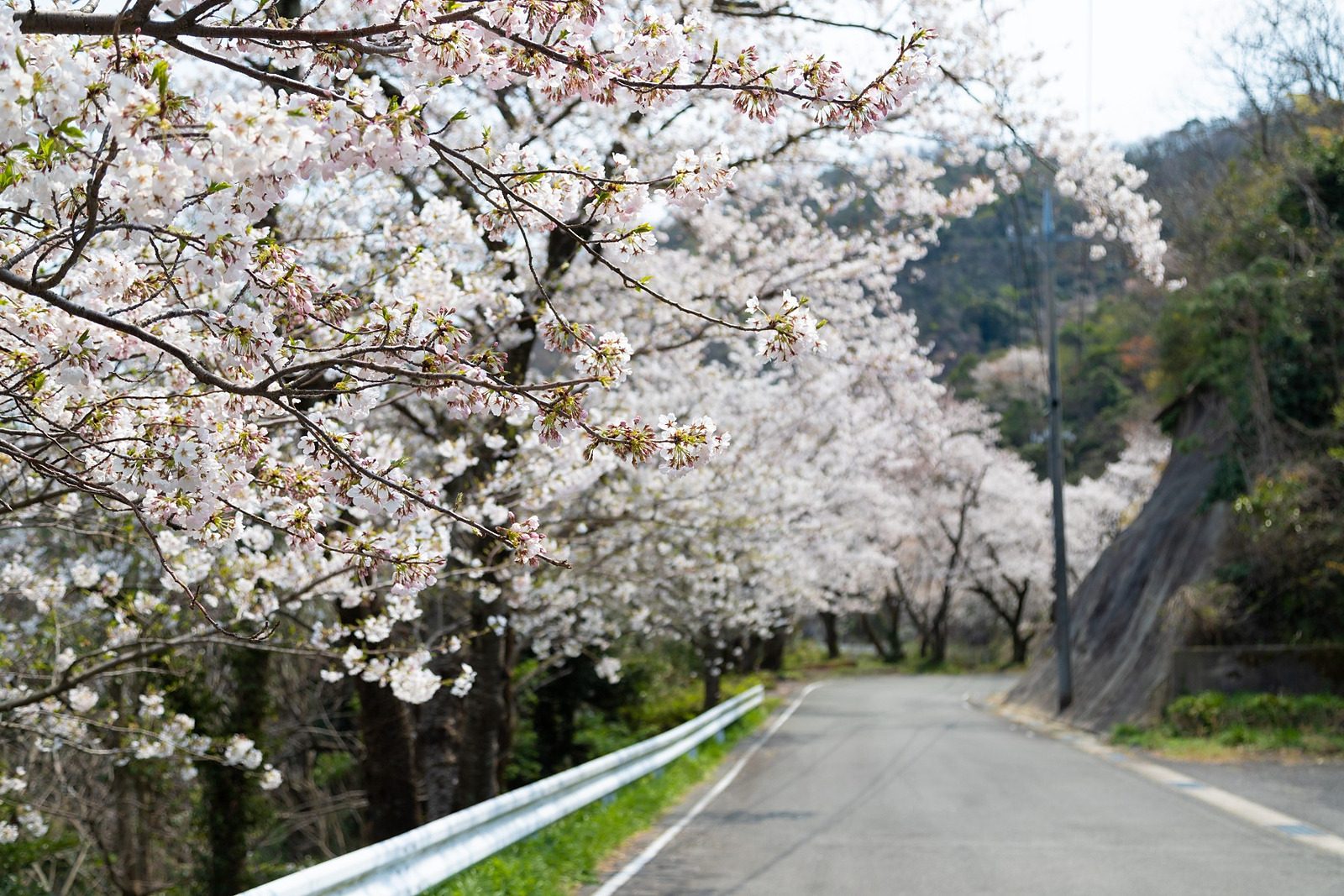
Cherry trees along a road in Shimane
Beyond the capital

Exploring the Chugoku Region

Spring in Chugoku is a season of cherry blossoms across castle ruins, historic gardens, and the coastal landscapes of the Seto Inland Sea and the Japan Sea coast. The region is less visited than Kansai or Kanto in spring which means that several of the destinations below offer blossom experiences of genuine quality with a fraction of the crowds that define the more celebrated spring destinations to the east. The spots below cover the full geographic range of the region from the Inland Sea coast to the Japan Sea facing prefectures of the north.

Miyajima · Hiroshima

Miyajima Itsukushima Shrine (宮島 厳島神社)

The vermilion World Heritage shrine built over the tidal flats, appearing to float at high tide, with its great offshore torii gate.

The Senjokaku, a large open wooden hall on the hill above Itsukushima Shrine on Miyajima island in the Seto Inland Sea off Hiroshima, was begun by Toyotomi Hideyoshi in 1587 and left unfinished after his death in 1598, with the hall's open platform of 857 tatami mats looking out across a cluster of cherry trees that bloom around April 1 towards the vermilion Otorii Great Torii Gate standing offshore in the water of the shrine. Itsukushima Shrine itself was rebuilt in 1168 by Taira no Kiyomori as his clan's family shrine and was inscribed as a UNESCO World Heritage Site in 1996 along with the primeval forests of Mount Misen behind it, with the buildings constructed over the tidal flats on wooden pillars so that they appear to float at high tide. Miyajima is one of Japan's Three Most Scenic Views alongside Matsushima and Amanohashidate. The five storey pagoda built in 1407 stands beside the Senjokaku and the Mount Misen ropeway from the interior of the island climbs to a summit viewpoint across the Inland Sea. Itsukushima Shrine is illuminated nightly until 11pm. From Hiroshima Station the JR Sanyo Line runs to Miyajimaguchi Station in around 30 minutes, with a 10 minute ferry to the island including a ¥100 visitor tax.

General information
Address1-1 Miyajimacho, Hatsukaichi-shi, Hiroshima-ken 739-0588
AccessApproximately 10 minutes by ferry from Miyajimaguchi Port, which is approximately 30 minutes by train from Hiroshima Station on the JR Sanyo Main Line
Entry¥300 for adults, treasure hall charged separately
Hours6:30 to 18:00, varies by season
Phone+81 829 44 2020
Onomichi · Hiroshima

Senkoji Park (千光寺公園)

A hillside park above the Onomichi Channel with around 1,500 cherry trees, a temple walk, and views over the Seto Inland Sea.

Around 1,500 cherry trees of around 20 varieties cover the slopes of Senkoji Park (千光寺公園) on Mount Senkoji above the historic port town of Onomichi in Hiroshima Prefecture, with peak bloom in late March and early April and the park listed among Japan's Top 100 Cherry Blossom Spots. The summit gives a panoramic view across the old town rooftops to the Seto Inland Sea and the chain of small islands beyond, and there are now two separate places to take it in. The Senkoji Temple Summit Observatory PEAK, reopened in 2022 and connected to the ropeway summit station by lift, is the higher of them. MiTeMi, completed in March 2022 on the site of the former Onomichi Castle and given its name by public competition later that year, is the other, a two storey structure that leaves the old castle stonework exposed and carries an 80 square metre viewing deck on its upper floor, open around the clock. Senkoji Temple itself, founded in 806 by the monk Kobo Daishi, has a vermilion lacquered main hall known as the Akado or "Red Hall", rebuilt in 1686 and standing on a raised platform that juts out from the cliff face. The way up on foot is the Old Temple Walk (古寺めぐりコース), a stone paved path of about 2 kilometres that threads the hillside from Jikoji near the station east to Kairyuji and takes in around 25 temples and shrines, roughly 3 hours end to end if you stop at them. The Senkoji Ropeway is the quick alternative, 3 minutes for the climb with departures every 15 minutes and adult fares ¥500 one way or ¥700 round trip. Lanterns light the trees at night for evening cherry viewing. JR Onomichi Station is around 15 minutes' walk from the ropeway base station and is reachable from Hiroshima via Fukuyama Station on the Shinkansen, and it is also the mainland end of the Shimanami Kaido, so a blossom morning on the hill pairs with an afternoon on the first islands of the cycling route.

General information
Address19-1 Nishitsuchido-cho, Onomichi-shi, Hiroshima-ken 722-0032
AccessApproximately 3 minutes by ropeway from Onomichi Ropeway Station, which is approximately 10 minutes on foot from Onomichi Station on the JR San'yo Main Line
EntryFree, Senkoji Ropeway ¥500 one way or ¥700 return, children ¥250 and ¥350
HoursPark and MiTeMi viewpoint open at all times, ropeway 9:00 to 17:15 with seasonal extensions
ParkingPaid car park near the summit, around ¥800
Phone+81 848 38 9184
Maniwa · Okayama

Daigo-zakura (醍醐桜)

A single Azuma higan cherry in the Maniwa hills, said locally to be 1,000 years old and lit up at night while it is in bloom.

Daigo-zakura (醍醐桜) is one cherry tree, an Azuma higan, standing alone on a hillside above the hamlet of Bessho in Maniwa, northern Okayama. Estimates put its age at around 700 years and local tradition at 1,000. It is 18m tall, 7.1m round the trunk at chest height and 9.2m round the base, and its branches spread about 20m in every direction. It has been an Okayama Prefecture natural monument since 1972. The name comes from a legend that Emperor Go-Daigo stopped to admire the tree in 1332 on his way into exile on the Oki Islands. The small pale blossom usually opens from late March to early April. The Daigo-zakura Festival runs from first bloom until the leaves come through, with food stalls from 9am and the tree lit up from 6:30pm to 9pm. No train or bus goes to the tree. By car it is about 30 minutes from Hokubo IC on the Chugoku Expressway, the last 10km on narrow mountain roads that run one way at peak bloom and back up at weekends. Without a car, a taxi from JR Tsukida Station takes about 15 minutes. On busy weekends it is easier to park lower down by the katakuri flower colony at the foot of the hill and walk about 2km up to the tree.

General information
Address2277 Bessho, Maniwa-shi, Okayama-ken 719-3157
AccessApproximately 30 minutes by car from Hokubo IC on the Chugoku Expressway, or about 15 minutes by taxi from JR Tsukida Station
Best timeLate March to early April
Light up18:30 to 21:00 during the festival
ParkingThree paid car parks, busy at peak bloom
Phone+81 867 52 1111
Okayama · Okayama

Korakuen Garden (後楽園)

One of Japan's three great gardens, a circuit landscape of pond, lawns and teahouses with Okayama Castle across the river.

Korakuen (後楽園) in Okayama City is one of Japan's Three Great Gardens alongside Kenrokuen in Kanazawa and Kairakuen in Mito, completed in 1700 by Ikeda Tsunamasa, the 2nd lord of the Okayama Domain, after 14 years of construction. The garden is unusual among Japanese gardens for its open central lawns, with a large pond at the centre, channelled streams, tea houses, a tea plantation, rice fields, and a crane aviary that holds eight red crowned cranes released into the garden every New Year's Day. Spring brings two flowering events across roughly six weeks, with the plum grove of around 100 red and white trees blooming from late February to early March before the 280 Somei Yoshino cherry trees across the garden flower from late March into early April and form a tunnel of blossom along the Horseback Riding Ground and the path through the South Gate. In early April the 岡山さくらカーニバル (Okayama Sakura Carnival) runs on the Asahi River bank just outside the garden, where around 250 cherry trees are lit from sunset to 9pm with the castle visible above the blossom across the water. From late April into early May, once the blossom has gone, the 幻想庭園 (Genso Teien) evening opening lights the pond, the teahouse buildings, the lawns and the paths across the whole garden from 6pm to 9:30pm, with Okayama Castle illuminated at the same time on the far bank and a tea ceremony running at the 延養亭 (Enyo-tei) South Lawn. The lookout point on Yuishinzan Hill gives the most photographed view across the largest pond towards Okayama Castle, nicknamed the "Crow Castle" for its black exterior and reconstructed in 1966 after wartime destruction, sitting on the other side of the Asahi River and connected to the garden by the Tsukimi Bridge. Admission is ¥500, or ¥720 for the combined ticket with the castle, with JR Okayama Station around 25 minutes' walk from the garden, 5 minutes by tram on the Higashiyama Line to Shiroshita stop plus a 10 minute walk, or around 15 minutes by bus. The two spring events fall in early and late April and give the garden and the castle two completely different evenings across the same month.

General information
Address1-5 Korakuen, Kita-ku, Okayama-shi, Okayama-ken 703-8257
AccessApproximately 15 minutes on foot from Okayama Station on the JR Sanyo Main Line, or approximately 5 minutes by streetcar to the Shiroshita stop
Entry¥500 for adults, free for high school students and younger
Hours7:30 to 18:00 in spring and summer, 8:00 to 17:00 in winter
ParkingPaid car park nearby
Phone+81 86 272 1148
Hiroshima · Hiroshima

Shukkeien Garden (縮景園)

A compact Edo period circuit garden of miniature landscapes around a central pond, rebuilt after the atomic bombing.

Shukkeien (縮景園) in Naka-ku, Hiroshima was laid out in 1620 by the tea master Ueda Soko for Asano Nagaakira, the first Asano lord of Hiroshima. Its name means "shrunken scenery", and the garden compresses valleys, mountains and a coastline into a circuit walk of a few hundred metres, looping the central Takuei Pond, crossing the arched Kokokyo Bridge and passing a scattering of islets, tea houses and miniature landscapes modelled on scenery from around the country. The garden stands around 1.3 kilometres from the hypocentre and was destroyed in the atomic bombing of 6 August 1945, when the grounds also served as a refuge for people fleeing the city centre. It was restored and reopened in 1951, and a handful of trees that survived the blast still stand among the newer plantings. Spring arrives in two parts, with the plum grove flowering from late February and the cherry trees following from late March into early April, when the blossom along the pond edge is lit in the evenings. Azaleas then colour the banks and islets around the pond from mid April into early May. The Hiroshima Prefectural Art Museum adjoins the garden and a combined ticket covers both. Admission is ¥260, and the streetcar from Hiroshima Station reaches the Shukkeien-mae stop in around 15 minutes.

General information
Address2-11 Kaminoboricho, Naka-ku, Hiroshima-shi, Hiroshima-ken 730-0014
AccessApproximately 15 minutes by streetcar from Hiroshima Station to the Shukkeien-mae stop
Entry260 yen for adults
Hours9:00 to 18:00 April to September, to 17:00 October to March
ParkingPaid car parks nearby, public transport recommended
Phone+81 82 221 3620
Spring moments

Seasonal Experiences and Events in Spring

Now that you have a sense of how the season runs here, these are the highlights and experiences worth building a spring visit around:

Prefecture map

Seasonal culture

Seasonal Food & Everyday Atmosphere

Spring in Chūgoku is a season defined by balance between land and sea. As the region moves out of winter, the Seto Inland Sea begins to warm while the mountainous interior brings forward its first seasonal harvests. The result is a mix of fresh seafood, delicate greens, and ingredients that are closely tied to local traditions. It is a region with a quieter but deeply rooted food identity, and spring brings out some of its most understated and rewarding flavours.

真鯛 (Madai)

Sea bream

Setouchi sakura-dai, running through the narrows to spawn, cooked whole with rice as tai-meshi.

Sashimi, simmered, or tai-meshi

Spring is when madai is at its best in the Seto Inland Sea, and the fish caught then is called 桜鯛 (sakura dai). The Inland Sea's particular claim is the water itself. The tide is forced through a series of narrows between the islands, and bream that hold in those currents come out firm fleshed and lean rather than soft. The season peaks as the fish gather to spawn from April. It is eaten as sashimi and salt grilled, but the regional dish is 鯛めし (Tai Meshi), a whole bream laid on rice and cooked with it so the stock runs through the grain, then flaked and mixed at the table. Hiroshima and Okayama both do it. Kanto buys this fish at market alongside everyone else's. Here it is pulled out of the channel down the road.

いかなご (Ikanago)

Sand lance

The young fish boiled down into kugini in early spring, a batch cooking tradition along the Inland Sea.

Simmered as ikanago no kugini

いかなご (Ikanago) are fished as tiny young fish, シンコ (shinko), in a season that opens in late February or early March and can be over in a fortnight, and the whole point is what happens next. They are simmered hard in soy, sugar, mirin and ginger until they stiffen and curl into shapes said to resemble rusty nails, which is where the name くぎ煮 (kugini) comes from. It is made at home in large batches while the fish are in, and the smell of it carries through whole neighbourhoods for the week or two the season lasts. The custom is strongest around Akashi and the Harima coast at the eastern end of the Inland Sea and carries along the Okayama shoreline, so it belongs to the Inland Sea rather than to any one prefecture. The finished kugini keeps for months and is eaten a few pieces at a time with rice.

シラウオ (Shirauo)

Ice goby

Lake Shinji's translucent spring fish, netted from small boats below Matsue Bridge from February to April.

Shimane, as kakiage or raw

シラウオ (Shirauo) is a small, almost transparent fish that runs into 宍道湖 (Lake Shinji) in Shimane to spawn between February and April, and it is one of the lake's seven named specialities. The traditional method is a 四つ手網 (yotsude ami), a square dip net on crossed poles worked from a small boat, and the stretch below 松江大橋 (Matsue Bridge) is where it was done. The fish is two or three centimetres long, eaten whole, and has almost no flavour of its own beyond a clean sweetness, so the preparations are about texture. 白魚のかき揚げ, a fritter of them bound in light batter, is the dish the agriculture ministry lists as Shimane's own, and the fish is also served raw in a vinegared dressing or dropped into a clear soup. It is not to be confused with しらす, which is a different fish entirely.

わけぎ (Wakegi)

Wakegi scallions

Hiroshima grows most of Japan's wakegi, and the crop peaks for the Doll Festival in early March.

Hiroshima, late February to March

わけぎ (Wakegi) is a scallion that multiplies from the bulb rather than setting seed, and Hiroshima grows roughly 60 per cent of the national crop. Shipping runs October to November and again from late February to March, and the peak is the first days of March, because the demand is 雛祭り (Hinamatsuri), the Doll Festival on 3 March. It is eaten there as a lucky food. One bulb divides into fifty or more inside six months, so it reads as 子孫繁栄, a family multiplying, in the same way the Okinawan field taro does at New Year. 向島 (Mukaishima) and the small island of 岩子島 (Iwagijima) in Onomichi produce the large majority of it. The dish is わけぎのぬた (Wakegi no Nuta), which the agriculture ministry lists as Hiroshima's own. The scallions are boiled and dressed in white miso beaten with sugar, vinegar and mirin, usually with boiled octopus through it, so it arrives as a cold dressed plate rather than a cooked one.

Plan your trip

Book your stay in Chugoku

Search accommodation across Chugoku, from Hiroshima and Okayama city hotels to Matsue lakeside inns and Izumo guesthouses. Compare options across the major booking platforms.

AdultsAges 18 or above
2
ChildrenAges 0–17
0
Book with
Pick a site. Your dates and details are carried over so you can check prices and book there.

Ready to plan your Chugoku trip?

Browse itineraries built around Chugoku in spring, from castle park cherry blossoms to the floating torii of Miyajima.

View Chugoku Itineraries →