What spring feels like
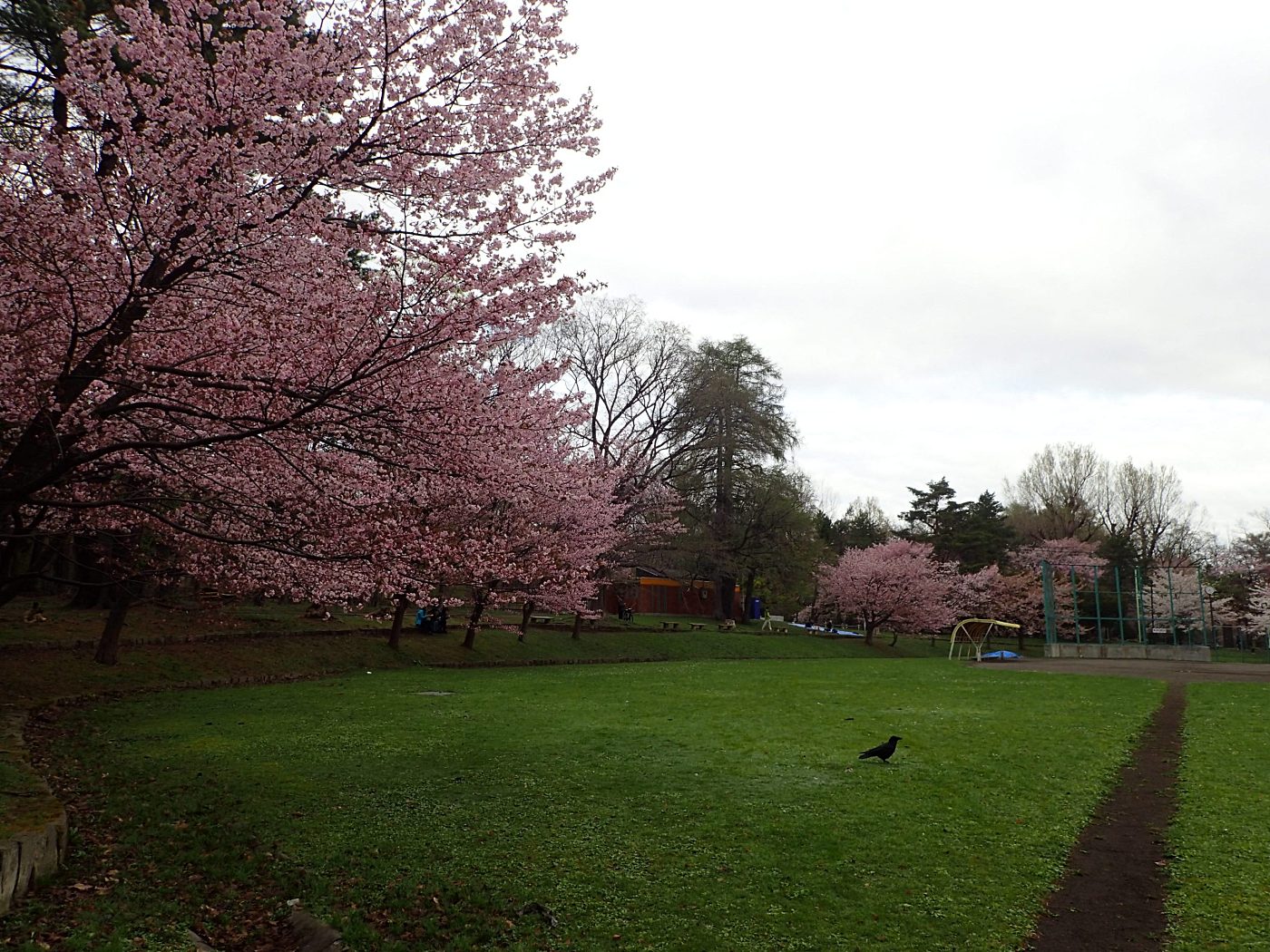
Spring in Hokkaido runs from late April through early June, arriving noticeably later than the rest of Japan. In April, temperatures in Sapporo are on the border between cold and mild, and in the more rural and elevated areas it can still feel just like winter, with a fair amount of snow lingering well into the month. By May, things warm up considerably with temperatures reaching the high teens, and by June much of the island is lush and mild, sitting comfortably in the low to mid twenties.
While this slow transition can be a plus as you can experience two seasons almost at the same time, it does mean that you might need to pack a little extra to be comfortable in both conditions. This is definitely the case if you're out and about in the evenings or going to places like Daisetsuzan or Shiretoko Peninsula, and staying long enough for the flowers to come into bloom. Do also consider waterproof footwear as melting snow and spring rain can make paths muddy and wet.
Japan is overall a small country, but Hokkaido is quite large and travel to some of the top spots in the region can take time, so it's worth planning your trip with this in mind. If you were to explore either just Hakodate or Sapporo this wouldn't impact you all that much as public transport is still frequent. However, in more rural areas, renting a car is highly recommended as it opens up so many more different avenues to experience.
Spring is not Hokkaido's busiest tourist season, which is actually a plus as accommodation is generally easier to book and prices are lower than in summer or during peak autumn. That said, the Flower Fields of Furano and Biei begin drawing visitors from late May onward, so if those are on your list it's still wise to book ahead.
Where to go in spring
A few places to anchor a spring trip. Open any card for the detail, access, and a timing tip.
Goryokaku Park (五稜郭公園)
A star shaped fort whose moat and grounds fill with around 1,600 cherry trees in spring.
Goryokaku is a star shaped fort built in the mid 19th century and is one of the most historically significant sites in Hokkaido. In spring it becomes one of the island's most celebrated cherry blossom destinations, with approximately 1,600 cherry trees planted along the moat and within the grounds that turn the fort and its surroundings into an extraordinary pink landscape from late April into early May. The cherry blossom season in Hakodate arrives later than on the mainland and the combination of the distinctive star shaped structure which is best viewed from the Goryokaku Tower and the cherry blossom creates a sight that is unique to this part of Japan. The viewing period is relatively short given Hokkaido's climate so timing a visit to the peak of the blossom is worth planning carefully.
Matsumae Park (松前公園)
Hokkaido's only castle town, with roughly 10,000 cherry trees across some 250 varieties that stretch the blossom over weeks.
Matsumae is the southernmost town in Hokkaido and the only one with a castle, and in spring it is home to one of the finest cherry blossom experiences in the prefecture. The park contains approximately 10,000 cherry trees with around 250 different varieties making it one of the largest collections of cherry tree varieties in Japan, which means the blossom season in Matsumae extends over a longer period than at most other locations, with different varieties coming into bloom in from late April through mid May. The combination of the historic castle, the variety and sheer number of trees, and the relatively small number of international visitors makes Matsumae one of those lesser known places that you have got to see.
Furano and Biei Hills (富良野・美瑛の丘)
Rolling patchwork farmland emerging from winter, quieter and more open than the summer lavender season.
The rolling agricultural hills between Furano and Biei are among the most photographed landscapes in Japan and spring is the season when they begin to emerge from winter in a way that is quieter and more open than the famous lavender season of summer. The patchwork fields of wheat, potato, and the first spring flowers spread across the gentle contours of the landscape and the light in spring, particularly in the early morning and late afternoon, gives the scenery a clarity and softness that the denser summer green does not have. The crowds that define this area in July are entirely absent in spring and moving through the hills by car or bicycle in April and May with almost no other visitors around gives you a version of this landscape that most people who come to Furano never see. In summer the lavender fields come into full bloom and the area transforms into one of the busiest tourist destinations in Hokkaido.
Takikawa Canola Fields (たきかわ菜の花畑)
Japan's largest canola planting, around 180 hectares of rolling farmland that turns solid yellow from mid May into early June.
Takikawa in central Hokkaido grows more canola than anywhere else in Japan, with around 180 hectares planted across the gentle hills of Ebeotsu and Maruka Kogen on the north side of the city. From mid May into early June the whole area turns a bright, even yellow that runs right up to the farmhouses and shelter belts, and on a clear day the snow still lying on the distant mountains gives the fields a backdrop you rarely get with flower fields further south. The Takikawa Nanohana Festival runs while the bloom is at its peak, with a canola bus and canola taxi touring the fields, a designated viewing area where you can walk in among the flowers, and stalls selling local canola greens and freshly pressed rapeseed oil. Keep in mind these are working farms, so the rule is to enjoy the fields from the road or the viewing area and never to stop on the roadside or walk into the crop. Bloom times move a little each year, so check the festival site for the latest flowering report before you set off.
Higashimokoto Shibazakura Park (ひがしもこと芝桜公園)
Ten hectares of hillside blanketed in moss phlox from early May, away from the busier spring flower parks.
Higashimokoto Shibazakura Park while being the least visited of Hokkaido's major spring flower destinations doesn't disappoint in the visuals department one bit. The park covers approximately 10 hectares of hillside that is blanketed in moss phlox or better known as Shibazakura from early May to early June, creating a carpet of vivid pink that covers the slopes in a way that has to be seen in person to be properly appreciated. The pink torii gate of Yamatsumi Shrine sits within the Shibazakura and has become one of the most photographed images associated with Hokkaido's spring. The annual Shibazakura Festival runs through the bloom period and the facilities on site include a lookout point, seasonal food stalls, and helicopter rides for those who want to see the scale of the pink carpet from above.
Seasonal experiences and events
Pick the prefecture on the map to see what is on this spring.
Prefecture map
Seasonal food & atmosphere
Spring is when Hokkaido's table wakes up. Open a card for the detail and a few images.
Sansai
Wild fuki, warabi, kogomi and gyoja-ninniku pushing up as the snow clears, later here than anywhere else.
As the snow melts and the ground warms, wild plants come up across the forests and hillsides of the island. Fuki (butterbur), warabi (bracken fern) and kogomi (ostrich fern) are the common ones, simmered in dashi, dressed with miso or mixed through rice, and the faint bitterness is how the season announces itself. Hokkaido's own addition to the list is 行者にんにく (gyoja ninniku), wild leek, which grows in the shade of the island's forests and smells strongly of garlic when it is cut. It is short lived, protected in places because it takes years to regrow, and is eaten raw with miso, folded into gyoza or quickly fried with meat. The other thing that separates Hokkaido is the timing. The snow goes late here, so while the mainland is finishing its sansai the island is only starting, and the roadside stalls carry it well into May.
Hair crab
The Okhotsk fishery after the drift ice clears, with most of the year's catch landed in March and April.
毛ガニ (kegani) is the crab Hokkaido eats in spring, and it is a different season from the winter zuwai and taraba. The Okhotsk and Soya fishery runs from February to July, but over seventy per cent of the annual catch comes ashore in March and April, once the drift ice has broken up and pulled away from the coast. The boats out of Omu, Monbetsu and Yubetsu go out as soon as the sea is open, and the fish markets sell the result as 流氷明けの毛ガニ, post drift ice crab. Spring is also when the crabs are 堅蟹 (kata-gani), hard shelled, meaning the shell has fully set and the meat fills it rather than sitting loose and watery. It is smaller than the crabs the island is famous for in winter, with a fine, sweet meat and a quantity of 蟹味噌 (kani miso) out of proportion to its size, and it is usually just steamed and pulled apart at the table.
Asuparagasu
Thick, sweet spears from late April through June, from the country's largest asparagus growing area.
Asparagus has a particular place in Hokkaido, which grows more of it than any other prefecture. The season runs from late April through June, and the spears that come out of the island's farmland in that window are thick, sweet and juicy in a way that out of season asparagus is not, because the cold nights slow the growth and the sugars build. Green is the common type. White asparagus also appears in spring, grown under soil or covers so it never develops chlorophyll, and Hokkaido was where Japanese white asparagus canning started in the 1920s, so it turns up as a local speciality rather than an import. Grilled with nothing on it, or briefly boiled and eaten with butter, is the standard treatment, and both are better than they sound.
Haru Uni
The Hidaka coast's early uni, smaller than summer's but clean and sweet, from late March.
This is less well known than Hokkaido's summer uni but still worth seeking out. The Hidaka region on the Pacific coast reaches its peak uni season earlier than the rest of the island, from late March through May, and the spring uni caught during this window while smaller than their summer counterparts are intensely sweet and full of flavour.
Nishin
The spring herring run that once built Hokkaido's coastal towns, still tied to the island's identity.
Just to touch on a little history of this as it is quite significant to Hokkaido, the spring herring run was once so prolific that it essentially built the economy of the island's coastal communities during the Meiji era, and the fish remains closely associated with Hokkaido's identity. Today it is enjoyed pickled, grilled, or simmered in a sweet soy broth, and finding it in spring connects you to a part of Hokkaido's story that goes well beyond the plate.
Yariika
Tender spring squid before summer's flying squid, at its best as fresh sashimi.
This appears in Hokkaido's waters in spring before the flying squid of summer takes over. It is more tender and delicate than its summer counterpart and is best eaten as sashimi when fresh, where its clean, sweet flavour is most apparent.
Shin Jaga
Late spring's small, thin skinned potatoes, clean and fresh, simply boiled with butter.
These start appearing in late spring as Hokkaido's main farming season gets underway. They are smaller and have a thinner skin than regular potatoes, with a fresh, clean flavour that is noticeably different from what you get later in the season. Simply boiled with butter or incorporated into light spring dishes, they are a quiet reminder that Hokkaido's agricultural identity is just as strong as its seafood reputation.