This page has been translated from Japanese. If anything is unclear, please get in touch.
Spring region guide

Kansai in Spring

Setting the Scene

General Feeling of the prefecture

Spring in Kansai carries a weight of expectation that few regions in Japan can match. Kyoto's temples, gardens, and canal lined streets under cherry blossom have become one of the defining images of Japanese travel globally, and the reality largely lives up to that reputation, but it comes with crowds that have grown significantly in recent years and now define the experience in ways that can catch first time visitors off guard. Peak blossom weekends in late March and early April bring enormous volumes of people into the historic centre, accommodation prices spike well in advance, and the most photographed spots require either an early start or a degree of patience that not every traveller is prepared for. None of that diminishes what Kyoto offers in spring, it remains extraordinary, but going in with clear expectations and a flexible approach makes the experience considerably more rewarding.

What tends to get lost in Kyoto's dominance of the Kansai conversation is that the region stretches into prefectures that offer their own compelling spring character with a fraction of the international attention. Hyogo, Wakayama, and Mie each bring something distinct to the season, castle towns surrounded by blossom, coastal landscapes coming alive after winter, and ancient pilgrimage routes that wind through mountain cedar forests into areas where the crowds simply do not follow. Even within Osaka and Nara, which draw significant visitors in their own right, it is possible to move beyond the well worn paths into neighbourhoods and natural areas that feel unhurried and local in atmosphere.
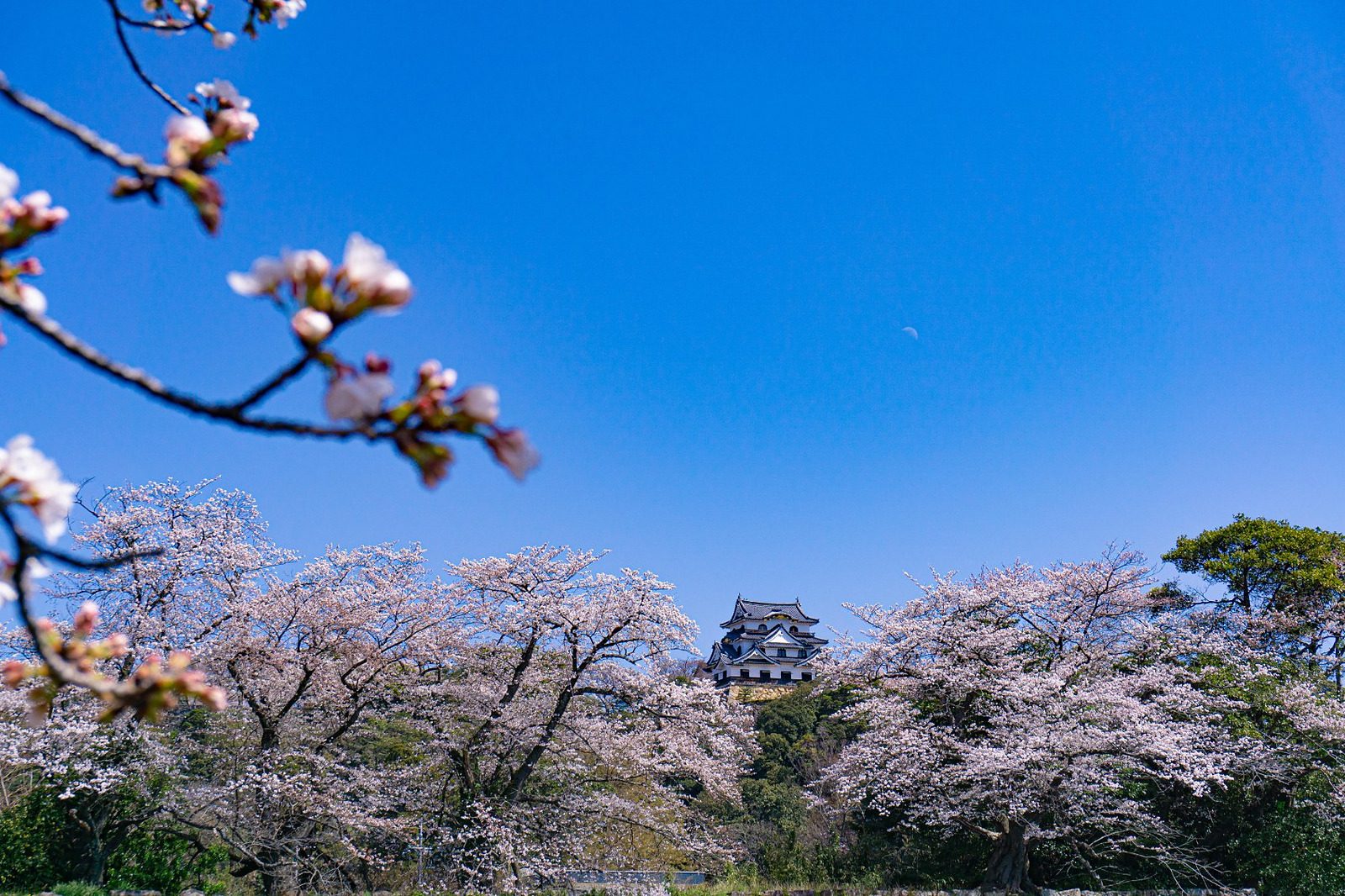
Hikone Castle above cherry blossom along the moat

Temperatures across Kansai in spring are mild and generally pleasant, sitting in the low to mid teens through April and warming comfortably into the twenties by May. The region sits far enough south that the season arrives earlier than in Tohoku or the mountain interior of Chubu, and the window of comfortable travel weather is correspondingly longer. Rain becomes more of a factor as spring progresses towards the early stages of the rainy season in June, but through April and into May the conditions are largely cooperative and the long mild days make moving between cities, towns, and countryside easy and enjoyable.

Kansai is one of the best connected regions in Japan and getting around is rarely a logistical challenge. The rail network between Osaka, Kyoto, Nara, and Kobe is efficient and frequent, and the wider prefectures are accessible by a combination of regional rail and road. Spring is worth approaching with more advance planning than other seasons given the demand on accommodation and transport around peak blossom, particularly in Kyoto where booking several months ahead is standard practice rather than excessive caution. Venturing into the quieter corners of the region not only relieves that pressure but often delivers the kind of spring experience that feels more personal and less managed than the headline destinations.
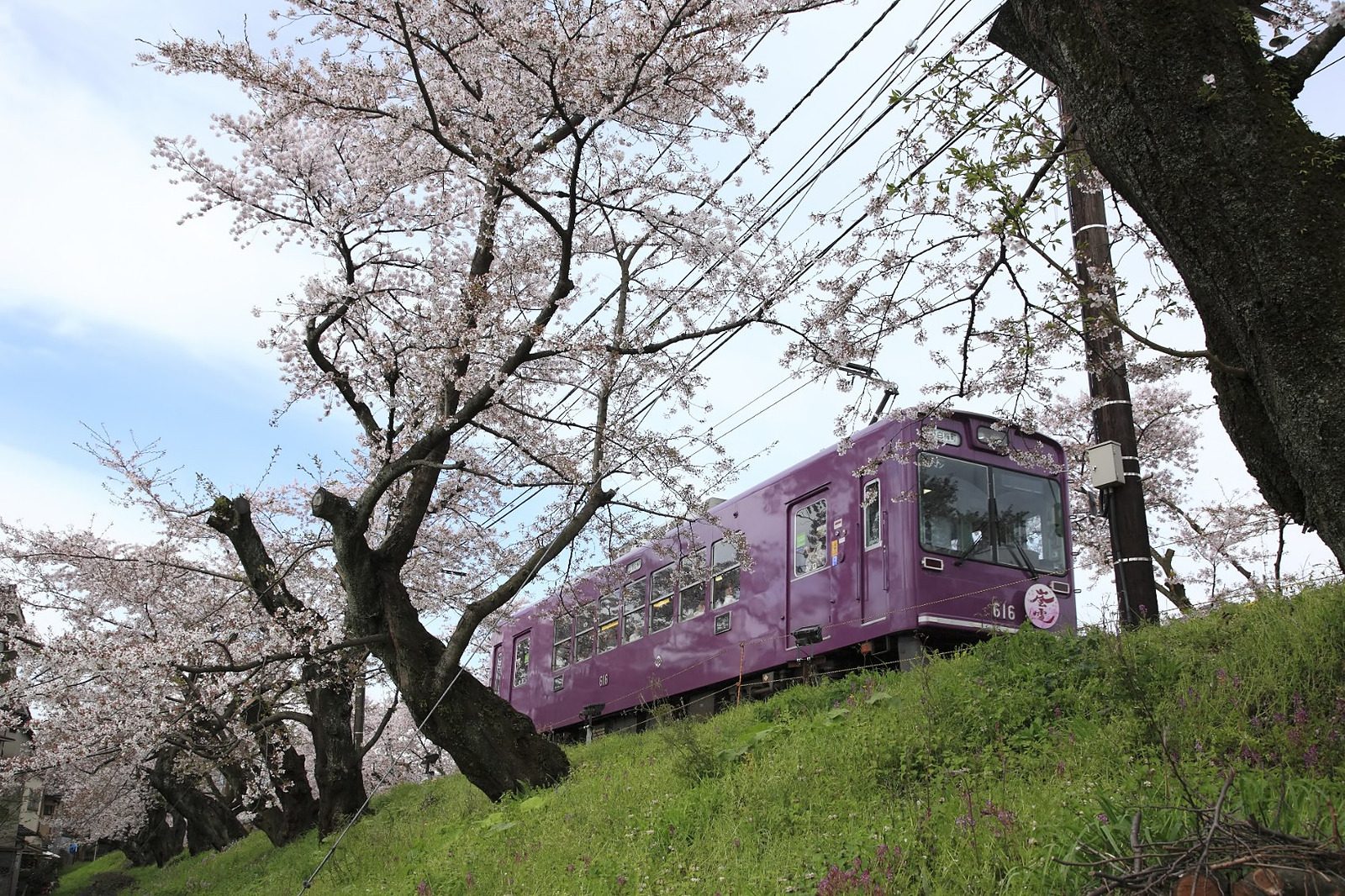
A Randen tram passing cherry trees in Kyoto
Beyond the capital

Exploring the Kansai Region

Spring in Kansai is cherry blossom season at its most historic and most celebrated. The concentration of temples, shrines, castle parks, and natural mountain landscapes within a relatively compact area gives the region a density and variety of spring destinations that is unmatched anywhere in Japan, and the combination of world class historic architecture with blossom of genuine quality makes Kansai the destination that most visitors to Japan associate most directly with the cherry blossom season. The spots below cover the range from the most celebrated Kyoto destinations to the wider region's finest spring experiences.

Kamigyo · Kyoto

Kyoto Gyoen National Garden (京都御苑)

Around 1,100 cherry trees across the old imperial palace grounds, led by the early weeping cherries of the former Konoe residence.

京都御苑 (Kyoto Gyoen) is the park that surrounds 京都御所 (Kyoto Imperial Palace), the home of the emperors until the capital moved to Tokyo, and its lawns, gravel avenues and old noble estates cover an area of around 700 metres by 1.3 km in the middle of the city. Around 1,100 cherry trees grow across the grounds, among them weeping cherries, yamazakura and late flowering satozakura, so the season here runs longer than at most single spots in Kyoto. The first to open are the 糸桜 (itozakura / thread cherries) at 近衞邸跡 (the former Konoe residence) in the northwest corner, slender weeping cherries that start in mid March while most of the city is still waiting, and that peak in late March beside a small pond. The 出水の枝垂れ桜 (Demizu weeping cherry) nearby blooms at around the same time, and the 車還桜 (Kurumagaeshi Zakura) near the Nakadachiuri Gate, a satozakura said to have made an emperor turn his carriage back for a second look, follows in early to mid April. The park is a national garden and free to enter, and because the trees are spread over such a wide area it rarely feels as crowded as Maruyama Park or the Philosopher's Path. Marutamachi and Imadegawa Stations on the Karasuma Line subway, around 7 and 9 minutes from Kyoto Station, are both a short walk from the park. Coming in the last week of March for the Konoe weeping cherries, ideally in the morning, is the time to go.

General information
Address3 Kyotogyoen, Kamigyo-ku, Kyoto-shi, Kyoto-fu
AccessA short walk from Marutamachi or Imadegawa Station on the Karasuma Line subway
EntryFree
HoursPark grounds open at all times
ParkingPaid car parks inside the park, busy at peak bloom
Phone+81 75 211 6364
Sakyo · Kyoto

Philosopher's Path (哲学の道)

A 2km stone canal path lined with cherry trees through northern Higashiyama, linking Ginkakuji and Nanzenji.

The Philosopher's Path (哲学の道, Tetsugaku no Michi) is a stone walking path that runs for around 2 kilometres along a branch of the Lake Biwa Canal in Kyoto's Higashiyama district, between Ginkaku-ji (the Silver Pavilion) at the northern end and Nanzen-ji at the southern end. Around 500 cherry trees line both banks of the canal and bloom in early April, with the path's reputation as one of Kyoto's quieter cherry blossom walks earned from the mix of overhanging Somei Yoshino branches, fallen petals floating on the canal, and the small cafes, galleries and side street temples lining the residential neighbourhood. The path is named after Nishida Kitaro, one of the most influential Japanese philosophers of the 20th century, who walked it daily as a meditative commute to and from Kyoto University. The canal itself is part of the Lake Biwa Canal built during the Meiji period to bring water from Shiga Prefecture to Kyoto and to power Japan's first hydroelectric power plant. Walking the path takes 30 to 40 minutes one way without stops. From Kyoto Station, city bus 5, 17, or Raku Bus 100 to the Ginkakuji-michi stop takes around 30 to 40 minutes, with a 10 minute walk to the northern end of the path.

General information
AddressJodoji Ishibashi-cho, Sakyo-ku, Kyoto-shi, Kyoto-fu
AccessApproximately 5 minutes on foot from Nanzenji/Eikan-do-michi bus stop on the Kyoto City Bus
EntryFree
HoursOpen at all times
ParkingNo dedicated parking, paid car parks nearby
Fushimi · Kyoto

Daigoji Temple (醍醐寺)

Around 700 cherry trees descended from Hideyoshi's 1598 blossom party, with a five storey pagoda and the Sanboin garden.

Around 700 cherry trees fill the grounds of Daigo-ji Temple (醍醐寺) in southern Kyoto each spring, descended from the cherry trees originally planted by Toyotomi Hideyoshi in 1598 for his famous Daigo no Hanami, with the cherry lined path from the entrance gate through the temple precinct passing the National Treasure five storey pagoda built in 951, the oldest verified wooden building in Kyoto. The temple was founded in 874 and is a UNESCO World Heritage Site since 1994. The Sambo-in subtemple at the base of the mountain holds a garden designed personally by Hideyoshi for the 1598 hanami, designated a Special Historic Site and Special Place of Scenic Beauty. Hideyoshi's party of 1,300 guests is considered the origin of the modern Japanese practice of eating and drinking under the cherry blossoms, and the annual Ho-Taiko Hanami Gyoretsu parade on the second Sunday of April reenacts it with around 100 participants in Momoyama period costume. Cherry blossoms peak from late March to early April. Combined admission to Sambo-in, Shimo-Daigo and the Reihokan Garden during spring is ¥1,500. Daigo Station on the Tozai Subway Line is around 30 minutes from Kyoto Station via Yamashina, with a 15 minute walk to the temple.

General information
Address22 Daigoji, Fushimi-ku, Kyoto-shi, Kyoto-fu
AccessApproximately 5 minutes on foot from Daigo Station on the Kyoto Municipal Subway Tozai Line
EntrySanboin Garden and Garan ¥1,000 for adults, spring combined ticket including Reihokan Garden ¥1,500, Kami-Daigo mountain ¥600
Hours9:00 to 17:00, last admission 30 minutes before closing, to 16:30 in winter
ParkingPaid temple car park on site
Phone+81 75 571 0002
Yoshino · Nara

Yoshino Mountain (吉野山)

Around 30,000 cherry trees in tiered groves up the mountain slope, blooming from base to summit across April, a UNESCO World Heritage site.

Around 30,000 cherry trees of around 200 varieties, predominantly the white Shiro-Yamazakura wild mountain cherry, cover the slopes of Yoshinoyama (吉野山) in southern Nara Prefecture from base to summit, with the bloom moving progressively up the mountain over a month from late March through April as the lower slopes give way to the higher ones. The trees were planted as sacred offerings rather than for decoration, with the tradition dating to over 1,300 years ago when followers of En no Gyoja, the founder of Shugendo mountain asceticism, began planting cherry trees on the mountain as offerings to the mountain deity Kongo Zao Gongen. The mountain has been a UNESCO World Heritage Site since 2004 as part of "Sacred Sites and Pilgrimage Routes in the Kii Mountain Range" and is divided into four cherry zones along its elevation, with the lower Shimo Senbon, middle Naka Senbon, upper Kami Senbon and innermost Oku Senbon blooming in sequence as the bloom front rises. The Kinpusenji Temple at the centre of the town is the second largest wooden temple in Japan after Todaiji in Nara and the main temple of Shugendo. From Osaka-Abenobashi Station the Kintetsu Limited Express runs direct to Kintetsu Yoshino Station, with a temporary Nara Kotsu Bus from the station to Naka Senbon during the cherry blossom season at ¥500 one way.

General information
AddressYoshino-cho, Yoshino-gun, Nara-ken
AccessApproximately 2 hours by limited express train from Osaka Abenobashi Station on the Kintetsu Yoshino Line to Yoshino Station, then by ropeway or on foot to the mountain
EntryFree to the mountain, with the ropeway and some facilities charged separately
HoursOpen at all times
ParkingLimited paid parking near Yoshino Station, fills early in the cherry blossom season
Osaka · Osaka

Osaka Castle Park (大阪城公園)

Around 3,000 cherry trees across 60 hectares around the reconstructed castle tower, with Nishinomaru Garden illuminated in the cherry blossom season.

Osaka Castle Park (大阪城公園) carries around 3,000 cherry trees across its 60 hectare grounds, with the reconstructed main tower of the castle that Toyotomi Hideyoshi began in 1583 rising above the blossom in late March and early April. The park runs its spring programme under the official name 大阪城 春まつり (Osaka Castle Spring Festival), which covers the whole season rather than the blossom weeks alone and was dated March 10 to May 24 in 2026. The cherry blossom centrepiece is Nishinomaru Garden (西の丸庭園) on the western side of the castle, a 6.5 hectare lawn garden formerly home to Hideyoshi's wife Kita no Mandokoro and now planted with around 300 Somei Yoshino and weeping cherry trees. The garden also holds the 標本木 benchmark tree that the Japan Meteorological Agency watches for Osaka, the agency declaring the season open once five blossoms have opened on that single tree, and on the evening of that declaration the castle tower is lit cherry pink from sunset to midnight. For the 観桜ナイター evening cherry viewing, dated March 20 to April 12 in 2026, the garden opens from 9am to 9pm with last entry at 8:30pm and the lighting on from around 6pm, and admission is ¥350 for high school age and above in place of the regular ¥200. Everything outside that garden and the tower museum is free to walk, including the outer moat and the path through the Sakuramon Gate, a National Important Cultural Property named after the rows of cherry trees that line the approach, and the South Outer Moat is a popular free hanami picnic spot with the trees reflected in the moat water below the castle walls. Tanimachi 4-chome Station on the Tanimachi Subway Line is around 11 minutes' walk from the park.

General information
Address1-1 Osakajo, Chuo-ku, Osaka-shi, Osaka-fu
AccessApproximately 5 minutes on foot from Osakajokoen Station on the JR Osaka Loop Line
EntryPark free, Nishinomaru Garden ¥200 normally and ¥350 for high school age and above during the cherry blossom season, castle tower museum charged separately
HoursPark open at all times, Nishinomaru Garden 9:00 to 17:00, extended to 9:00 to 21:00 with last entry 20:30 for the evening cherry viewing, March 20 to April 12 in 2026
ParkingPaid car parks within the park
Phone+81 6 6755 4146
Himeji · Hyogo

Himeji Castle (姫路城)

The white World Heritage keep, one of twelve surviving original castles, ringed by around 1,000 cherry trees and the Kokoen garden.

Himeji Castle (姫路城) in Hyogo Prefecture is nicknamed 白鷺城 (Shirasagi-jo) or "White Heron Castle" for its brilliant white plaster walls that resemble a heron taking flight, and the contrast between the white walls and the pink of the around 1,000 cherry trees of multiple varieties in the castle grounds from late March to mid April makes it one of the most photographed spring scenes in Japan. The view along 大手前通り (Otemaedori Street) from Himeji Station, with the white tower rising above the blossom, is the one most often taken. The castle is the finest surviving in Japan, with the original main keep built by Ikeda Terumasa in 1609 and standing intact through nearly four centuries that included surviving WWII bombings, designated a UNESCO World Heritage Site in 1993 as one of Japan's first two inscriptions and a National Treasure alongside Matsumoto, Hikone, Inuyama and Matsue. The 41st Himeji Castle Cherry Blossom Viewing Event runs in 2026 in 三の丸広場 (Sannomaru Square), with traditional koto, dance and taiko performances, tea ceremony, Himeji sake and 姫路おでん (Himeji oden), and wooden boat rides operate on the inner moat from March 20 onward. From March 27 to April 5 each year the 夜桜ライトアップ (Night Cherry Blossom Light Up) runs in the 西の丸庭園 (Nishinomaru Garden) from 6:30pm to 9pm, with projection mapping and illumination across the garden and the castle walls, at ¥600 for adults. The adjacent Kokoen Garden, built in 1992 on the grounds of the former samurai West Residence, holds 9 interconnected gardens including a working tea house and runs its own evening illumination from 6pm to 8pm at ¥400 over the same period. Admission to the castle from March 1, 2026 is ¥2,500 for visitors from outside Himeji City, with cherry blossom viewing in the outer grounds free. JR Himeji Station on the Sanyo Shinkansen is around 20 minutes' walk from the castle. Staying a night in Himeji and going to the evening illumination after the daytime crowds have thinned is the practical way to see both.

General information
Address68 Honmachi, Himeji-shi, Hyogo-ken
AccessApproximately 15 minutes on foot from Himeji Station on the JR Sanyo Main Line and Sanyo Shinkansen
Entry¥2,500 for adults from March 2026 for those not resident in Himeji, free for visitors under 18, Kokoen Garden charged separately
Hours9:00 to 17:00, last entry 16:00, closed December 29 and 30
ParkingPaid municipal car parks near the castle
Phone+81 79 285 1146
Spring moments

Seasonal Experiences and Events in Spring

Now that you have a sense of how the season runs here, these are the highlights and experiences worth building a spring visit around:

Prefecture map

Seasonal culture

Seasonal Food & Everyday Atmosphere

Spring in Kansai is a season defined by subtlety rather than intensity. As the region moves out of winter, the focus shifts towards lighter flavours, delicate textures, and ingredients that are deeply rooted in tradition. From Kyoto’s refined seasonal cooking to the coastal influences of Wakayama and Hyogo, spring brings a range of ingredients that are not just enjoyed, but carefully appreciated as part of Kansai’s long established food culture.

筍 (Takenoko)

Bamboo shoots

Kyoto's Nishiyama shoots, grown in tended groves and dug before they break the surface.

Takenoko gohan and spring simmered dishes

Spring in Kansai is inseparable from bamboo shoots, and Kyoto's are grown rather than gathered. The groves on the 西山 (Nishiyama) slopes around Nagaokakyo, Muko and Oyamazaki are worked all year. Clay is spread over the soil, the canes are thinned, and the shoots are dug with a long chisel bladed 掘り (hori) before they push through the surface, which is what produces 白子たけのこ (shirako takenoko), pale, tender and almost without bitterness. The season runs from around late March through early May. The dish that belongs to it is 若竹煮 (Wakatake Ni), shoots simmered with young wakame in a light dashi, the two spring ingredients that arrive at the same time. 筍ごはん follows. Kanto digs shoots off hillsides for freshness. Kyoto farms them for texture.

しらす (Shirasu)

Whitebait

Tiny translucent fish landed along the Wakayama coast, eaten raw within hours of coming ashore.

Raw nama shirasu or over rice

しらす (Shirasu) are the young of sardine and anchovy, and the reason to eat them in Kansai is 生しらす (nama shirasu), the raw version. They spoil within hours, so raw shirasu is only served where the boats land, which along this coast means the ports of Wakayama and the Kishu shoreline, and menus there will say which morning's catch it is. Fresh, the texture is soft and almost melting and the flavour is faintly sweet rather than salty, which is a different thing entirely from the dried しらす干し sold everywhere. It is served over rice as しらす丼, sometimes with an egg yolk or grated ginger and nothing else. The spring boats go out from around mid March once the winter closure lifts.

鰆 (Sawara)

Spanish mackerel

The fish whose name means spring, running into the Inland Sea to spawn, grilled with Kyoto's white miso.

Sashimi or grilled with saikyo miso

鰆 (Sawara) is written with the character for spring, and the reason is the run. The fish move in from deeper water to spawn in and around the Seto Inland Sea from March, which is when the Kansai boats land them and when the name makes sense. The flesh is soft, pale and mildly fatty, and it does not hold together like a firmer fish, so it is handled gently. Kansai's treatment is 西京焼き (Saikyo Yaki), fillets left for a day or two in the sweet white 西京味噌 (Saikyo miso) of Kyoto and then grilled until the surface caramelises, which is one of the standard items in a Kyoto lunch set. It is also eaten as sashimi and lightly seared as tataki. Salt grilled sawara turns up in autumn too, but the spring fish is the one the character refers to.

いかなご (Ikanago)

Sand lance

A Kobe and Seto Inland Sea spring tradition, the young fish simmered into sweet savoury ikanago no kugini.

Simmered as ikanago no kugini

A uniquely Kansai seasonal tradition, especially around Kobe and the Seto Inland Sea. In early spring, ikanago is cooked down into いかなごのくぎ煮, a sweet soy glaze preparation that locals make at home in large batches. The smell of it cooking is said to signal the arrival of spring in the region, and it’s deeply tied to everyday life rather than restaurant culture.

春懐石 (Haru Kaiseki)

Spring kaiseki cuisine

Kyoto's seasonal multi course cuisine reworked for spring, built around bamboo shoots, sea bream, and wild mountain vegetables.

Multi course seasonal Kyoto cuisine

This is less a single dish and more the ultimate expression of Kansai’s seasonal philosophy. In Kyoto, kaiseki menus shift entirely with spring, incorporating bamboo shoots, young greens, light broths, and delicate seafood. The focus is on balance, subtlety, and presentation, creating a dining experience that reflects the season in every detail rather than highlighting one standout ingredient.

Plan your trip

Book your stay in Kansai

Search accommodation across Kansai, from Kyoto and Osaka city hotels to Nara guesthouses and Koyasan temple lodgings. Compare options across the major booking platforms.

AdultsAges 18 or above
2
ChildrenAges 0–17
0
Book with
Pick a site. Your dates and details are carried over so you can check prices and book there.

Ready to plan your Kansai trip?

Browse itineraries built around Kansai in spring, from Kyoto's temple and canal blossoms to the cherry covered slopes of Mount Yoshino.

View Kansai Itineraries →