General Feeling of the prefecture
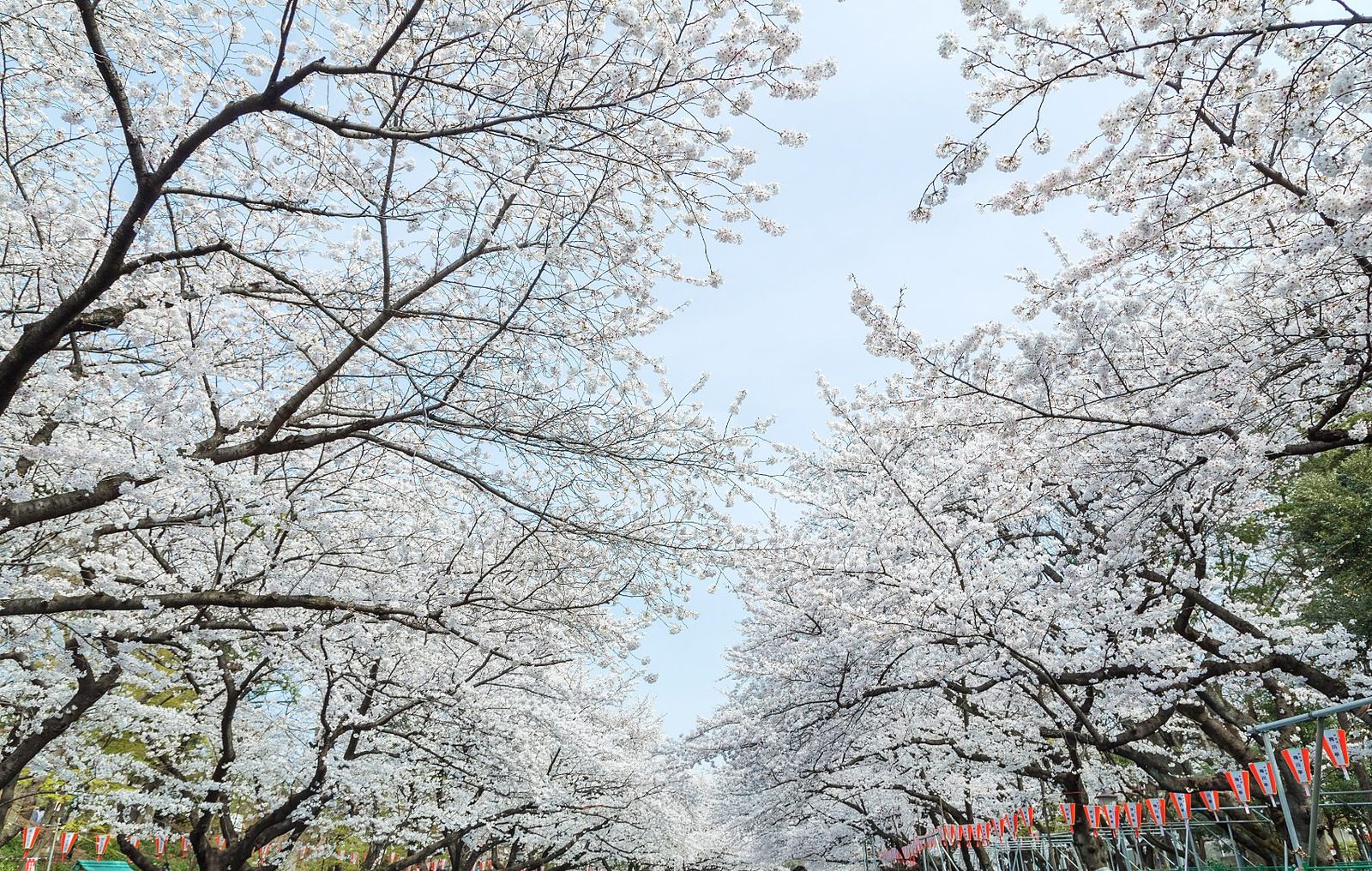
Alongside with autumn, springtime in Kanto can become quite hectic, and of course, a majority of this would happen in Tokyo. From late March the parks and riverside paths are in bloom and the city draws enormous numbers of visitors, domestic and international, during what is one of the busiest periods of the year. The popular spots fill up fast, transport gets crowded, and accommodation prices rise accordingly. It is worth being there for it but going in with a clear sense of what peak weekends in Tokyo actually look like, and some room to adjust your timing around them, makes a real difference to how much you get out of it.
Temperatures across Kanto in spring are mild and generally pleasant through April, sitting in the mid to high teens and warming into the low twenties by May. Rain is a factor and worth being prepared for. Spring showers are common and as the season progresses the weather edges toward the early stages of the rainy season, so having some backup plans wouldn't be a terrible idea. Outside of that the conditions are easy and the long mild days make travelling around the region easy and comfortable.
On that note, Kanto is easy to get around. Tokyo's rail network covers the city thoroughly and the wider region is well connected by both rail and road. A rental car becomes worth considering once you move into the outer prefectures where other spring scenery tends to be away from the train lines.
Exploring the Kanto Region
Spring in Kanto is cherry blossom season at its most urban and most concentrated. Tokyo and its surrounding prefectures offer a density and variety of spring flower destinations that no other region in Japan can match, and the combination of world class city parks, historic temples and shrines, and the remarkable flower fields of the outer prefectures gives the season a range that rewards exploring well beyond the city limits. The spots below cover that full range from the centre of Tokyo to the quieter corners of the wider region.
Shinjuku Gyoen (新宿御苑)
Around 1,000 cherry trees of around 70 varieties stretch the bloom from late February to late April, well beyond most Tokyo hanami spots.
Shinjuku Gyoen (新宿御苑) in central Tokyo holds around 1,000 cherry trees of around 70 varieties, with the early Kanzakura winter cherries opening in late February, Somei Yoshino at peak from late March into early April, and the late Ichiyo, Kanzan, Fugenzo and Shogetsu varieties carrying the season through late April. The cherry blossom window at the park therefore runs roughly two months, more than twice the length of most other Tokyo hanami spots, so a visit at almost any point through this stretch encounters trees at or near peak bloom. The 58 hectare park covers Japanese, French and English Landscape garden sections, each with its own character, with the cherry trees clustered most densely in the English Landscape Garden and along the cherry tree path near the Sendagaya Gate. Alcohol and smoking are not permitted, which keeps the atmosphere noticeably calmer than the picnic party feel of the nearby Yoyogi Park or the Meguro River walk. Admission is ¥500. Advance registration may be required on weekends during peak bloom in late March and early April. JR Shinjuku Station is 10 minutes' walk from the Shinjuku Gate.
Chidorigafuchi (千鳥ヶ淵)
A 700 metre path runs beneath a cherry canopy along the Imperial Palace moat, with rowboats out onto the water during bloom.
The 700 metre Chidorigafuchi Green Way walking path along the northwestern corner of the Imperial Palace moat in central Tokyo runs beneath a continuous canopy of Somei Yoshino cherry trees that hang over the water from both banks, with the fallen petals collecting on the moat in pink rafts after peak bloom in late March and early April. Walking the path is free and busy during the festival period from March 26 to April 6 in 2026, with LED illumination of the moat nightly until 10pm. The Chidorigafuchi Boat Pier rents rowboats out onto the moat at ¥800 for 30 minutes or ¥1,600 for an hour during cherry blossom season, with three people per boat and life jackets provided. Demand is extreme during peak bloom, with same day queues forming by around 7:30am and typically selling out by 10 to 11am on weekends, so the online Smart Ticket system at ¥12,000 per boat is the practical way to lock in a slot, with a portion donated to the Chiyoda Ward Sakura Fund for moat conservation. The moat was originally dug as a defensive line around Edo Castle. Kudanshita Station on the Tozai, Hanzomon, and Toei Shinjuku Lines is around 5 minutes' walk away.
Meguro River (目黒川)
Around 800 cherry trees arch into a pink tunnel over the river, lit at night by paper lanterns inscribed with names.
Around 800 Somei Yoshino cherry trees line the 4 kilometre stretch of the Meguro River running through the Nakameguro and Gotanda neighbourhoods of Tokyo, with the branches meeting overhead to form a continuous pink tunnel above the narrow waterway. The trees are illuminated at night by pink bonbori paper lanterns inscribed with the names of local residents and businesses, lit from 5pm to 8pm from around March 21 to March 31 in 2026. Multiple local cherry blossom festivals run along different stretches of the river the same weekend, with the main Nakameguro Cherry Blossom Festival at the Confluence Playground on March 28 and 29. Local restaurants and cafes on both sides of the river set up food and drink stalls during the festival period, with most food trucks concentrated at Meguro River Park rather than scattered along the path because eating while walking is discouraged and picnic sheets are prohibited. Pedestrian flow is one way along the central Nakameguro stretch between Chitosebashi and Hinodebashi bridges during peak bloom. Nakameguro Station on the Tokyu Toyoko Line and Tokyo Metro Hibiya Line is the main access point.
Showa Kinen Park (国営昭和記念公園)
Around 250,000 tulips of around 260 varieties fill the stream plaza and the Tulip Garden from early to mid April, in a national park on the western side of Tokyo.
国営昭和記念公園 (Showa Kinen Park) in Tachikawa in western Tokyo is a national government park opened in 1983 to mark 50 years of the reign of Emperor Showa, laid out on the site of the former Tachikawa air base and now one of the largest parks in the Tokyo area. Its spring Flower Festival ran from 20 March to 24 May in 2026, following the bloom around the park from the cherry and canola of late March to the tulips of April and the poppies of May. The tulips are the centrepiece, with around 250,000 bulbs of around 260 varieties planted across about 18,600 square metres of the 渓流広場 (Keiryu Hiroba, the stream plaza) and the Tulip Garden, set in broad bands of colour along a tree lined stream and at their best from early to mid April. Around 250,000 canola flowers bloom in two meadows from late February to mid April, around 200,000 nemophila follow from mid April to mid May, and around 1.8 million Shirley poppies and baby's breath take over across more than a hectare in May. Workshops and guided walks run through the festival, and paid Segway tours are on offer for covering the park's wide lawns. Admission is ¥450 for adults and ¥210 for seniors 65 and over, free for junior high school students and younger. The Nishi-Tachikawa Gate, the closest entrance to the tulips, is a 2 minute walk from Nishi-Tachikawa Station on the JR Ome Line.
Hitachi Seaside Park Miharashi Hill (国営ひたち海浜公園 見晴らしの丘)
Around 5.3 million pale blue nemophila carpet Miharashi Hill from mid April, meeting the sky and the Pacific beyond.
Around 5.3 million nemophila bloom across the 4.2 hectares of Miharashi Hill at Hitachi Seaside Park (国営ひたち海浜公園) in Hitachinaka City in Ibaraki Prefecture from mid April into early May, creating a pale blue carpet of "baby blue eyes" wildflowers that blends with the colour of the sky above and the Pacific Ocean visible from the summit beyond. The park has been cultivating nemophila on the hill since 2002, and in 2026 the flowers reached their peak on 16 April and held their colour through late April. Yellow rape blossoms planted at the foot of the hill provide a contrast against the blue, the Tamago no Mori Flower Garden holds around 260,000 tulips of some 330 varieties that peak from mid to late April, and over in the West Gate area a hectare of pine woodland planted as the Suisen Garden carries around a million narcissus that flower from late March into mid April, just ahead of the nemophila. Admission is ¥450 for adults for most of the year, and during the peak flower periods a seasonal supplement of ¥350 is added, so a ticket in nemophila season comes to ¥800, with junior high school students and younger free throughout. Opening is brought forward to 7 or 7:30am during Golden Week to let visitors get ahead of the crowds. The JR Joban Line Limited Express Hitachi and Tokiwa start from Shinagawa and call at Tokyo and Ueno on the way, taking around 85 minutes from Tokyo Station to Katsuta, where an Ibaraki Kotsu bus from stand 2 at the east exit reaches the park's West Gate in around 15 minutes. The West Gate is the closest entrance to Miharashi Hill.
Rikugien Gardens (六義園)
A weeping cherry around 15 metres tall and 20 metres wide spreads over the entrance lawn of an Edo period stroll garden in late March, lit after dark at its peak.
六義園 (Rikugien) in Bunkyo Ward in Tokyo is a stroll garden begun in 1695 by 柳沢吉保 (Yanagisawa Yoshiyasu), a senior retainer of the fifth shogun Tokugawa Tsunayoshi, on land the shogun granted him, and finished seven years later. Its name comes from the six principles of poetry in the Chinese Book of Odes, and Yoshiyasu laid the garden out around a central pond with islands and an artificial hill, recreating 88 scenes from classical waka poetry along its paths. It is a nationally designated Special Place of Scenic Beauty. Its spring signature is the しだれ桜 (shidarezakura, weeping cherry) just inside the main gate, around 15 metres tall and 20 metres across, which usually opens in the second half of March, a little ahead of the Somei Yoshino across the city. For around a week at its peak the garden holds 春夜の六義園 (Shunya no Rikugien), an evening special viewing that lights the tree and the paths around the pond, with the dates set to match the flowering. Admission is ¥300 for adults and ¥150 for those 65 and over, free for primary school children and younger. The main gate is a 7 minute walk from Komagome Station on the JR Yamanote Line and the Tokyo Metro Namboku Line, and arriving at the 9:00 opening on a weekday gets you the tree before the crowds.
Seasonal Experiences and Events in Spring
Now that you have a sense of how the season runs here, these are the highlights and experiences worth building a spring visit around:
Prefecture map
Seasonal Food & Everyday Atmosphere
Spring in Kanto is a season of fresh, delicate flavours that reflect the change in temperature and the new growth happening across the region's farmland, coastline, and waterways. Tokyo sits at the centre of one of the most sophisticated food cultures in the world and spring brings out ingredients and dishes that the city and its surrounding prefectures handle particularly well.
Bamboo shoots
Shoots push up through Kanto's wooded hillsides in March and April, dug young before they toughen.
Bamboo shoots are one of the spring ingredients Japanese cooks wait for, and Kanto digs its own. As soil temperatures rise through March and April the shoots push up across the wooded hillsides of Chiba, Kanagawa and western Tokyo, and they have to come out fast, because the sweetness turns to bitterness within a day or two of breaking the surface. Fresh takenoko has a clean, faintly sweet flavour and a firm snap that the canned version cannot reproduce. It appears as 竹の子ご飯 (Takenoko Gohan), simmered in dashi, and through a long list of spring dishes. What Kanto has is proximity rather than pedigree. The groves on the edge of the metropolitan area mean shoots reach Tokyo kitchens the morning they are dug, and the pick your own groves in Chiba and the Tama hills open to the public through April.
Rapeseed flowers
The young flowering shoots carry a mild spring bitterness, and fill the fields of Chiba and Kanagawa with yellow.
Rapeseed shoots are a visual symbol of spring across Kanto and a genuine seasonal vegetable at the same time. The young flowering stems are cut before the buds open, while the bitterness is still mild, and they are usually blanched and dressed with soy and sesame as おひたし (ohitashi) or turned with a light mustard dressing as からし和え. Chiba grows more nanohana than any other prefecture, and the fields around the southern Boso peninsula flower early enough that they are out in January and February, well before the blossom. The colour is the reason the flower turns up on every spring menu and poster in the region, but the eating version is the shoot rather than the bloom, and the season for that is short.
Cherry blossom sea bream
Sea bream fatten ahead of spawning and take on a pink cast, which is where the name comes from.
Sea bream caught in spring is called 桜鯛 (sakura dai), partly for the season and partly because the skin takes on a pinker cast as the fish comes into spawning condition. As the water warms the bream feed hard and the flesh turns rich and sweet. Kanto's fish comes out of 相模湾 (Sagami Bay) and the waters off the Boso peninsula, and the region's relationship with it is a market one rather than a coastal one. This is where the good fish from everywhere else also arrives, so a Tokyo restaurant in April is choosing between Sagami Bay, Setouchi and Naruto on the same board. The preparation that belongs to the city is 鯛茶漬け (Tai Chazuke), sashimi dressed in a sesame and soy sauce, laid over rice and flooded with hot dashi at the table so the surface of the fish just turns, which the shops around Nihonbashi that have been at it for generations built their reputations on. The Inland Sea, Naruto and Genkai pages each do something different with the same fish.
Clams
Rising spring water temperatures bring Tokyo Bay clams to their best, releasing a sweet, savoury broth.
Clams peak in spring when rising water temperatures bring them to their best condition in Tokyo Bay and along the broader Kanto coastline. They release a naturally sweet and deeply savoury broth when cooked and are used extensively in miso soup, steamed with sake and butter, or incorporated into pasta dishes in the Western influenced restaurants of Tokyo.潮干狩り (Shiohigari), clam digging at low tide, is a popular spring activity along the Kanto coast, particularly in the tidal flats of Chiba, where families and groups head out to dig their own clams during the low tide season in April and May. It is a seasonal tradition that connects the city to the coastline in a way that is worth experiencing if the timing works.
Asparagus
The cool nights and warm days of inland Tochigi and Gunma produce thick, sweet spears from late April.
Asparagus from the growing regions of Tochigi and Gunma comes into season through spring and the quality from these inland prefectures is excellent. The cool nights and warm days of the Kanto interior create good growing conditions and the asparagus harvested here is thick, sweet, and full of flavour. It appears across restaurant menus in Tokyo through spring simply grilled, wrapped in meat, or served as a side dish, and the seasonal version available from late April is noticeably better than what is imported out of season.
Edomae sushi
Tokyo's own sushi tradition, and the short list of fish that only appear on the counter in spring.
江戸前寿司 (Edomae Zushi) is worth a card in a spring section rather than a general one, because the case changes with the season and spring is the most obvious of the four. Edomae means in front of Edo, the fish of Tokyo Bay and the waters around it, and the techniques the style is built on, curing in vinegar and salt, marinating in soy, simmering in sweetened stock, all began as ways of keeping fish edible without ice. The spring fish are the ones to look for and most of them are gone by June. 春子 (kasugo) is juvenile sea bream, lightly cured and served skin on. さより (sayori) is the needlefish, long and silver and cut thin. 鳥貝 (torigai) is the cockle from Tokyo Bay, briefly blanched so it curls, and 青柳 (aoyagi) is the orange foot of the round clam. 蛤 (hamaguri) is simmered in its own stock. A counter working properly in April will put most of those in front of you without being asked, and a chef who only has tuna and salmon in the case in spring is not doing Edomae.
Kuzumochi
A Kanto wagashi made from fermented wheat starch, served chilled with kinako and kuromitsu.
Kuzumochi is a traditional wagashi sweet that is specific to the Kanto region and has been made in Tokyo and Kanagawa for centuries. Made from fermented wheat starch rather than the arrowroot used in the Kansai version, it has a distinctive slightly tangy flavour and a soft, wobbly texture that is unlike most other Japanese sweets. It is served chilled with kinako, roasted soybean flour, and kuromitsu, black sugar syrup, and the combination of textures and flavours is simple but carefully balanced. Spring is when it begins to appear more widely as the warmer weather creates the right mood for a chilled, light sweet, and finding it at one of the long established shops in Tokyo that have been making it for generations is worth the effort.