
This page has been translated from Japanese. If anything is unclear, please get in touch.
Spring region guide

Shikoku in Spring

Setting the Scene

General Feeling of the prefecture

Shikoku in spring is the kind of experience that rewards travellers who have moved beyond Japan's most obvious destinations and are looking for something with a different pace and character. The island is the smallest of Japan's four main islands and the least visited by international tourists, and spring arrives here with the same cherry blossom beauty as anywhere else in the country but without the infrastructure of mass tourism that surrounds it elsewhere. The overall atmosphere is rural, unhurried, and in places remote, qualities that are becoming harder to find in Japan as a whole and that Shikoku quietly holds onto.

Cherry blossoms arrive across Shikoku's lowland areas and river valleys in late March to early April, broadly in line with the timing on the Pacific coast of Honshu. The island's dramatic interior, particularly the gorges and mountain areas of Kochi and the highland areas of the Iya Valley in Tokushima, holds onto cooler conditions longer, and the combination of blossom in the valley floors against snow dusted peaks in the background is a feature of early spring that gives the island a particular visual appeal. By May the whole island has warmed into comfortable travelling conditions and the landscape is fully green and alive.
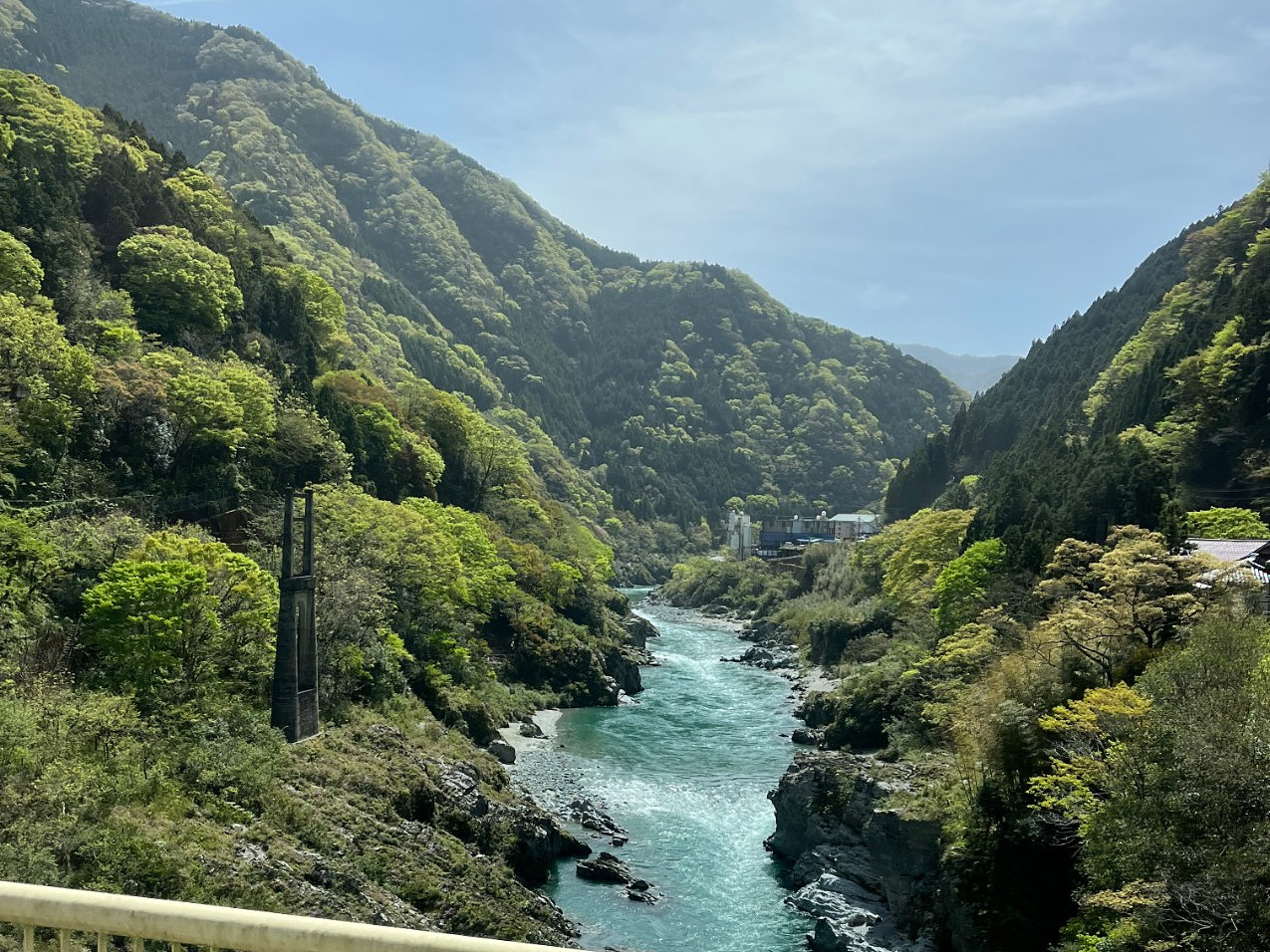
Oboke Gorge in fresh spring green

Temperatures through spring are mild across most of Shikoku, though the four prefectures have slightly different climates worth being aware of. Ehime on the northwest coast facing the Seto Inland Sea warms earliest and has a sheltered, gentle spring climate. Kochi on the Pacific side is warm and occasionally wet, sitting in one of the rainier parts of Japan even outside of the official rainy season. Tokushima and Kagawa in the east are broadly mild and settled through spring. A light waterproof layer is worth having across the island regardless of which prefectures you are covering, and a mid layer remains useful for evenings and higher areas through April.

Getting around Shikoku requires more planning than in the more heavily connected regions of Honshu. Rail connections exist between the major cities but the rural interior and many of the island's most rewarding areas are difficult or impractical to reach without a rental car. Spring is a good season to drive Shikoku. The roads are clear, the scenery is at its most vivid, and the relatively low traffic on the island's rural routes makes self directed travel enjoyable. The island rewards slow travel more than almost anywhere else in Japan, and spring's comfortable conditions make that slower pace easy to settle into.
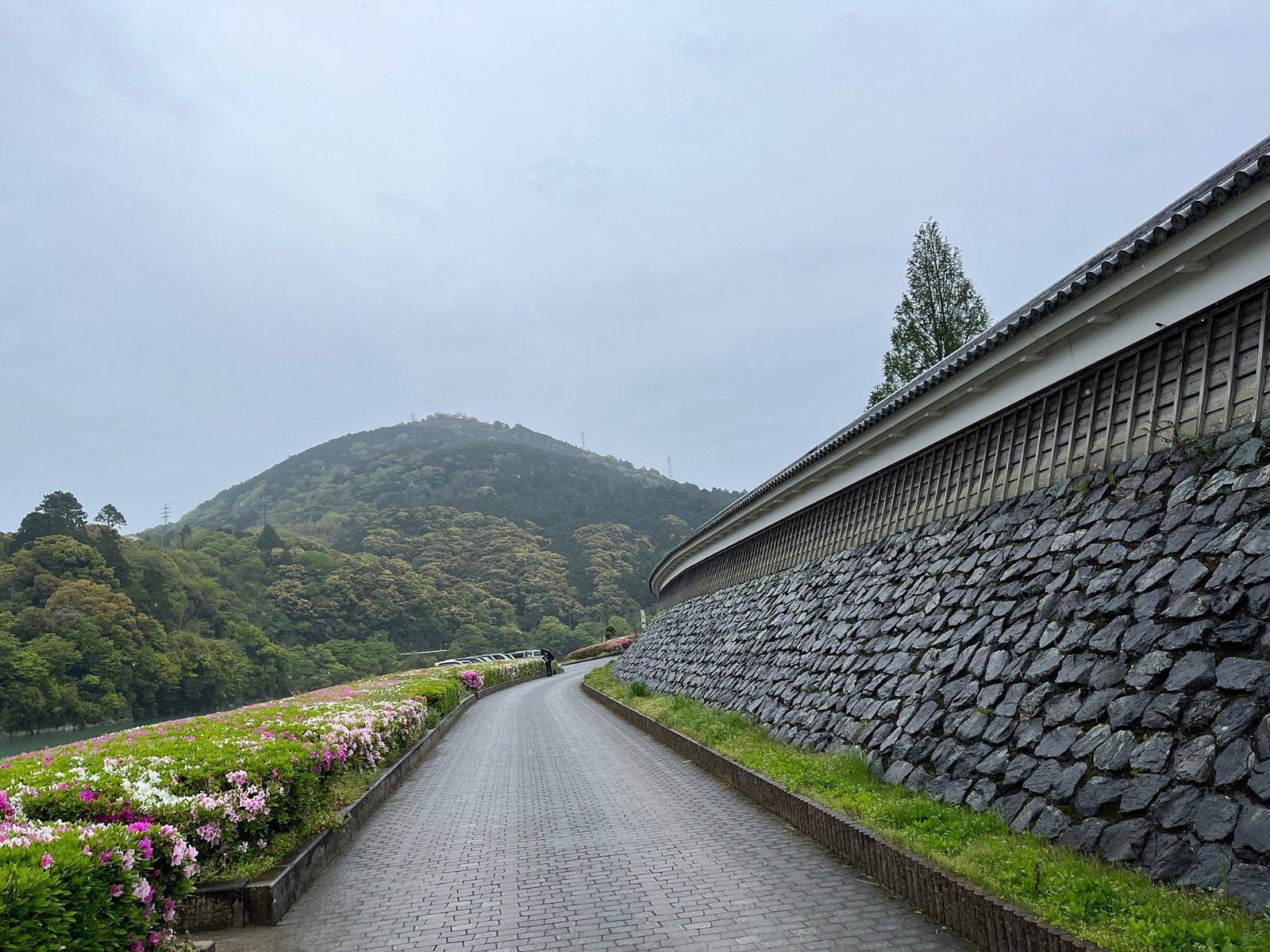
Azaleas along the riverside in Ozu
Beyond the capital

Exploring the Shikoku Region

Spring in Shikoku arrives earlier than in most of Japan and the combination of the island's warm Pacific climate, its dramatic mountain interior, and the historic castles, shrines, and hot spring towns that define its cultural identity gives the season a range and character that rewards exploring slowly across all four prefectures. The spots below cover that full geographic and cultural range from the Pacific coast of Kochi to the Seto Inland Sea shore of Kagawa and Ehime.

Matsuyama · Ehime

Matsuyama Castle (松山城)

One of Japan's twelve original castle keeps on a hilltop above the city, ringed by around 200 cherry trees and reached by ropeway or chairlift.

Matsuyama Castle (松山城) on the summit of Mount Katsuyama above Matsuyama City in Ehime Prefecture is one of Japan's 12 surviving original castle keeps and one of only three to survive on a mountaintop alongside Himeji and Hikone, with the main keep originally built in 1602 by Kato Yoshiaki, first lord of the Iyo Matsuyama Domain, and rebuilt in 1854 after a lightning fire destroyed the original in 1784. Around 200 cherry trees including Somei Yoshino, Kawazu-zakura, Yoko-zakura, Tsubaki-kanzakura and Oshima-zakura bloom across the castle grounds and Shiroyama Park at the foot of the mountain from late March to early April, with the site listed among Japan's Top 100 Cherry Blossom Spots and the view of the castle tower above the blossoms towards the Seto Inland Sea making one of the finest castle and blossom compositions in Shikoku. The complex includes 21 Important Cultural Property structures and a rare renritsu-shiki linked compound keep design with the main tower connected to smaller keeps and turrets by corridors. The Matsuyama Castle Ropeway and parallel single seat chairlift run from the base of the mountain to the summit in around three minutes for ¥520 round trip, with castle admission an additional ¥520, and the keep is illuminated nightly from sunset to 11pm. From JR Matsuyama Station, tram line 5 runs to the Okaido stop in 10 minutes followed by a five minute walk to the ropeway base.

General information
Address1 Marunouchi, Matsuyama-shi, Ehime-ken 790-0008
AccessApproximately 5 minutes by ropeway from Ropeway-mae Station, which is approximately 15 minutes by streetcar from Matsuyama Station on the JR Yosan Line
Entry¥520 for the keep, ropeway and chairlift charged separately
Hours9:00 to 16:30
ParkingPaid car park at the base
Phone+81 89 921 4873
Kotohira · Kagawa

Kotohiragu Shrine (金刀比羅宮)

The principal Konpira shrine, reached by a stone stairway of 785 steps to the main shrine, with cherry trees along the approach.

A climb of 785 stone steps from the town of Kotohira in Kagawa Prefecture leads to the Main Shrine of Kotohira-gu (金刀比羅宮), the shrine commonly known as Konpira-san that is the head of the around 600 Konpira shrines across Japan, with pilgrims continuing a further 583 steps to the Inner Shrine for 1,368 steps total and the shrine dedicated to Omononushi no Kami, the guardian deity of seafaring, agriculture and prosperity, together with Emperor Sutoku, who was enshrined here in 1165, with around 3 million annual worshippers and a distinctive yellow happiness charm as its signature omamori. The spring climb passes through a 150 metre flat section called Sakura-no-Baba at around the 370th step, where around 3,500 cherry trees form a tunnel of blossom over the path in late March and early April, before continuing past the ornately carved former Buddhist hall of Asahisha shrine, an Important Cultural Property around 18 metres tall at the 628th step that took 40 years to build, to the Main Shrine at 251 metres above sea level, where the view takes in the Sanuki Plain, the Seto Inland Sea and the Seto-Ohashi Bridge on clear days. Admission to the shrine grounds is free, with a Konpira Worship Climbing Shuttle available for those who cannot manage the steps. The foot of the stone steps is around a 15 minute walk from Kotoden Kotohira Station or 20 minutes from JR Kotohira Station along the approach street, and the shrine allows around 30 minutes for the climb from there to the Main Shrine.

General information
Address892-1 Kotohira, Nakatado-gun, Kagawa-ken 766-8501
Access15 minutes on foot from Kotoden Kotohira Station or 20 from JR Kotohira Station to the foot of the steps, then around 30 minutes up 785 steps to the Main Shrine
EntryFree
HoursMain shrine open 6:00 to 18:00
ParkingPaid car parks in the town
Phone+81 877 75 2121
Kochi · Kochi

Kochi Castle (高知城)

The only Japanese castle keeping both its original keep and main gate, with 223 cherry trees that bloom earlier than most of Japan.

Kochi Castle (高知城) stands on 大高坂山 (Otakasaka Hill) in the centre of Kochi City and is the only castle in Japan where the original main keep, Honmaru Palace and Otemon Gate all survive together from the Edo period, with the Otemon Gate the oldest part dating from 1664 and one of only three original castle main gates in the country still standing alongside their original keep, making the view through the gate to the main keep the only single photograph of its kind in Japan. The castle was built between 1601 and 1611 by Yamauchi Kazutoyo, the first lord of Tosa Domain rewarded with the province for siding with Tokugawa Ieyasu at the Battle of Sekigahara in 1600, with the keep and most other structures rebuilt between 1729 and 1753 after the 1727 fire that the Otemon Gate alone survived. Kochi blooms two to three weeks ahead of Tokyo because of the warm Pacific climate of the prefecture, with the 223 cherry trees concentrated at the Sannomaru third citadel typically peaking in late March to early April and more lining the 追手筋 (Otesuji) approach. The 高知城花回廊 (Kochi Castle Flower Corridor), run by the Kochi City Tourism Association, fills the castle grounds and Kochi Park with ikebana by sixteen schools and evening lights over three nights in early April, 3 to 5 April in 2026, from 6pm to 9pm, with a stage of traditional Japanese music and the keep open after dark. Castle admission is ¥500, with the park grounds and the Otemon Gate free, and JR Kochi Station is around 25 minutes' walk or 5 minutes from the Kochijomae stop on the Tosa Dentetsu tram. From Okayama, the Nanpu Limited Express reaches Kochi Station in around 2 hours 30 minutes. Going in late March puts you ahead of the main sakura rush while the grounds are at their most vivid.

General information
Address1-2-1 Marunouchi, Kochi-shi, Kochi-ken 780-0850
AccessApproximately 10 minutes by streetcar from Kochi Station on the JR Dosan Line to the Kochi-jo-mae stop, then approximately 10 minutes on foot to the castle
Entry¥500 for the keep, grounds free
Hours9:00 to 17:00, last entry 16:30
ParkingPaid car park next to the castle
Phone+81 88 824 5701
Mitoyo · Kagawa

Shishijima Island (志々島)

A tiny island off the Mitoyo coast whose residents tend hillside flower fields above the Seto Inland Sea, with a camphor tree said to be 1,200 years old.

志々島 (Shishijima) is a small, hilly island in the Seto Inland Sea off the 荘内半島 (Shonai Peninsula) of Mitoyo City in western Kagawa, home today to only a handful of residents and reached by a small ferry from 宮の下港 (Miyanoshita Port) in Takuma, about 20 minutes away for ¥350 each way with only a few sailings a day. In the past the island was known as a 花の島 (flower island) whose terraced slopes were planted with flowers for the markets of the mainland, and in recent years the islanders have brought the tradition back with the 天空の花畑 (Tenku no Hanabatake, the flower fields in the sky), planted on the hillsides high above the harbour. The fields are at their best from spring into early summer, when moss phlox, pot marigolds and pinks cover the slopes in pink, orange and white against the blue of the sea and the islands beyond. On the hillside about 20 minutes on foot from the port stands 志々島の大楠 (the Great Camphor Tree of Shishijima), said to be around 1,200 years old and designated a Kagawa Prefecture Natural Monument in 1970, its branches spreading as far as 26 metres, with a wooden viewing platform built beside it. The island is explored on foot only, on steep paths and stone steps, and a full loop takes around two and a half hours, so it suits an unhurried half day. Shops and toilets are few, so bringing water and food is sensible. Visitors are asked to keep to the paths, not to pick the flowers, and to respect the privacy of the residents. A spring weekday crossing, when the flowers are out and the ferry is less busy, is the best way to see it.

General information
AddressShishijima, Takuma-cho, Mitoyo-shi, Kagawa-ken
AccessAbout 20 minutes by ferry from Miyanoshita Port in Takuma, Mitoyo, which is reached by local bus or taxi from JR Takuma Station on the Yosan Line
EntryFree, ferry ¥350 each way
HoursOpen at all times, ferry sailings limited
ParkingCar park near Miyanoshita Port
Shimanto · Kochi

Shimanto River Submersible Bridges (四万十川 沈下橋)

Low railingless bridges crossing Japan's last free flowing clear river, built to submerge under the water in flood rather than wash away.

A cycling route called the Shimanto Rin-Rin Cycle runs along the Shimanto River (四万十川) in western Kochi Prefecture, with the relatively flat section between Nakamura Station and Camp Village Kawarakko the easiest stretch for casual riders and passing several of the river's 47 chinkabashi submersible bridges, including the longest at around 290 metres at Sada Chinkabashi closest to the river mouth. The chinkabashi are built without parapets so that floodwater and fallen trees flow over them rather than wash them away, and have become the symbol of Japan's last clear stream, one of the country's Three Free Flowing Rivers alongside the Nagara in Gifu and the Kakita in Shizuoka. Spring brings cherry blossoms along the riverbanks in late March and early April, hundreds of koinobori carp streamers strung across the river from mid April to mid May, and the Nyuta Willow Forest near Nakamura turning into a yellow sea of around 10 million canola flowers under the willow canopy. Yakatabune traditional roofed boats with tatami mat floors run river cruises that pass under the chinkabashi as an alternative to cycling. From JR Kochi Station the JR Dosan Line Limited Express runs to Nakamura Station in around an hour, with bike rental and the Shimanto Trolley Bus at ¥500 per day available from the station during spring vacation.

General information
Address2305-16 Sada, Shimanto-shi, Kochi-ken 787-1106
AccessThe river is accessible from Nakamura Station on the Tosa Kuroshio Railway, with rental bicycles available in the town
EntryFree
HoursOpen at all times
ParkingSmall car park near the Sada bridge
Spring moments

Seasonal Experiences and Events in Spring

Now that you have a sense of how the season runs here, these are the highlights and experiences worth building a spring visit around:

Prefecture map

Seasonal culture

Seasonal Food & Everyday Atmosphere

Spring in Shikoku is a good season to eat through the island and the variety available across its four prefectures reflects the geographic range of the region, from the Seto Inland Sea coast of Kagawa and Ehime to the Pacific facing coastline of Kochi and the mountain interior of Tokushima. The island is not a major food destination in the way that Osaka or Tokyo is, but it has a genuine and distinctive food identity that spring brings out well.

かつお (Katsuo)

Bonito

Kochi's first bonito of the year, seared hard over a straw fire and taken with salt.

Katsuo no tataki, seared over straw

Bonito is the spring fish of Kochi. 初鰹 (Hatsu Gatsuo), the first of the year, arrives off the Pacific coast between March and May as the fish run north on the Kuroshio, and the first catch landing is an event the prefecture marks. The spring fish is lean and clean, which is the opposite of the fat autumn 戻り鰹 that comes back down the same coast in September. Kochi's preparation is 土佐の塩たたき (Tosa no Shio Tataki). The loin is seared hard over a fire of burning rice straw so the outside chars and the centre stays raw, sliced thick, and seasoned with salt and garlic rather than the ponzu used elsewhere. Straw burns hot and fast and the searing is done in the open, so it is worth watching. 弘人市場 (Hirome Market) in Kochi City is the easy place to eat it, and Kure in Nakatosa is the fishing town version.

文旦 (Buntan)

Pomelo

A large, thick skinned citrus that Kochi grows most of, eaten fresh through late winter and spring.

Kochi spring citrus

文旦 (Buntan) is a large citrus with a thick, spongy rind, and Kochi grows the great majority of the national crop. 土佐文旦 (Tosa Buntan) is picked in autumn but not eaten then. The fruit is stored for weeks or months in 土蔵 (doza) earth walled sheds or under straw to soften the acidity, which is why the eating season falls in late winter and spring rather than at harvest. The flesh breaks into firm, dry segments that separate cleanly, less sharp than grapefruit and more floral than an orange, and the rind is thick enough to be candied as 文旦漬け. Roadside stands across the prefecture sell it by the box through the spring, and the greenhouse 水晶文旦 (Suisho Buntan) is the more expensive version sold as a gift fruit.

鳴門の桜鯛 (Naruto no Sakura Dai)

Naruto sea bream

Bream fattening for the spawn in the Naruto Strait, where the tide does the work, in March and April.

Tokushima, March and April

鳴門鯛 (Naruto Dai) is madai out of the Naruto Strait between Tokushima and Awaji, and the spring fish preparing to spawn is 桜鯛 (sakura dai), in season across March and April with more fat on it than at any other point in the year. The strait is what makes the difference. The tide funnels through a narrow channel fast enough to raise whirlpools, and a bream that spends its life holding position in that current builds muscle. The old local description is that the bone becomes fatigued, leaving knots along the skeleton, and the flesh ends up noticeably firmer than bream from calmer water. Tokushima eats it as sashimi where the texture shows, salt grilled whole, and simmered as 鯛の煮付け. The Inland Sea bream on the Chugoku page is the same species in gentler water. Here the current is the selling point.

新玉ねぎ (Shin Tamanegi)

New season onions

Sweet, mild new season onions harvested in spring, eaten raw or lightly cooked.

Sweet spring onions

New season onions are harvested in spring and while Awaji Island sits just off the coast of Hyogo rather than strictly within Shikoku, its proximity to Tokushima and the strong culinary connection between the two means that Awaji new onions are a familiar spring ingredient across the northeast of the island. The flesh is mild, sweet, and juicy, quite different from the sharper onions available through the rest of the year, and they are eaten raw in salads, lightly grilled, or simply dressed with soy and bonito flakes.

わかめ (Wakame)

Seaweed

Seaweed harvested fresh in spring along the Pacific coast, eaten in miso soup, salads, and simmered dishes.

Fresh spring seaweed

Seaweed is harvested in spring along the Pacific coast of Kochi where the cold, nutrient rich waters produce seaweed of good quality. Fresh spring wakame has a tenderness and clean oceanic flavour that the dried version used through the rest of the year cannot replicate, and finding it fresh at a coastal market or fish shop in Kochi in spring is worth doing if the opportunity presents itself.

Plan your trip

Book your stay in Shikoku

Search accommodation across Shikoku, from Takamatsu and Matsuyama city hotels to Iya Valley ryokan and Kochi riverside inns. Compare options across the major booking platforms.

AdultsAges 18 or above
2
ChildrenAges 0–17
0
Book with
Pick a site. Your dates and details are carried over so you can check prices and book there.

Ready to plan your Shikoku trip?

Browse itineraries built around Shikoku in spring, from castle hill cherry blossoms to the clear waters of the Shimanto River.

View Shikoku Itineraries →