
General Feeling of the prefecture
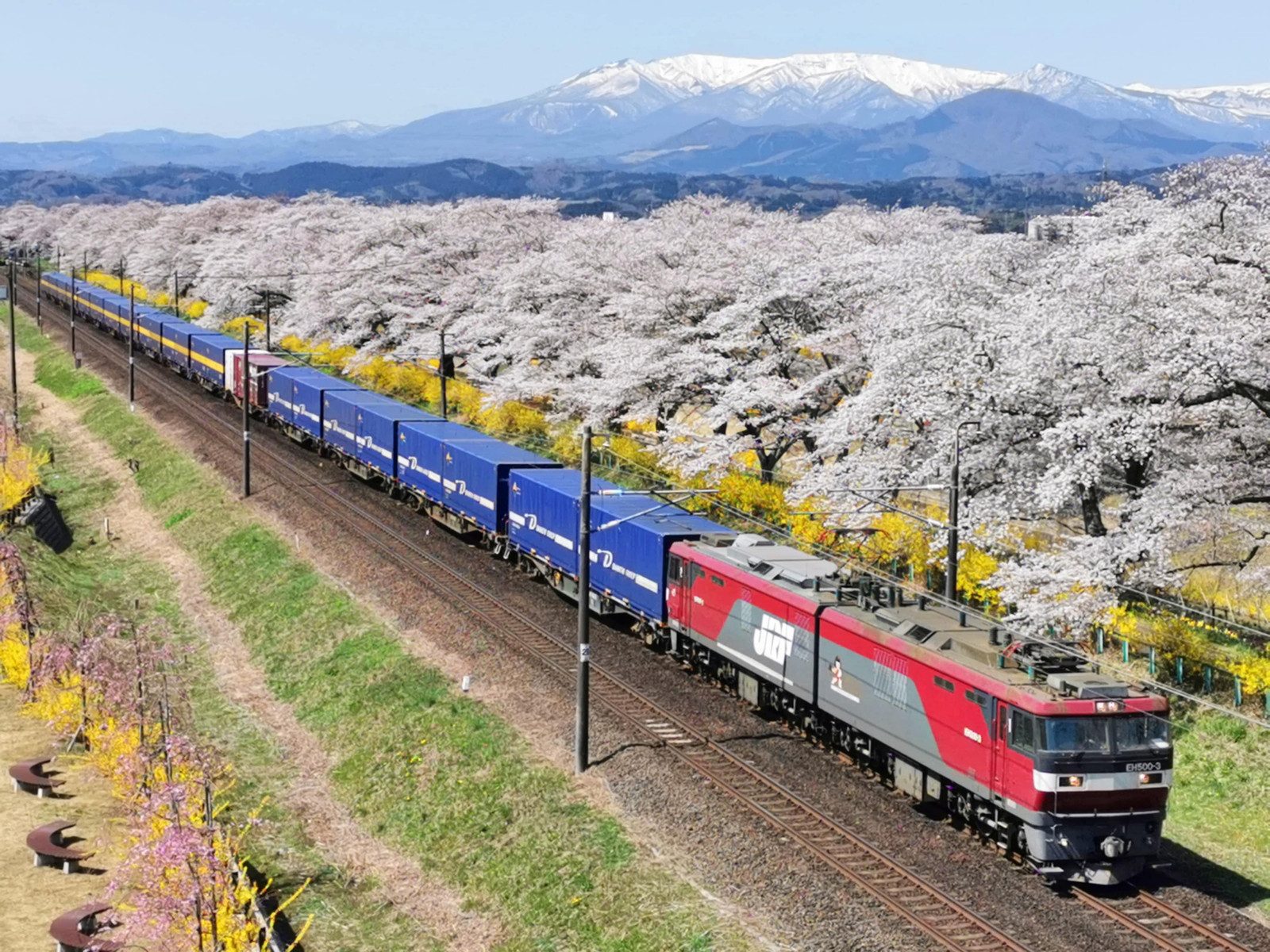
Spring comes later in Tohoku than in central and western Japan but bringing with it some of the most jaw dropping cherry blossom views in the entire country. The region has a combination of castle ruins, expansive parks, and mountain backdrops that add on to these views and the crowds here are a fraction of what you deal with in Kyoto or Tokyo, so for those who aren't a big fan of crowds, Tohoku may be a place to consider visiting.
Tohoku is a long region stretching considerably from north to south and in spring that means the temperatures vary more than you might expect. The southern end around Fukushima and Yamagata is mild through April, generally sitting in the low to mid teens and comfortable enough during the day. Further north toward Aomori it remains cold into the month and snow at higher elevations is not unusual. May brings warmer conditions across the whole region and makes travel easier. Bringing some extra clothes like jackets or coats along would be the best way to go, especially if you are moving between the coast and inland or mountain areas where the gap between temperatures can be noticeable.
The Shinkansen covers the major cities but the parts of the region that tend to stay with people longest are the ones that sit off those main lines, reachable by local rail, bus, or rental car rather than the express services. Springtime is quite nice here because the roads are clear, the crowds outside of peak blossom weekends are thin enough that you can move around without much friction, and the landscape is in good shape. Accommodation is generally easy to find outside of those peak weekends, though late April at the popular blossom spots is worth planning ahead for.
Exploring the Tohoku Region
Spring in Tohoku is cherry blossom season at its most unhurried and most rewarding. The season arrives later here than in central and western Japan and the blossoms linger longer in the cooler temperatures, giving the region a spring character that feels less pressured and more connected to the landscape than the more crowded blossom destinations further south. The spots below each have a specific seasonal reason that makes spring the right time to visit them.
Hirosaki Castle (弘前城)
Roughly 2,600 cherry trees around an Aomori castle, blooming weeks after the south has finished.
Hirosaki Castle (弘前城) in Aomori Prefecture is the major cherry blossom destination for visitors who miss the bloom further south, with the 2,600 cherry trees in the park around the castle typically reaching peak bloom in the last week of April (around two to three weeks later than Tokyo or Kyoto) and the famous pink 花筏 (hanaikada) petal carpet turning the moats completely pink in the first week of May.
The first trees were planted in 1715, when the Tsugaru clan brought them from Kyoto to the castle grounds, and the keep is one of only 12 surviving original Edo period castle towers in Japan and a National Important Cultural Property.
The festival usually falls between late April and early May, typically around April 23 to May 5 with the exact dates shifting on bloom conditions, and the 2026 edition runs April 17 to May 5.
The cherry varieties (52 in total) are pruned using techniques borrowed from local apple farming (Aomori is Japan's largest apple producing prefecture), producing four to five flowers per bud rather than the usual three to four and giving the blossoms a denser, cloudlike appearance.
The viewpoint from Gejo Bridge takes in the castle keep, the cherry blossoms in front and Mt. Iwaki (the "Tsugaru Fuji") rising behind in a single composition. The keep is currently in a temporary position before its move back to the original foundation in July 2026, which makes 2026 the last year for this trinity view in this exact form.
Rowboats can be rented on the west moat during the festival, and evening illumination runs from sunset to 10pm with the keep itself lit and reflected in the moat below.
Hirosaki Station is around 45 minutes from Aomori Station, with a ¥100 loop bus to the park.
If you can only see cherry blossoms in Japan once, Hirosaki in late April is worth making the trip for.
Kakunodate Samurai Street (角館武家屋敷通り)
A preserved Edo period samurai quarter in Akita, weeping cherries hanging over the old residences.
Kakunodate (角館) in Akita Prefecture is nicknamed the "Little Kyoto of Tohoku" for its preserved Edo period samurai district, with around 80 samurai residences from the 17th century lining the main Buke Yashiki street and designated an Important Preservation District for Groups of Traditional Buildings.
The weeping cherry trees (shidarezakura) along the street are held by local tradition to descend from three saplings carried up from Kyoto around 360 years ago in the dowry of the wife of Satake Yoshiaki, second lord of the Kakunodate branch of the Satake clan, who came from the Sanjonishi family of the capital, although no contemporary record survives to confirm the story.
Around 400 weeping cherries stand in the district today, 162 of them designated National Natural Monuments, and the oldest go back to plantings made at the samurai houses from about 1656.
The cascading branches over the black wooden fences of the samurai residences give the street its distinctive spring image, with the Kakunodate Cherry Blossom Festival running April 15 to May 5 in 2026 and peak bloom typically falling in late April through Golden Week.
There is no charge to enter the viewing areas, and food stalls line the approach streets through the festival period. Several samurai houses including the Ishiguro House and the Aoyagi House museum complex are open to visitors.
The riverbank along the Hinokinai River 5 minutes' walk from the samurai district has a separate 2 kilometre Somei Yoshino tunnel of around 400 trees designated a Place of Scenic Beauty by the national government.
Evening illumination starts at 5:30pm each day of the festival and runs until around 10pm on the samurai street and around midnight along the Hinokinai River embankment, with Semboku City counting around 864,000 visitors over the 2024 festival.
JR Kakunodate Station is around 3 hours from Tokyo on the Akita Shinkansen and around 45 to 50 minutes from Akita.
Kitakami Tenshochi (北上展勝地)
Around 10,000 cherry trees of 150 varieties along a 2 kilometre stretch of the Kitakami River.
Around 10,000 cherry trees of 150 varieties line a 2 kilometre stretch of the Kitakami River at Kitakami Tenshochi (北上展勝地) in southern Iwate Prefecture, a riverside park established in 1920, with the branches forming an unbroken canopy over the path and 300 carp streamers (koinobori) suspended across the river in a colourful row above the cherry blossoms in the lead up to Children's Day on May 5.
The Kitakami Tenshochi Sakura Festival runs April 10 to 29 in 2026, with bloom typically peaking in late April (around 2 to 3 weeks after Tokyo) and the varieties blooming in sequence from Yoshino cherries in mid April through Kasumizakura in early May to give a longer viewing season than most spots, and by the end of April the ground beneath the corridor is deep in fallen petals.
Horse drawn carriage rides under the cherry tree canopy run during the festival, and the trees are illuminated from 6pm to 8pm in the evening, their reflection spreading across the river surface.
River boat cruises are usually a popular option but have been suspended for the 2026 festival pending safety review.
北上コロッケ (Kitakami Croquette), made with locally produced beef, pork, taro and asparagus, is the food most associated with the festival and is sold from stalls throughout the grounds.
The park covers 293 hectares and is one of the Michinoku Three Great Cherry Blossom Spots alongside Hirosaki Castle in Aomori and Kakunodate in Akita, as well as one of Japan's Top 100 Cherry Blossom Spots. Admission is free.
JR Kitakami Station on the Tohoku Shinkansen is around 2.5 hours from Tokyo, with the park a 20 minute walk from the station's east exit.
Go at dusk, when the lights come on and the carp streamers are still moving above the river.
Tsurugajo Castle (鶴ヶ城)
Around 1,000 cherry trees ring the white keep and moats of Aizu's castle in mid April, lit up each evening through the festival.
鶴ヶ城 (Tsurugajo), also known as Aizu-Wakamatsu Castle, stands at the centre of Aizuwakamatsu in western Fukushima and is the spring set piece of the Aizu basin.
Around 1,000 cherry trees, mostly Somei Yoshino with yaezakura and weeping cherries among them, are planted around the keep, the stone walls and the moats, and they usually reach full bloom in mid April.
The castle was the stronghold of the Aizu domain and held out for about a month under siege in the Boshin War of 1868 before it surrendered.
The five storey keep you see today is a 1965 reconstruction that houses a museum on the castle and the domain, with a view from the top floor across the town and the cherry canopy below.
The Tsurugajo Sakura Festival runs through the blossom season from early April into the first week of May, and the trees are lit from sunset into the evening, when the white walls of the keep stand out above the blossom.
The park grounds are free to enter, so it is easy to walk the outer moats in the morning and come back after dark for the illumination.
Koiwai Farm Ipponzakura (小岩井農場の一本桜)
A lone Edo higan cherry standing in a pasture below the snow capped cone of Mount Iwate, in flower from late April into early May.
The 一本桜 (Ipponzakura / lone cherry tree) of 小岩井農場 (Koiwai Farm) in Shizukuishi, west of Morioka, is one of the best known spring scenes in Iwate, a single エドヒガン (Edo higan) cherry standing on its own in a green meadow, with the snow still lying on 岩手山 (Mount Iwate) behind it.
The tree is said to have been planted in the early 1900s to give the farm's cattle shade in what was then open pasture, and it has grown into a broad, rounded crown that usually flowers from late April into early May.
The meadow is a working part of the farm and is closed to visitors, so the tree is seen from a viewing area beside the road with its own free car park, about 1.5 kilometres from the entrance to Koiwai Farm Makiba-en, the farm's visitor park.
Early morning, before the cloud builds over the mountain, gives the best chance of a clear view of the peak, and the tree is just as striking at dusk when the sky colours behind it.
Koiwai Farm was founded in 1891 and is one of the largest private farms in Japan, so the visit pairs naturally with an afternoon at Makiba-en and its dairy produce, and with the cherry along the farm roads nearby.
Ashino Park (芦野公園)
Around 2,200 cherry trees and 1,800 old pines around a lake in Kanagi, with the Tsugaru Railway running through a tunnel of blossom.
芦野公園 (Ashino Park) in the Kanagi district of Goshogawara, in the Tsugaru area of western Aomori, is a lakeside park of around 80 hectares planted with some 2,200 cherry trees and 1,800 old pines, and it is listed among Japan's 100 best cherry blossom spots.
The scene most people come for is at Ashino-Koen Station on the 津軽鉄道 (Tsugaru Railway), where the cherry trees close over the single track and the small trains run through a tunnel of blossom as they pull in. The original 1930 station building beside the platform is a registered tangible cultural property and now houses a café.
Kanagi is also the home town of the writer 太宰治 (Dazai Osamu), and the park holds his literary monument and statue and appears in his book Tsugaru.
The Kanagi Sakura Festival runs from the end of April into the first days of May, which is when the blossom usually peaks this far north.
The Tsugaru Railway runs north from Tsugaru-Goshogawara, next to JR Goshogawara Station, so the park makes an easy stop on a day around the Tsugaru Peninsula.
Tsuruoka Park (鶴岡公園)
A castle park in Tsuruoka with cherry trees along the moats, listed among Japan's hundred blossom sites.
Tsuruoka Park (鶴岡公園) in Tsuruoka City in Yamagata Prefecture is the top cherry blossom destination in the prefecture and one of Japan's Top 100 Cherry Blossom Spots, with around 730 cherry trees of multiple varieties (Somei Yoshino, Yaezakura and weeping cherry) planted across the site of the former Tsurugaoka Castle, where the Sakai clan ruled the Shonai Domain for around 250 years during the Edo period.
The bloom peaks in early to mid April, with fallen petals forming pink rafts on the moat that runs around the park and the Tsuruoka Cherry Blossom Festival opening in early April (April 3 in 2026) for around two weeks of food stalls and lantern lit evening illumination from 17:30 to 21:00.
The park also contains Shonai Shrine (荘内神社), founded in 1877 to honour the former lords using materials from the dismantled castle, and the Chido Museum (致道博物館) collection of relocated historic Shonai buildings including a Taisho period Western style hall with a red dome. The old castle moat, stone walls and several cedar trees that are centuries old remain across the park.
JR Tsuruoka Station on the Uetsu Line is around 10 minutes by Shonai Kotsu Bus from the park.
Seasonal Experiences and Events in Spring
Now that you have a sense of how the season runs here, these are the highlights and experiences worth building a spring visit around:
Prefecture map
Seasonal Food & Everyday Atmosphere
Spring in Tohoku is one of the most rewarding seasons to eat through the region. The combination of cold coastal waters, mountain forests, and fertile river valleys produces a range of seasonal ingredients that are deeply tied to the landscape and to the communities that have been eating them for generations. It is a region with strong food identity and spring brings out some of its most distinctive flavours.
Sansai
Wild mountain vegetables gathered from the thawing hillsides, with a foraging tradition that runs deeper here.
Sansai are as central to Tohoku's spring as they are to Hokkaido's, but the tradition here is older and more codified.
Across the mountain communities of Iwate, Yamagata and Akita, spring foraging follows routes and rules passed down through families, and the range is wider, with kogomi, warabi, taranome, koshiabura and shidoke.
The connection to the mountains is partly religious, since the 出羽三山 (Dewa Sanzan) pilgrimage in Yamagata carries a 精進料理 (shojin ryori) tradition in which sansai do the work meat and fish would do elsewhere, and the temple lodgings at Haguro still serve it that way in spring.
Practically it means Tohoku cooks sansai more seriously than it fries it. Bitterness is drawn out in ash or rice water, stalks are salted for the year ahead, and the same plant is treated differently depending on the week it was picked.
Fuki
Akita's giant butterbur, stalks tall enough to stand under, simmered down through spring.
Fuki is eaten across Japan but Tohoku has a version of its own. 秋田ふき (Akita fuki) is a giant strain that grows to well over a metre and occasionally to two, thick enough that the old tourist photographs of the Akita countryside show people standing beneath the leaves.
The stalks are cut in spring, peeled, and simmered in a sweet soy broth as きゃらぶき, or cooked down with miso, and the flower buds, ふきのとう (fukinoto), are picked earlier still as the snow retreats and fried as tempura for their sharp bitterness.
The texture is fibrous and the flavour is bitter in a way that takes some getting used to, which is exactly why it reads as spring to people who grew up with it.
Most of it is preserved rather than eaten fresh, so the jars turn up in Akita's markets all year.
Sakuramasu
Yamagata's prefectural fish, a sea run trout that comes back up the rivers around cherry blossom time.
桜鱒 (Sakuramasu / cherry salmon) is the sea run form of the masu trout, and it takes its name from the season it comes home. The fish spend a year or so in the sea and return to the rivers of northern Japan in spring, around the time the cherry blossom is out.
In Yamagata it is the prefectural fish, and the rivers that run into the Sea of Japan, the 最上川 (Mogami) above all, have long been known for it.
The flesh is a soft pink with a fine grain and just enough fat, and it is usually eaten simply, grilled with salt or with a little miso, which suits its clean, delicate flavour better than richer sauces.
In spring it turns up on ryokan and restaurant menus around Yamagata and Shonai, and it is worth asking for whenever you see it written up.
Hirame
Firm, clean flounder at its best in the cold water carrying from winter into spring.
Flounder is at its best in the cold water season that carries from winter into spring along Tohoku's Pacific coast.
The flesh is firm, clean, and delicately flavoured, and the Sanriku coast in particular produces hirame of excellent quality.
It is most commonly eaten as sashimi where the quality of the fish speaks for itself, and spring hirame sashimi served simply with soy and wasabi is one of those dishes that needs nothing more than good ingredient quality to be memorable.
Wakame
Spring harvested wakame from the Sanriku coast, prized for its quality.
This is harvested in spring along the Sanriku coast of Iwate and Miyagi and the wakame coming off this stretch of coastline has a reputation going back a long way.
Fresh wakame available in spring has a tenderness and flavour that the dried version used throughout the rest of the year cannot replicate.
It is eaten simply, blanched and dressed with sesame oil and soy, or served in a light miso soup, and the clean, oceanic flavour of fresh spring wakame from the Sanriku coast is something worth experiencing if you are passing through the region.
Asari
Plump spring clams, in miso soup or steamed with sake.
Asari peak in spring when the water temperatures are ideal and the clams are full and flavourful.
They appear in miso soup, steamed with sake and butter, or cooked in a light broth, and the natural sweetness and umami that good quality spring clams release into whatever liquid they are cooked in is one of the reliable pleasures of the season across Tohoku's coastal prefectures.
Kaki
Sanriku oysters carrying into spring at the tail of the season.
Kaki from the Sanriku coast of Iwate and Miyagi have a strong reputation and the tail end of the oyster season carries into spring.
The cold, nutrient rich waters of the Sanriku coast produce oysters that are large, creamy, and intensely flavoured, and eating them fresh at the coast in spring before the season closes is an experience that regular oyster eaters tend to remember clearly.
Ichigo
Strawberries taken seriously across Tohoku, with strong growing areas in Miyagi and Iwate.
Ichigo are taken seriously in Tohoku and the region is a serious producer. Miyagi and Iwate in particular have developed strong strawberry growing reputations and the spring harvest produces fruit that is large, sweet, and deeply flavoured.
Roadside stalls and farm shops sell them fresh through the season and eating Tohoku strawberries in spring is a simple pleasure that is difficult to improve on.
Some farms offer strawberry picking experiences which are popular with both locals and visitors.
Moso Bamboo Shoots
Pale, tender bamboo shoots from the Yudagawa hot spring area of Tsuruoka, at their best in May in rice and in moso soup.
孟宗 (Moso) is the large moso bamboo, and its young shoots are one of the clearest tastes of spring in the 庄内 (Shonai) region of Yamagata.
The ones from 湯田川 (Yudagawa), a small hot spring village on the edge of Tsuruoka, are sold under the name 湯田川孟宗 and are prized for being pale, tender and naturally sweet. This far north the shoots come up later than in the rest of Japan, with the peak in mid May.
The classic dish is 孟宗汁 (Mosojiru), a soup of bamboo shoots simmered with thick fried tofu and shiitake and finished with sake lees and miso, and the shoots are also cooked into rice or grilled whole in the husk.
Yudagawa's inns build their spring menus around the harvest, and the season is short, so it is a dish to plan a late spring visit to Shonai around.