This page has been translated from Japanese. If anything is unclear, please get in touch.
Summer region guide

Chugoku in Summer

Setting the Scene

General Feeling of the prefecture

Chugoku in summer is warm and humid across both coastlines, though the intensity varies depending on where you are. The San'yo side facing the Seto Inland Sea heats up steadily through July and August, with temperatures sitting in the low to mid thirties on the hottest days. The sheltered nature of the Inland Sea coast means less wind and more still, heavy air during peak summer, not as extreme as Kyoto's basin heat but noticeable enough to shape how you move through the day. The San'in coast to the north runs slightly cooler and catches more of a sea breeze, which makes outdoor activity more manageable through the hotter months.
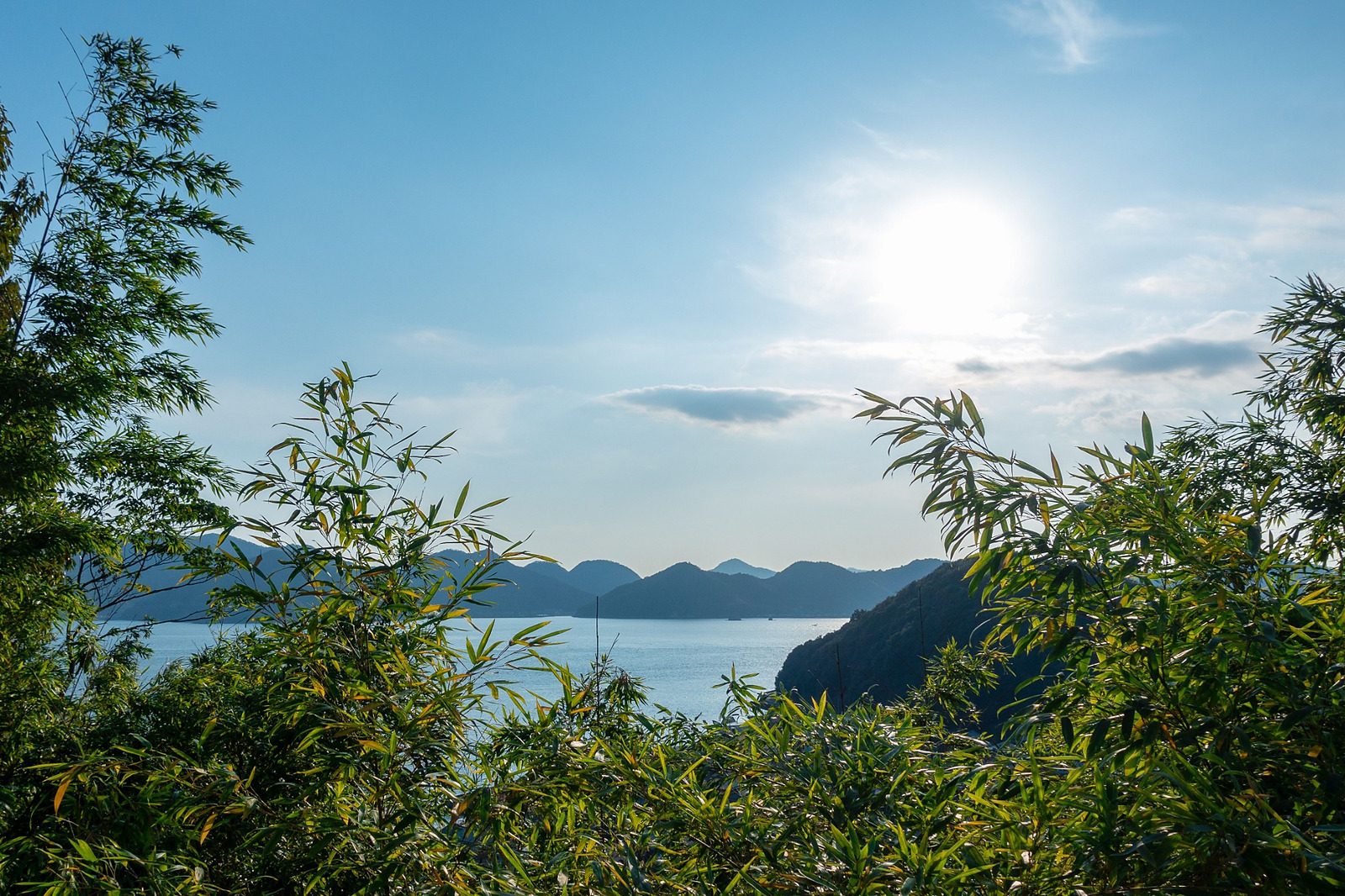
Summer sun over the islands of the Seto Inland Sea seen through green bamboo

The region's cities handle the summer heat without much fuss. Hiroshima and Okayama are functional, well equipped urban centres with the usual range of air conditioned spaces, covered shopping areas, and indoor attractions that make the middle of the day easy enough to navigate. Outside the cities, the rural interior and mountain areas that run through the spine of the region offer cooler conditions and a practical escape from the coastal heat if you are willing to put in the short drive or train ride to get there. The Chugoku Mountains are not dramatic in the way the Japan Alps are, but they are green, quiet, and noticeably more comfortable in summer than the lowland areas on either side.

Clothing is the same simple calculation as anywhere in Japan's summer, light and breathable for the day, with a layer available for air conditioned spaces and cooler evenings. Sun protection is worth taking seriously, particularly if you are spending time around the Seto Inland Sea where the combination of direct sun and reflection off the water adds up quickly. The rainy season moves through Chugoku in June and clears in time for the main summer period, though afternoon rain showers are still possible through July and August.
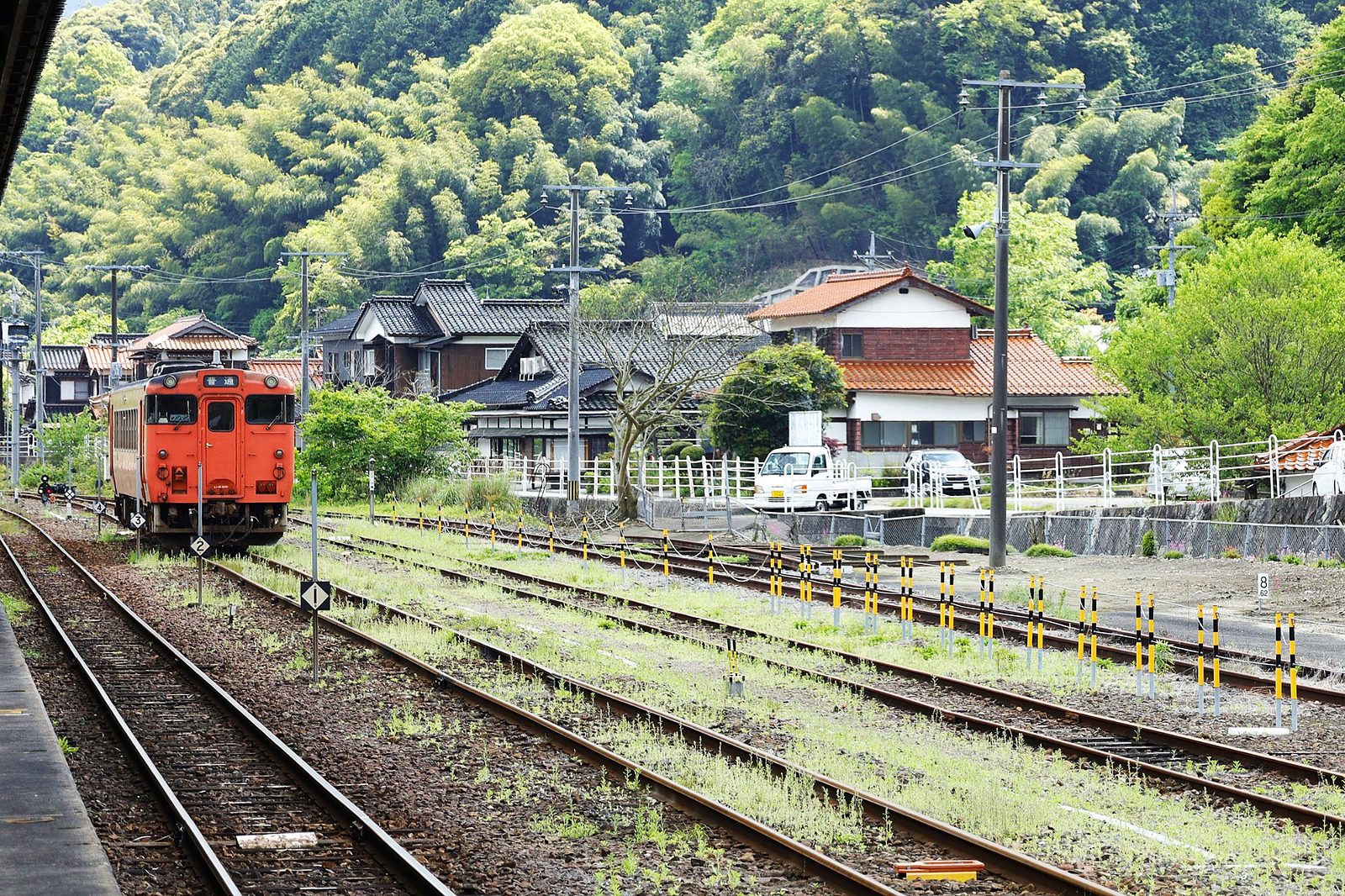
A local diesel train at Tsuwano Station in a green mountain valley of western Shimane

Summer is not Chugoku's peak tourist season and the region is generally manageable even at the height of summer. Hiroshima draws consistent visitor numbers year round given its historical significance, but outside of the city the wider region is quiet and accommodation is available without the advance booking pressure that defines summer in more popular parts of Japan. That relative calm is one of Chugoku's consistent advantages regardless of season.

Beyond the capital

Exploring the Chugoku Region

Summer in Chugoku reveals a region that handles the season with more variety and more specific reward than its relatively quiet reputation might suggest. The Seto Inland Sea islands, the dramatic Japan Sea coastline, the remote mountain valleys of the interior, and the historic port towns of the southern coast all offer summer experiences that are specific to the season and specific to a region that most visitors to Japan pass through rather than explore properly. The spots below cover that full range.

Onomichi · Hiroshima

Shimanami Kaido (しまなみ海道)

A cycling and driving route across six Seto Inland Sea islands, linking Onomichi in Hiroshima to Imabari in Ehime by a chain of long bridges.

The Shimanami Kaido (しまなみ海道) crossing the Seto Inland Sea between Onomichi in Hiroshima and Imabari in Ehime carries a 70 kilometre dedicated cycling path alongside the Nishiseto Expressway, over six bridges and through the six islands of Mukaishima, Innoshima, Ikuchijima, Omishima, Hakatajima and Oshima, marked by a painted blue line on the road shoulder from one end to the other so that navigation takes care of itself. The last crossing before Imabari is the Kurushima Kaikyo Bridge, 4,105 metres of the world's first three linked suspension bridge, thrown across a strait about 4 kilometres wide. Bridge tolls for cyclists are waived to 31 March 2028 under the Shimanami Cycling Free scheme, and Cycle Oasis rest stops at regular intervals provide bicycle racks, water, food and toilets. The Shimanami Japan rental network hires a cross bike or city cycle for ¥1,100 a day and an electric assist bike for ¥1,600, on top of a ¥1,100 deposit that comes back only if the bike is returned to the terminal it came from or another on the same island, so riding one way costs the deposit. Sagawa Express will move a bag between the two ends for ¥2,200 on the same day, which leaves you riding with a daypack. Summer riding runs June through September and rewards an early start, with the heat off the water by mid morning and shade to be found in the citrus groves on the southern islands. The route takes 6 to 8 hours for a moderate cyclist at one day pace and is commonly broken into two days with an overnight stop on Omishima, where the treasure hall at Oyamazumi Shrine holds around 80 per cent of the arms and armour designated National Treasures or Important Cultural Properties in Japan, at ¥1,000 for adults. Kosanji Temple on Ikuchijima, the Murakami Kaizoku Museum on Oshima and the Yoshiumi Rose Park, also on Oshima and free to enter with 3,500 rose plants of 400 varieties flowering from mid May into December, are the other stops worth shaping a day around. From Hiroshima Station the JR Sanyo Line runs to Onomichi Station in around 1 hour 40 minutes for ¥1,520, with the Sanyo Shinkansen to Shin-Onomichi Station taking around 35 minutes for ¥3,280 as the faster option.

General information
AddressOnomichi-shi, Hiroshima-ken to Imabari-shi, Ehime-ken
AccessThe route begins at Onomichi Station on the JR San'yo Main Line. Rental bicycles available at Onomichi Port adjacent to the station.
EntryFree to ride, bridge tolls for cyclists waived to 31 March 2028, cycle hire from ¥1,100 per day plus a ¥1,100 deposit
HoursOpen at all times
ParkingCar parks at the route ends and island ports
Misasa · Tottori

Mitokusan Sanbutsuji Nageire-do (三徳山三佛寺 投入堂)

A small temple hall wedged into a cliff face high on Mount Mitoku, reached only by a steep chained climb through the forest.

The Nageire-do (投入堂) is a small wooden hall built into a cave on a sheer cliff face high on the sacred mountain of Mitokusan (三徳山) in Misasa, Tottori, designated a National Treasure and dating to the late Heian period over 1,000 years ago, with the construction method by which the building was placed in the inaccessible cliff cave still unknown and the structure popularly called "Japan's most dangerous National Treasure". Reaching the temple requires registering at the climber's office at the Sanbutsuji (三佛寺) main hall, the Tendai mountain temple at the foot of the mountain founded by the Shugendo ascetic En no Gyoja in 706 AD, with the shoe inspection required at registration and minimum two person rule for safety, the option of buying traditional straw sandals if footwear is inadequate, and the steep mountain trail to the temple taking around 45 minutes one way with sections of chain climbs and slippery boulder traverses past the Kazura-zaka root strewn slope and the Uma-no-se and Ushi-no-se rock surfaces. The Nageire-do can only be viewed from outside the cliff site rather than entered, with a distant Yohaijo viewing point on the road at the base of the mountain as an alternative for those not climbing. The mountain climbing fee is ¥1,200 including the main hall admission, with registration open 8am to 3pm and descent required by 4:30pm, and the mountain closed entirely in wet weather. From JR Kurayoshi Station the Hinomaru Bus on the Misasa Line runs to Mitokusan Sando Iriguchi in around 40 minutes.

General information
Address1010 Mitoku, Misasa-cho, Tohaku-gun, Tottori-ken 682-0132
AccessApproximately 40 minutes by bus from Kurayoshi Station on the JR San'in Main Line, taking the Hinomaru Bus Misasa Line to the Mitokusan Sando Iriguchi stop
EntryTemple ¥400, mountain trail a further ¥800
Hours8:00 to 15:00, trail entry by inspection
ParkingCar parks at the temple base
Phone+81 858 43 2666
Mine · Yamaguchi

Akiyoshidai Plateau (秋吉台)

Japan's largest karst plateau, green grassland studded with white limestone pinnacles above a cave that holds 17°C all summer.

秋吉台 (Akiyoshidai) in Mine City, Yamaguchi, is the largest karst plateau in Japan, a rolling upland at around 300 metres where the limestone breaks through the grass in thousands of grey and white pinnacles and the ground is pocked with sinkholes. It has been a Quasi-National Park since 1955 and a Special Natural Monument since 1964. In summer the grassland is at its greenest, and the Akiyoshidai Karst Road that crosses the plateau passes viewpoints over the whole sweep of it. Below the plateau lies 秋芳洞 (Akiyoshido), one of the largest limestone caves in Japan, with an entrance 20 metres high, chambers up to 200 metres wide and a constant temperature of 17°C, which makes it the coolest place in the region on an August afternoon. Admission to the cave is ¥1,300 for adults. The plateau is burned every February in the Akiyoshidai Yamayaki, which is why the grass returns so fresh and even by early summer. Walking up from the cave on the elevator exit to the plateau above and following one of the marked trails across the karst is the classic half day, and the Akiyoshidai Science Museum explains how the landscape formed.

General information
AddressAkiyoshi, Shuho-cho, Mine-shi, Yamaguchi-ken 754-0511
AccessApproximately 45 minutes by bus from Shin-Yamaguchi Station on the Sanyo Shinkansen to the Akiyoshido stop, then a short walk to the cave entrance or the plateau
EntryPlateau free, Akiyoshido cave ¥1,300 for adults
HoursPlateau open at all times, cave open daily
ParkingCar parks at the cave entrance and on the plateau
Phone+81 837 62 0115
Shimonoseki · Yamaguchi

Tsunoshima Island and Bridge (角島・角島大橋)

A 1,780 metre bridge over cobalt and emerald water to a small Japan Sea island of white beaches and a Meiji stone lighthouse.

角島 (Tsunoshima) is a small island off the Hohoku coast at the north western tip of Yamaguchi, joined to the mainland since 2000 by the 角島大橋 (Tsunoshima Ohashi), a 1,780 metre bridge that runs low across the Amagase Strait and is one of the longest toll free bridges to an island in Japan. The water around it is the reason to come in summer. Over the white sand shallows the sea turns a clear cobalt and emerald that looks more like Okinawa than the Japan Sea, and the bridge was routed around the islet of Hatoshima to protect it. On the island the 角島灯台 (Tsunoshima Lighthouse) is a granite tower completed in 1876 to a design by the British engineer Richard Henry Brunton, one of the few in Japan that visitors can climb, and the park around it looks out over the open sea. 角島大浜海水浴場 (Tsunoshima Ohama Beach) and the beaches beside the bridge are the island's swimming spots in July and August, and there is camping on the island. The best view of the bridge is from 海士ヶ瀬公園 (Amagase Park) on the mainland side, where there is free parking for 47 cars. By public transport take the JR San'in Line to Takibe Station and the Blue Line bus bound for Tsunoshima, about 30 minutes, getting off beside Tsunoshima Elementary School.

General information
AddressTsunoshima, Hohoku-cho, Shimonoseki-shi, Yamaguchi-ken 759-5331
AccessApproximately 30 minutes by Blue Line bus from Takibe Station on the JR San'in Line, or about 41 km by car from the Mine-Nishi exit of the Chugoku Expressway
EntryFree, bridge toll free
HoursOpen at all times
ParkingFree car parks at Amagase Park (47 spaces) and Sezaki Hi no Koen (23 spaces)
Phone+81 83 782 1914
Summer moments

Seasonal Experiences and Events in Summer

Now that you have a sense of how the season runs here, these are the highlights and experiences worth building the trip around.

Prefecture map

Seasonal culture

Seasonal Food & Everyday Atmosphere

Summer in Chūgoku is a season shaped by the Seto Inland Sea and the heat that settles across the region. As temperatures rise, the focus shifts toward lighter dishes, fresh seafood, and ingredients that bring a sense of balance to the climate. From the coastal towns of Hiroshima and Okayama to the quieter inland areas, it is a region with a calm and understated food culture, and summer brings out some of its most refreshing and naturally bright flavours.

小イワシ (Ko-Iwashi)

Small sardines

Hiroshima's ko-iwashi, at their best through the summer, eaten raw or fried whole.

Hiroshima small sardines

小イワシ (Ko-Iwashi) are small sardines landed in the Seto Inland Sea, and Hiroshima has a saying about them, that washed seven times they are better than sea bream, which refers to the rinsing the fish get before they are served raw. The season runs through the warm months, and being small and delicate they have to be handled fast, which is why raw ko-iwashi is a coastal dish rather than an exported one. Sashimi is the version to look for, prepared by hand rather than knife and eaten with ginger and soy. 天ぷら (tempura), the whole fish battered and fried so the bones soften, is the everyday form and turns up in every Hiroshima izakaya through the summer. They are cheap, which is part of the character of the dish, and they are eaten in quantity rather than ceremoniously.

タコ (Tako)

Octopus

Inland Sea octopus, muscled by the tidal currents between the islands, at its firmest in summer.

Seto Inland Sea octopus

Octopus from the Seto Inland Sea is firm rather than soft, and the currents are the reason. The tide is forced through narrow channels between the islands and an octopus holding position on that seabed builds dense muscle, so the texture has a snap to it. Summer is when it is best, and there is an old habit of eating it around the 半夏生 (hangesho) turning point in early July, the idea being that the eight arms grip like rice roots taking hold. Okayama and the Bizen coast are a centre of it, as are the waters off Mitoyo and the Shimanami islands. It is boiled and sliced, eaten as sashimi, or cooked through rice as たこめし (tako meshi), and the local touch is a squeeze of citrus rather than soy. 干しタコ, whole octopus dried in the sun on frames, is a sight along the island coasts in summer.

鱧 (Hamo)

Pike conger eel

The Inland Sea is where hamo is actually caught, and the local way with it is a hotpot rather than a ritual.

Summer hamo

Hamo is Kyoto's summer fish but the Inland Sea is where it comes from, and the coast handles it differently. The fish is landed all along the Chugoku shoreline through summer, and historically it was Inland Sea hamo that travelled alive up to the capital, which is the trade that made Kyoto's hamo cuisine possible in the first place. On this coast it is treated as fish rather than as ceremony. 骨切り (honegiri), the bone cutting, is done here too because there is no way around it, but the results go into 鱧しゃぶ (hamo shabu), the scored fillets swirled briefly in a hot dashi at the table so they curl open, and into simple 鱧の天ぷら and grilled preparations. It is cheaper here and more plainly served. The Kyoto version on the Kansai page is the same fish at the end of a much longer road.

穴子飯 (Anagomeshi)

Conger eel rice

Grilled conger eel over rice cooked in its own stock, the dish of Miyajimaguchi and a Hiroshima summer plate.

Miyajimaguchi speciality

Conger eel rice began as a station bento in 1901, sold near Miyajimaguchi Station on the crossing to Miyajima, four years after the Sanyo Railway opened. The eel is gutted and grilled kabayaki style with soy sauce, sake and mirin, then sliced over rice cooked with kombu and anago stock. The agriculture ministry puts the fish at its best in July and August, and again in November when it carries more fat.

岩牡蠣 夏輝 (Iwagaki Natsuki)

Rock oysters

Tottori's wild rock oysters, dived off the San'in coast and eaten raw right through the summer.

June to August

Rock oysters are the summer oyster of the San'in coast, in season from June to August and at their fullest in July and August before spawning. Divers work rocky ground between 1 and 15 metres down, levering the shells off with an iron bar called a kakiokoshi. Flat bottomed ones measuring 13 centimetres or more carry the Natsuki brand label, a name given in 2005 and registered as a trademark in 2007.

宍道湖のしじみ (Shinjiko no Shijimi)

Lake Shinji shijimi clams

Brackish water clams from Lake Shinji in Shimane, simmered with miso into the soup drunk through the summer months.

Doyo shijimi

Lake Shinji shijimi clams are the yamato shijimi of Lake Shinji, the seventh largest brackish lake in the country and, the agriculture ministry says, one of its leading grounds for the catch. The summer clams are the plump ones, eaten during the midsummer doyo period as a guard against summer fatigue. Around 300 fishers work the lake, each held to roughly 100 kilograms to keep the beds from being stripped.

マスカット・オブ・アレキサンドリア (Masukatto obu Arekisandoria)

Muscat of Alexandria grapes

Pale green glasshouse grapes from Okayama, thinned berry by berry by hand and cut through the summer months.

Okayama glasshouse fruit

Muscat of Alexandria grapes come almost entirely from Okayama, which JA Zen-Noh Okayama puts at 90 per cent of the national crop. The vines stand in glasshouses heated from around December, which brings the fruit off between May and August, with unheated houses carrying the season on to November. Growers thin the berries by hand several times over so that the bunch fills out evenly. Grape growing in the prefecture dates to 1878.

須佐男命いか (Susa Mikoto Ika)

Sword tip squid

Yamaguchi's branded kensaki squid, landed live at Susa and eaten as sashimi while the flesh is still clear.

Live from Susa port

Sword tip squid is caught by hook and line off Susa in Hagi City, where summer is the peak of the fishery. Boats bring it in alive to holding tanks, so it reaches the plate translucent and firm. The brand takes its name from the deity Susanoo no Mikoto and was registered as a trademark in 2006. Fishermen sold it at the harbour on Sunday mornings from 7 June to 26 July 2026, at ¥320 per 100 grams.

砂丘らっきょう (Sakyu Rakkyo)

Sand dune shallots

Small white bulbs lifted from the Tottori dunes in early summer and pickled in sweet vinegar.

Late May to mid June

Sand dune shallots are dug from the sandy ground around Fukube in Tottori City and Hokuei in Tohaku from late May to mid June, whiter and finer in fibre than rakkyo grown in ordinary soil. The full cure salts them for a fortnight or more so that a lactic fermentation starts, then desalts them and moves them into sweet vinegar. Tottori Sakyu Rakkyo and Fukube Sakyu Rakkyo were registered as geographical indications in 2016.

Plan your trip

Book your stay in Chugoku

Search accommodation across Chugoku, from Hiroshima and Okayama city hotels to Matsue lakeside inns and Izumo guesthouses. Compare options across the major booking platforms.

AdultsAges 18 or above
2
ChildrenAges 0–17
0
Book with
Pick a site. Your dates and details are carried over so you can check prices and book there.

Ready to plan your Chugoku trip?

Browse itineraries built around Chugoku in summer, from the island hopping Shimanami Kaido to the clear coves of the San'in coast.

View Chugoku Itineraries →