Confirm your email to unlock saving, sharing and exporting. We sent a link when you signed up.
Summer region guide
Hokkaido in Summer
Setting the Scene
General Feeling of the prefecture
Hokkaido's summer would be considered by many the best season, and for good reason. While the rest of Japan swelters through heat and humidity that can make
sightseeing exhausting, Hokkaido is generally more comfortable being free from the humidity that anyone would know if they travelled in Japan in summer.
July and August bring warm, sunny days typically ranging from
the low to mid twenties, with cooler evenings that make everyday things like sleeping and moving around not such a pain. It is, by Japanese standards,
a remarkably easy climate to travel in.
That said, summer is Hokkaido's peak tourist season and you can definitely feel it. Accommodation fills up quickly particularly around Furano, Biei,
and the national parks which are reflected in the prices. Booking well in advance is not just recommended, it is essential if you have specific places in mind.
The same applies to the more popular seasonal attractions which can draw large crowds, particularly in late July and August.
Packing for a Hokkaido summer is pretty simple compared to other seasons. Light, breathable clothing will cover most of your days,
though a light layer for evenings is always worth having on hand as temperatures can drop more than you might expect once the sun goes down, especially
in elevated or coastal areas. If you're planning to spend time outdoors hiking, cycling, or exploring the national parks, good walking shoes and sun
protection are worth prioritising.
As with any season in Hokkaido, having a rental car will significantly enhance your experience. There are endless things to see and do, but they
are spread across a vast area,
so having the freedom to stop at a roadside farm stand, detour to a quiet lake, or chase the best light across the flower fields is something public transport
simply cannot replicate. Roads are fully open by summer and driving conditions are at their best, making it the ideal season to explore Hokkaido at your own pace.
Beyond the capital
Exploring the Hokkaido Region
Summer is when Hokkaido is fully open and at its most accessible. The roads are clear, the days are long, and the landscapes that
define the island, the flower fields, the alpine highlands, the coastline, and the lakes, are all at their peak at the same time.
The spots below each have a specific seasonal reason that makes summer the right time to visit them.
Nakafurano · Hokkaido
Farm Tomita (ファーム富田)
A lavender farm in Nakafurano, its rows of purple at their peak in early to mid July, with flower fields, a distillery, and lavender ice cream.
Farm Tomita is the farm that established Furano's identity as Japan's lavender capital and summer is the only time to visit it. The lavender fields that roll across the hillside behind the farm buildings flower from late June to late July, with the Traditional Lavender Field at its peak in the first half of July, and the sight of the purple rows stretching across the landscape with the Tokachi mountain range visible behind them on a clear day is one of the most recognisable images associated with Hokkaido. The farm grows multiple varieties of lavender that peak at slightly different times throughout the season, which is great as this can allow travellers to be a little more flexible in when they want to go and also spread the crowds out a bit too. Once the lavender is over the farm carries on into August on its other flowering crops, poppies, salvia and a range of other seasonal flowers that are planted in broad coloured bands across the hillside that help to make the farm worth more than a single photograph. The distillery on site produces lavender oil and a range of lavender scented products, and the soft serve ice cream made with lavender is one of those simple seasonal pleasures that any and all visitors should at least think of trying.
AccessApproximately 10 minutes by car from Nakafurano Station on the JR Furano Line, or by the seasonal Lavender Farm Station stop on the same line which operates during the summer lavender period
A pond of striking turquoise water near Biei, its colour from mineral runoff, with bare larch trunks standing in the shallows.
The Blue Pond sits in the forest just outside Biei and summer is the season when the extraordinary blue green colour of the water is at its most vivid. The colour is a natural phenomenon caused by aluminium hydroxide particles suspended in the water that scatter light in a way that produces the striking turquoise tone, and the combination of that colour with the drowned larch and birch trunks rising from the surface and the surrounding summer green of the forest makes it something that would draw eyes from every direction. Now something as eye catching as this would make you think that it was created with that vision in mind, but it was actually formed as a result of erosion control works on the Biei River following the 1988 eruption of Mount Tokachi and its accidental beauty is part of what makes it compelling. A walking path around the perimeter of the pond allows you to view it from multiple angles and the light changes significantly through the day, with the early morning and overcast days often producing the most intense blue colour.
AccessApproximately 20 minutes by car from Biei Station on the JR Furano Line
EntryFree
HoursOpen through the day, evening illumination in some seasons
ParkingPaid car park around ¥500
Phone+81 166 92 4321
Biei · Hokkaido
Shikisai no Oka (四季彩の丘)
A hillside of flower fields striped in colour across the rolling Biei landscape, at its fullest from July.
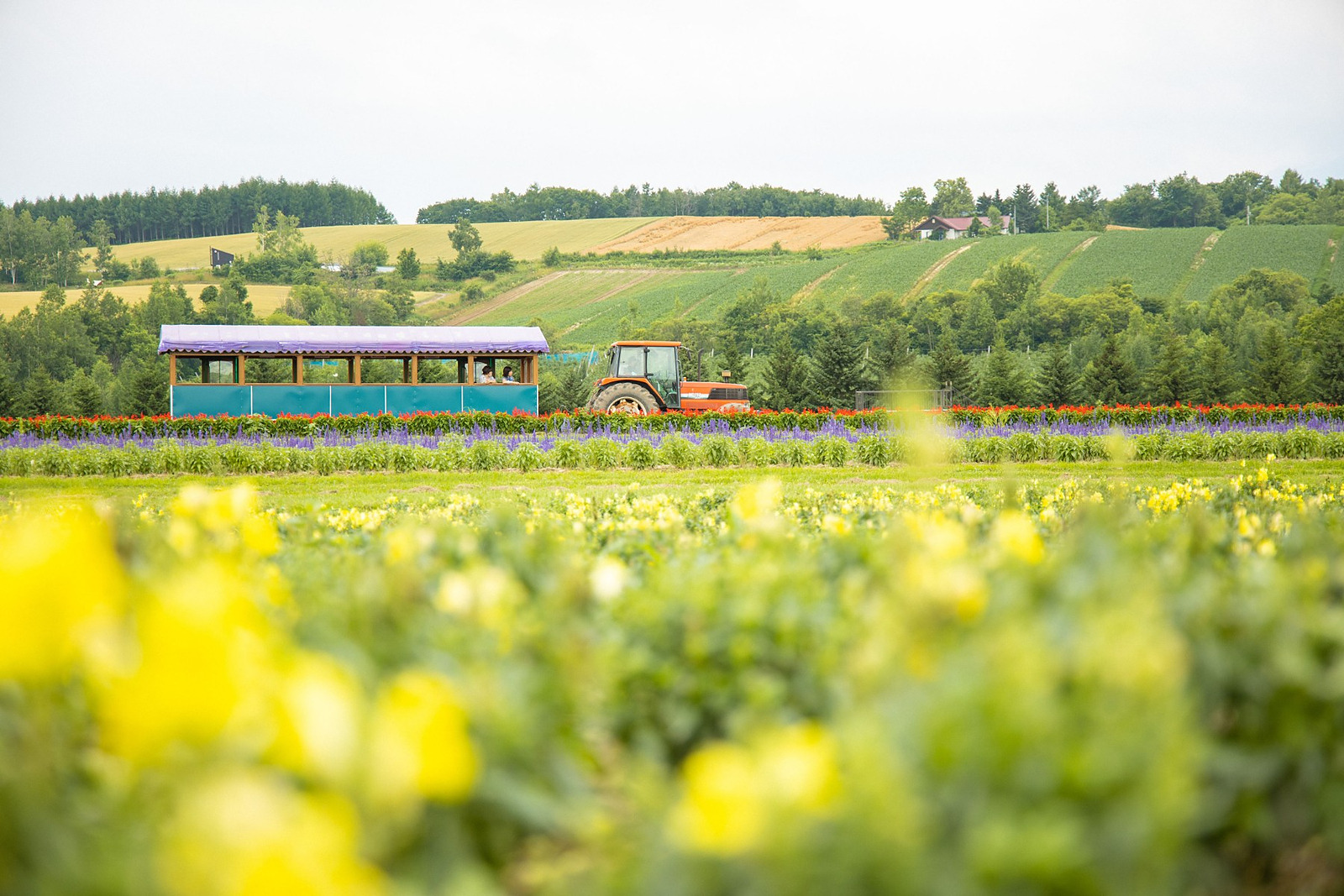
Shikisai no Oka is a large flower farm on the rolling hills outside Biei and while in springtime it is beautiful, summer is when it reaches its full and most spectacular display. For those who have read the Hokkaido in Spring section would likely know some of this, but for those who haven't, the fields are planted in broad bands of different flowering crops such as lavender, salvia, marigold, sunflower, and a range of other summer varieties that create a coloured patchwork across the hillside that is most intense through July and August. A tractor bus operates across the grounds for those who want to cover the full extent of the farm without walking and the farm shop on site sells seasonal produce and dairy products made from local milk. Also, the early morning light across the fields before the day visitors arrive gives a quieter and more personal experience of the landscape than the busier midday period so this might be worth considering if you want a more relaxed experience.
Around two million sunflowers across a 23 hectare hillside in Hokuryu, in full bloom from mid July to late August.
Hokuryu in the Sorachi region has made the sunflower its emblem, and the 北竜町ひまわりの里 (Hokuryu Sunflower Village) is where the town plants it on the largest scale, with around two million sunflowers of some 18 varieties covering a 23 hectare slope. The fields come into bloom from mid July and hold their colour until late August, and the Sunflower Festival runs through the peak from late July to the middle of August with food stalls and events on the site. The best way to take in the size of it is from the viewing deck at the top of the hill, where the rows of yellow run all the way down to the tree line, but the paths through the fields put you right in among the flowers, some of them taller than the people walking past. There is also a sunflower maze and a small tour train that loops through the fields during the season. Entry to the fields is free, which makes it an easy stop to add to a drive between Sapporo and Asahikawa, and it is a sight that only exists in summer.
Hokkaido's highest peak in Daisetsuzan National Park, reached by ropeway to alpine trails and steaming volcanic vents.
Summer is the season when the alpine environment of Asahidake is most accessible. Asahidake is Hokkaido's highest peak at 2,291 metres, and the ropeway lifts visitors from the onsen village to Sugatami Station at 1,600 metres, which opens the highland plateau to anyone regardless of fitness level, and the summer wildflowers that bloom across the volcanic terrain through July and August like チングルマ (Chinguruma), エゾコザクラ (Ezo Kozakura), and a range of other alpine species, are found nowhere else at this altitude in Hokkaido and are unique to the summer season before the early autumn foliage comes around. Hiking trails from the upper ropeway station lead across the plateau and toward the summit for those equipped for mountain walking, and the views from the upper slopes on a clear summer day reach across Daisetsuzan, the largest national park in Japan by area, taking in volcanic peaks, highland wetlands and forests that are as remote and extraordinary as any in the country.
AccessApproximately 1 hour by car from Asahikawa, or by bus from Asahikawa Station to the Asahidake Onsen bus stop
EntryFree, Asahidake Ropeway charged separately
HoursOpen at all times, ropeway runs through the day
ParkingPaid car park at the ropeway base
Northwestern · Hokkaido
Japan Sea Orolon Line (日本海オロロンライン)
The Japan Sea coast road up to Wakkanai, ending in a straight run across the Sarobetsu plain with no power poles, a line of wind turbines and Rishiri Island out to sea.
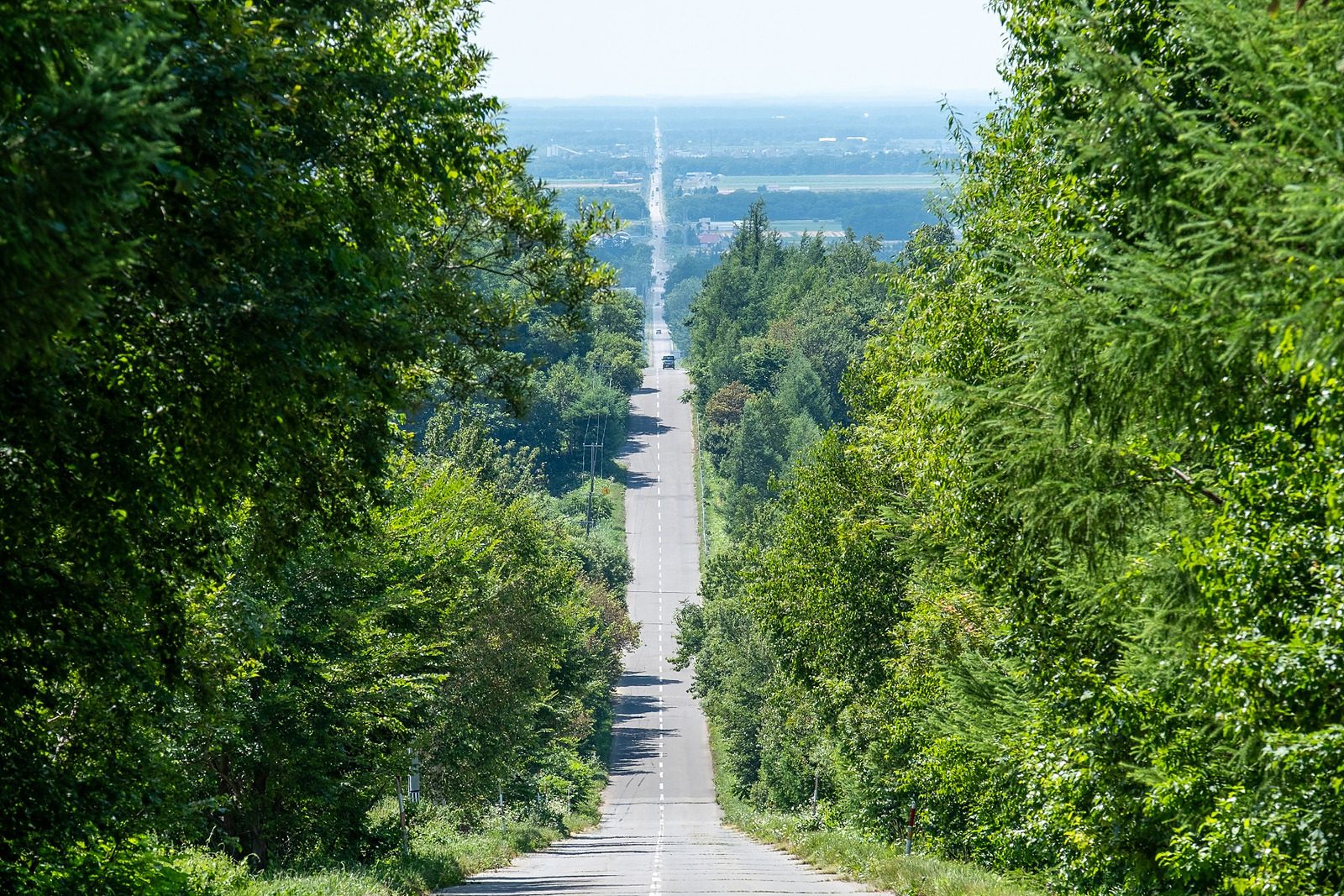
日本海オロロンライン (Japan Sea Orolon Line) is the name for about 380km of coast road from 小樽 (Otaru) to 稚内 (Wakkanai), up Routes 231 and 232 and then 道道106号 (Road 106). Summer is the easiest time to drive it. The stretch most people come for is Road 106 north of the 天塩川 (Teshio River) mouth, which crosses the サロベツ原野 (Sarobetsu plain) inside Rishiri Rebun Sarobetsu National Park. The road runs straight for over 20km with no power poles or wires in sight, the sea on one side and the cone of 利尻富士 (Rishiri Fuji) offshore, with Rebun beyond it on a clear day. At 幌延 (Horonobe) the 28 turbines of the オトンルイ (Otonrui) wind farm stand in a 3.1km line beside the road. At the northern end, drive on from Wakkanai to 宗谷岬 (Cape Soya), Japan's northernmost point, about 40 minutes by car from Wakkanai Station. Sakhalin is about 43km away and shows on the horizon on clear days.
General information
AddressRoad 106 (Wakkanai Teshio Line), Horonobe to Wakkanai, Hokkaido
AccessBy rental car. From Sapporo follow Route 231 and Route 232 north up the coast, then Road 106 from the Teshio area to Wakkanai.
EntryFree
HoursOpen at all times
Rebun · Hokkaido
Rebun Island (礼文島)
Japan's island of flowers off Wakkanai, where alpine plants bloom at sea level along clifftop trails from late May to August.
礼文島 (Rebun Island) sits in the Sea of Japan off the northern tip of Hokkaido and is known as the island of flowers, because the cold northern climate lets around 300 alpine species bloom right down at sea level. The season runs from late May to August, with several flowers that grow nowhere else in Japan. The レブンアツモリソウ (Rebun atsumori-so), a pale yellow orchid found only on this island, flowers from late May to mid June, the yellow レブンキンバイソウ (Rebun kinbai-so) carpets Kinbai Valley from mid June to mid July, and the レブンウスユキソウ (Rebun edelweiss), the town flower, lasts from June into August. The best way to see it all is on foot. The Momoiwa Observation Course takes around three hours over grassy ridges with views of the peach shaped 桃岩 (Momoiwa) rock and of Mount Rishiri across the strait, and the longer Cape Tour Course follows the west coast for 12.4 km from Cape Sukoton past Cape Gorota. Ferries from Wakkanai reach Kafuka Port in around two hours, so most people stay at least one night, and the island pairs naturally with Rishiri next door.
General information
AddressRebun-cho, Rebun-gun, Hokkaido
AccessApproximately 1 hour 55 minutes by Heart Land Ferry from Wakkanai Port to Kafuka Port
Now that you have a sense of how the season runs here, these are the highlights and experiences worth building the trip around.
Prefecture map
Seasonal culture
Seasonal Food & Everyday Atmosphere
Summer is the season Hokkaido's food calendar is built around. The uni beds reach their peak, the flying squid arrive off Hakodate, the corn and melon fields come in on the back of long daylight and cool nights, and the crab and shrimp of the eastern coast have their short, specific windows. It is the most abundant time of year on the island by some margin, and most of what follows is only worth eating here, in season.
ウニ (Uni)
Sea urchin
Kelp fed uni from Shakotan, Rishiri and Rebun, at its richest from mid June through August.
Fresh as nigiri or uni don
Sea urchin runs from mid June through August, when the uni pack in nutrients ahead of spawning, and Hokkaido lands more of it than any other prefecture. Two varieties are on the boards and the difference is worth knowing. エゾバフンウニ (Ezo Bafun) is orange and dense and heavily sweet, and キタムラサキウニ (Kitamurasaki) is paler and lighter and cleaner. What sets the island's uni apart is what it eats. The urchins off 積丹 (Shakotan), 利尻 (Rishiri) and 礼文 (Rebun) graze on 昆布 (kombu) kelp beds, and the sweetness in the roe comes directly from that diet, which is why those three names get printed on a menu when they apply. ウニ丼 (Uni Don), a bowl of it over rice with nothing else, is how it is eaten, and on the Shakotan coast the shops open for the season and close again when the quota is done.
スルメイカ (Surume Ika)
Japanese flying squid
Flying squid reach Hakodate in summer, translucent enough to serve as ika-somen.
Sashimi, grilled, or ika-somen
スルメイカ (Surume Ika) spawn off Kyushu in winter and work their way north, reaching Hokkaido's waters in summer at full size, and 函館 (Hakodate) on the southern tip is the town built around them. Freshness shows in this squid more than most. Straight off the boat the flesh is translucent and the bite is crisp, and both fade within hours, which is why Hakodate's morning market sells it live out of tanks. The local dish is イカそうめん (ika somen), the body cut into noodle thin strands and eaten with ginger and soy, which only works while the squid is still clear. The ゲソ (geso), the legs, are worth ordering alongside, either raw or briefly grilled. The town also runs イカ釣り (squid jigging) trips at night, and the lights of the boats working off the headland are part of the Hakodate summer.
北海シマエビ (Hokkai Shima Ebi)
Hokkai striped shrimp
Caught from sailing boats off the Notsuke Peninsula in June and July, to protect the eelgrass beds.
Boiled Hokkai striped shrimp
北海シマエビ (Hokkai Shima Ebi) is the most unusual fishery on the island. The season runs June to July around 尾岱沼 (Odaito) on the Notsuke Peninsula in eastern Hokkaido, and the boats that work it are 打瀬舟 (utasebune), wind powered sailing craft, because an engine's propeller would tear up the 藻場 (moba) eelgrass beds the shrimp live in. The practice dates to the Meiji era and is kept for that reason rather than for show, so the sight of a dozen sails working the lagoon is a working fishery rather than a display. The shrimp turn a vivid red banded with white when boiled, which is where the local name, the ruby of the sea, comes from. The flesh is firm and springy with a concentrated sweetness, usually just boiled in salt water and eaten with the fingers, and during the season it is also served as sashimi.
トウモロコシ (Tomorokoshi)
Corn
Sweet Hokkaido summer corn, eaten boiled or grilled, at its sweetest in the cool northern climate.
Boiled or grilled summer corn
Hokkaido offers excellent conditions for corn, because the long daylight hours and the wide temperature swing between day and night are what build the exceptional sweetness it has. Seeing freshly picked corn sold at roadside stalls and in stores across the island is something that becomes quite common during this window. Now, if you come across the white variety known as Pure White, try it without hesitation as the sugar content is extraordinary. Locals say it is sweet enough to eat raw, and they are not exaggerating. Corn also finds its way into Hokkaido's butter corn ramen known as バターコーンラーメン (Bata Kon Ramen), where sweet summer corn is piled onto a rich miso broth alongside a generous pat of butter that melts into the soup as you eat. It is one of the dishes the island is identified with, and summer is when to eat it, because the corn is at its peak.
夕張メロン (Yubari Melon)
Yubari King melon
The orange fleshed melon of Yubari, intensely sweet and at its peak in summer.
Yubari King melon
Yubari King melon is sold as a gift fruit at prices that reflect it, and is another of Hokkaido's summer crops. The flesh is extraordinarily sweet and smooth, and premium pairs have been auctioned for prices that seem almost impossible for fruit. You do not need to pay anywhere near that to enjoy it though as this is sold in slices at markets and supermarkets across the island through summer and is absolutely worth trying. If you are moving between cities, Hakodate tends to offer some of the better prices by comparison.
ハナサキガニ (Hanasaki Gani)
Hanasaki crab
A spiny summer crab from the waters off eastern Hokkaido, rich and eaten boiled or in teppo jiru soup.
Boiled or in teppo jiru
This is another of the crabs that only Hokkaido lands. It is named after Cape Hanasaki in Nemuro on the eastern tip of Hokkaido where it is primarily caught throughout the summer season. It is spikier and more dramatic looking than the other Hokkaido crabs and turns a vivid red when boiled. The flavour is bold and briny with a sweetness that reflects the cold eastern waters it comes from. It is far less well known internationally than Hokkaido's other crabs, but something that locals love to eat, so be sure to have this in the back of your mind when thinking of something to eat here.
Plan your trip
Book your stay in Hokkaido
Search accommodation across Hokkaido, from Sapporo city hotels to Niseko ski lodges and Hakodate ryokan. Compare options across the major booking platforms.
Ready to plan your Hokkaido trip?
Browse itineraries built around Hokkaido in summer, from the lavender fields of Furano to the cool lakes and trails of the Shiretoko Peninsula.