
This page has been translated from Japanese. If anything is unclear, please get in touch.
Summer region guide

Tohoku in Summer

Setting the Scene

General Feeling of the prefecture

Tohoku in summer is a region that comes fully alive. The green that takes hold across the mountains, rice fields, and coastline from June onward is deep and vivid, and the warm, relatively humid days give the landscape a lushness that feels distinctly different from the spare beauty of spring or the drama of autumn. It is also the season when Tohoku's culture and community spirit is at its most visible, but more on that in the events section.
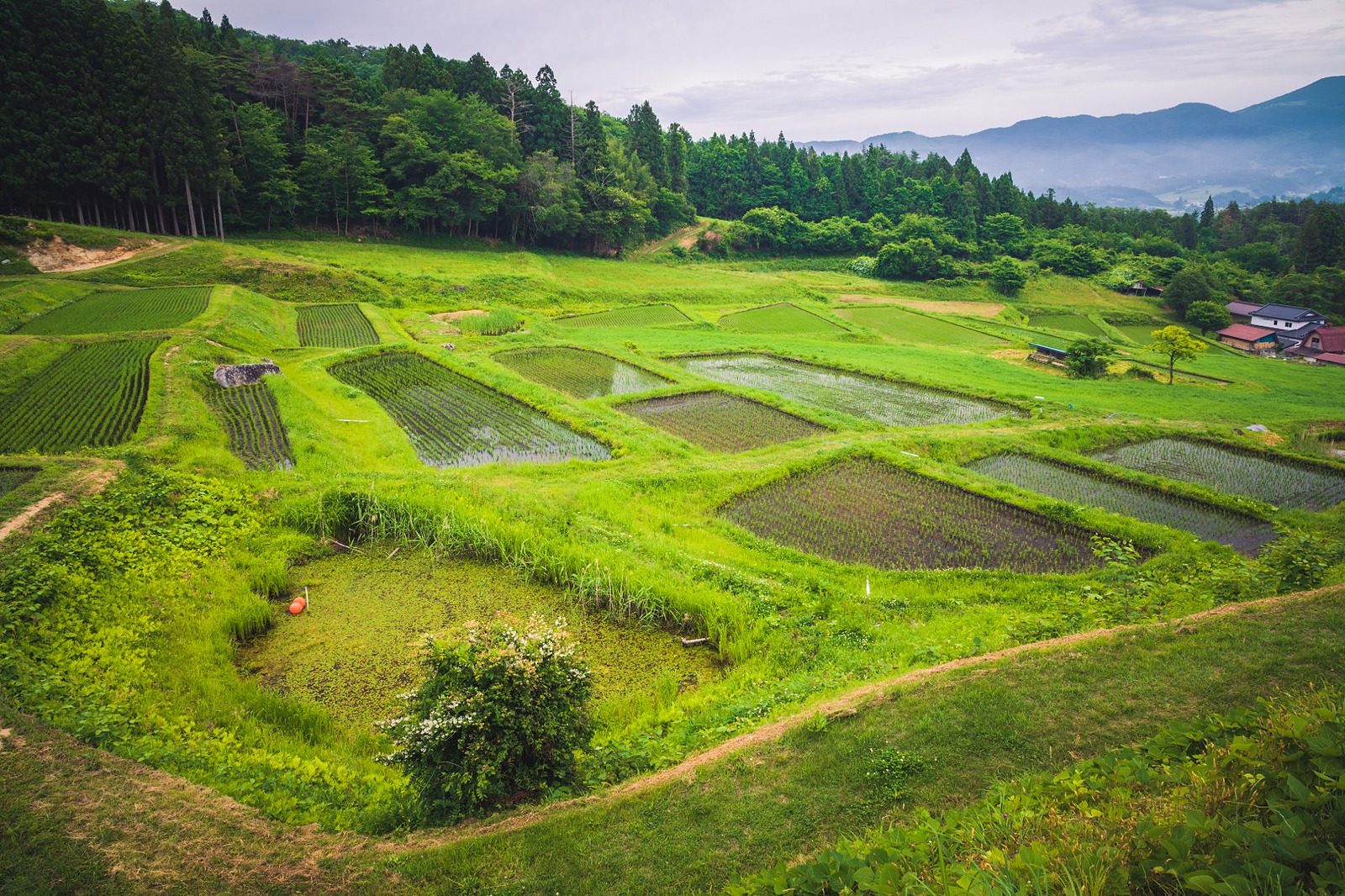
Green terraced rice fields in the hills of Iwate

In terms of temperature, Tohoku sits in a middle ground between Hokkaido's comfortable cool and the intense heat of Honshu further south. July and August bring warm and humid days typically ranging from the mid twenties to low thirties depending on where you are, with coastal areas catching sea breezes that take the edge off the heat. Inland and mountainous areas can feel more intense during peak summer but also offer cooler refuge at elevation. Light, breathable clothing is the foundation, with a compact rain layer worth keeping accessible as summer brings occasional heavy showers, particularly in July during the rainy season which reaches Tohoku later than the rest of Japan.

Getting around Tohoku in summer is at its easiest. Roads are fully open, conditions are reliable, and the longer daylight hours give you more flexibility in how you structure your days. A rental car is still the best way to access the region's more remote and rewarding corners, particularly along the rugged Sanriku coastline or into the mountain interiors, though the Shinkansen and regional rail handle the major city connections efficiently. Summer is Tohoku's busiest season, driven largely by its famous festivals, so accommodation in and around major cities during festival periods requires advance planning.

Beyond the capital

Exploring the Tohoku Region

Summer in Tohoku is a season of green, deep, saturated, and everywhere. The forests, river gorges, and highland plateaus that define the region's interior landscape are at their most vivid and most accessible through July and August, and the coastline of the Pacific facing prefectures opens up in a way that the colder months do not allow. The spots below each have a specific seasonal reason that makes summer the right time to visit them.

Towada · Aomori

Oirase Gorge (奥入瀬渓流)

A 14km stream trail of waterfalls and moss covered boulders running down from Lake Towada, deepest green in summer.

Oirase Gorge (奥入瀬渓流) in Aomori Prefecture is widely considered one of Japan's most beautiful river gorges, designated a National Special Place of Scenic Beauty and Natural Monument and protected as part of the Towada-Hachimantai National Park, with around 14 kilometres of the Oirase River running from the outlet of Lake Towada through a forest of beech, Japanese oak, maple and white cedar. The forest holds over 200 varieties of moss covering the rocks and tree trunks, with numerous named waterfalls cascading down the basalt walls into the river, including the 7 metre tall and 20 metre wide Choshi Otaki at the lake end of the gorge as well as the Kumoi-no-taki, Soryu and Tomoshiraga falls. Summer brings the densest forest canopy and the fullest waterfall flow after the spring snowmelt, with the cool air within the gorge providing natural relief from the summer heat of the surrounding lowlands. A walking path and a parallel road run the full length of the gorge but the most popular section for hikers is the 9 kilometres between Nenokuchi and Ishigedo, which takes around 2.5 hours and passes most of the named waterfalls. From Hachinohe Station on the Tohoku Shinkansen, the JR Bus Oirase-go runs to the Lake Towada area in around 2 hours 15 minutes at ¥3,050, with bus stops at Yakeyama, Ishigedo and Nenokuchi along the gorge for hop on, hop off access.

General information
AddressOkuse, Towada-shi, Aomori-ken 034-0301
AccessApproximately 40 minutes by car from Towada-Minami Station, or by seasonal bus from Towadako bus stop which is accessible from Aomori and Hachinohe
EntryFree
HoursOpen at all times, shuttle bus in season
ParkingFree car parks along the route
Towada · Aomori

Lake Towada (十和田湖)

A deep double caldera lake ringed by steep forested slopes, with cruise boats and lakeside walks in the national park.

A 50 minute pleasure boat cruise from the pier at Yasumiya on the southern shore of Lake Towada (十和田湖) runs either on a circular route around the southern bays or one way to Nenokuchi at the Oirase Gorge outlet on the east shore, with the boat giving access to dramatic cliff views of the Nakayama and Mikura peninsulas that are difficult to see from land and operating mid April to early November at ¥1,650 for adults. The lake is the largest crater lake on Honshu and the third deepest in Japan at around 327 metres, with deep blue water known as "Towada Blue" and forested caldera walls rising steeply on all sides inside a national park designated as Towada National Park on 1 February 1936 and renamed Towada-Hachimantai in July 1956, when the Hachimantai area was added and jointly designated with the Oirase Gorge that drains from it as a National Special Place of Scenic Beauty and Natural Monument. The bronze Maiden Statue by Kotaro Takamura unveiled near Yasumiya on 21 October 1953, having been commissioned as the project marking the 15th anniversary of the park's designation is the most recognised landmark on the lakeshore, with canoeing and SUP tours available at Utarube on the east shore. From Hachinohe Station on the Tohoku Shinkansen the JR Bus Oirase-go runs to Yasumiya in around 2 hours 15 minutes at ¥3,050, passing through the Oirase Gorge on the way and making the two sites natural companions for a summer visit.

General information
AddressTowada-shi, Aomori-ken / Kazuno-shi, Akita-ken
AccessApproximately 1 hour by car from Towada-Minami Station, or by seasonal bus from Aomori Station to the Towadako bus stop
EntryFree, lake cruises charged separately
HoursOpen at all times
ParkingPaid and free car parks at Yasumiya
Miyako · Iwate

Jodogahama Beach (浄土ヶ浜)

White rhyolite rock spires rising from clear water on the Sanriku coast, with blue cave boat tours from the beach.

Jodogahama Beach (浄土ヶ浜) on the Pacific coast at Miyako in Iwate Prefecture is one of Japan's Top 100 Swimming Spots and a National Place of Scenic Beauty within the Sanriku Fukko National Park, the park's "Fukko" or "Recovery" name reflecting the 2011 tsunami that destroyed the rest house and tourist facilities since rebuilt. The shoreline is defined by jagged white rhyolite rock columns formed around 44 million years ago and shaped by wind and waves, with the rocks sheltering a calm, clear inlet of deep blue water and a white pebble shore that the monk Reikyō Ryūkō of Joan-ji Temple in Miyako compared in 1680 to the Buddhist Pure Land paradise, giving the beach its name. The swimming beach is open in summer from mid July to mid August, with Sappa-bune traditional fishing boats running 20 minute tours into the Blue Cave for around ¥1,500 and the larger Miyako Umineko Maru sightseeing boat circling the wider coastline in 40 minutes alongside black tailed gulls fed by passengers, while sea kayaking and SUP tours operate from the beach through the warmer months. From Tohoku Shinkansen Morioka Station the 106 Express bus to Miyako Station takes around 1 hour 35 minutes, with the Iwate Kenpoku Bus then running to the Oku-Jodogahama stop closest to the beach in around 20 minutes for ¥250.

General information
AddressHitachihama-cho, Miyako-shi, Iwate-ken 027-0001
AccessApproximately 20 minutes by bus from Miyako Station on the JR Yamada Line to the Oku-Jodogahama bus stop
EntryFree, boat tours charged separately
HoursOpen at all times, boat tours in season
ParkingPaid car park, free lots a short walk away
Aomori · Aomori

Hakkoda Mountains (八甲田山)

A volcanic range south of Aomori with marshland trails and a ropeway, reached on the scenic road up from the city.

The Hakkoda Mountains (八甲田山) are a volcanic range of around sixteen peaks in central Aomori Prefecture between Aomori City and Lake Towada, part of the Towada-Hachimantai National Park and one of Japan's 100 Famous Mountains, with the main peak Mount Odake reaching 1,585 metres and the plateau between the peaks one of Tohoku's main summer hiking destinations. The Hakkoda Ropeway climbs in around 10 minutes from the lower station to the summit of Mount Tamoyachidake at 1,324 metres, where the Hakkoda Gold Line wetland circuit on boardwalks gives beginners an accessible loop with views to Aomori City, Mutsu Bay and the Tsugaru Peninsula on clear days, and longer routes continue across the plateau to Mount Odake or down to Sukayu Onsen at the southern foot in 2.5 to 4 hours. Summer wildflowers across the wetlands include cotton grass through June and July followed by Nikko-kisuge daylilies and bog asphodel that turn the larger Tashirotai marshland north of the range golden in July and August. The ropeway round trip is ¥2,000 and operates year round. From JR Aomori or Shin-Aomori Station the JR Bus toward Lake Towada runs to the Hakkoda Ropeway in around 60 to 75 minutes at ¥1,100 to ¥1,290 with three departures per day, with the bus also serving Sukayu Onsen for traverse hikers.

General information
AddressKomagome Fukazawa, Aomori-shi, Aomori-ken 030-0955
AccessApproximately 1 hour by car from Aomori Station, or by bus from Aomori Station to the Hakkoda Ropeway bus stop
EntryFree, Hakkoda Ropeway charged separately
HoursOpen at all times, ropeway runs through the day
ParkingFree car park at the ropeway base
Summer moments

Seasonal Experiences and Events in Summer

Now that you have a sense of how the season runs here, these are the highlights and experiences worth building the trip around.

Prefecture map

Seasonal culture

Seasonal Food & Everyday Atmosphere

Summer in Tohoku is when the region's agricultural identity really comes through. The warm temperatures and fertile land across the inland prefectures produce fruit and produce of exceptional quality, while the cold waters of the Sanriku coast continue to deliver some of the most interesting and distinctive seafood in Japan. It is a region that rewards eating broadly and curiously in summer.

ホヤ (Hoya)

Sea pineapple

A spiky sea squirt from the Sanriku coast, eaten raw, and the ingredient Tohoku is most protective of.

Eaten raw, briny and sweet

ホヤ (Hoya) is the ingredient Tohoku will defend hardest, and summer is its season. It is a sea squirt rather than a shellfish, farmed on ropes off the Miyagi and Iwate coast, roughly four years from seeding to harvest, and it looks like a knobbled orange rock until it is opened. The flavour has been described as carrying all five tastes at once and that is not far off. It is intensely briny and distinctly bitter, with a sweetness underneath that arrives late. It is eaten raw as sashimi, dressed with vinegar as 酢ホヤ, or dried and salted. Freshness decides everything, because hoya turns quickly and a bad one is unpleasant, which is most of the reason people outside the region are wary of it. Miyagi produces the large majority of the national crop and eating it in Ishinomaki or Kesennuma in July is the only fair test of it.

ウニ (Uni)

Sea urchin

Sanriku uni dived by the ama at Kuji, and the ichigo-ni broth that Hachinohe makes with it.

Sanriku summer sea urchin

Sea urchin from the Sanriku coast of Iwate and Miyagi peaks through summer, and Tohoku's version of it is about how it is caught and what it goes into. At 久慈 (Kuji) in northern Iwate the 北限の海女 (hokugen no ama), the northernmost free divers in Japan, still work the shallows for uni through July, August and September, diving without tanks from small boats, and the Kosode coast centre runs demonstrations at weekends through the season. The other thing Tohoku does with it is いちご煮 (Ichigo Ni), a clear broth of sea urchin and abalone from 八戸 (Hachinohe) in Aomori, named because the poached roe suspended in the cloudy soup was thought to look like wild strawberries. Hokkaido's uni is kelp fed and rich and eaten over rice. Sanriku's is cleaner, and it gets cooked.

だだちゃ豆 (Dadachamame)

Dadachamame edamame

Tsuruoka's heirloom edamame, shipped from late July with the peak after mid August.

Yamagata, boiled in the pod

だだちゃ豆 (Dadachamame) is an heirloom edamame grown only around 鶴岡 (Tsuruoka) in the Shonai plain of Yamagata, cultivated there since the Edo period. The name comes from local dialect for father. Shipping starts in late July and runs to mid September, with the peak falling just after the old Obon in mid August, and a run of named varieties comes in sequence through those weeks rather than all at once. The pods are ugly, short and fuzzy with usually two beans rather than three, and they carry markedly more alanine and free amino acids than ordinary edamame, which is measurable rather than a matter of opinion and is why the sweetness and the savoury depth are stronger. Tsuruoka has made 8 August its own dadachamame day. They are boiled in salted water in the pod and eaten with nothing else, and they are sold the morning they are picked because the sugars start falling within hours.

タコ (Tako)

Octopus

Octopus caught along the Tohoku coast through summer, eaten as sashimi or simmered.

Sashimi or simmered

Octopus is caught along the Tohoku coast through summer and is a staple of the region's coastal food culture during the warmer months. Miyagi and Iwate both have strong octopus fishing traditions and the summer catch is used in a wide variety of preparations, such as sashimi, simmered in a sweet soy broth, or grilled. In Sendai, octopus appears in various local dishes and is a familiar and well loved summer ingredient across the coastal communities of the region.

さくらんぼ (Sakuranbo)

Cherries

Yamagata cherries at their summer peak, the small bright Sato Nishiki the prized variety.

Yamagata summer cherries

Yamagata cherries are the signature summer crop of Tohoku, and the prefecture grows the large majority of Japan's cherries. The Yamagata cherry season runs through June and July and the fruit produced here, particularly the premium Sato Nishiki variety, is extraordinarily sweet, juicy, and deeply flavoured. Cherries are taken seriously in Yamagata in the way that Hokkaido takes its melon seriously, and buying them fresh from a roadside stall or farm shop during the season is a completely different experience from eating them out of season. They are also a standard summer gift in Japan and beautifully packaged boxes of Yamagata cherries command prices that reflect their reputation.

桃 (Momo)

Peaches

Fukushima peaches in season through summer, soft and intensely sweet.

Fukushima summer peaches

Peaches from Fukushima prefecture have a strong national reputation and summer is when they are at their best. Fukushima has a long history of peach cultivation and the warm summers and fertile soil of the region produce fruit that is large, intensely sweet, and extraordinarily juicy. Eating a ripe Fukushima peach in summer is the kind of experience that makes you reassess what a peach can actually taste like. They are sold fresh at roadside stalls and markets across the prefecture through July and August and are worth prioritising if you are passing through.

スイカ (Suika)

Watermelon

Summer watermelon grown across Tohoku, sweet and crisp in the season's heat.

Tohoku summer watermelon

Watermelon is grown across Tohoku through summer and is as embedded in the Japanese summer experience as anywhere else in the country. The hot days and cool nights of the inland growing areas produce watermelon with good sugar content and the fruit is sold at roadside stalls, convenience stores, and markets across the region from July onwards. It is the kind of food that needs no explanation. It is cold, sweet, and entirely appropriate for the season.

芋煮 (Imoni)

Taro hot pot

A communal taro and meat hot pot cooked outdoors by the riverside, a Tohoku tradition shared from large pots.

Riverside taro hot pot

Taro hot pot is one of the most culturally significant food traditions in Tohoku and particularly in Yamagata, where it is essentially a seasonal institution. Imoni belongs to the autumn rather than to the height of summer, and from September onwards communities across Yamagata gather at riverbanks to cook large pots of imoni over open fires, with taro root, beef, konnyaku, and leeks simmered in a soy and sake broth that gets better as it cooks down. The gatherings are social events as much as meals, and the scale of some of them, particularly the 日本一の芋煮会フェスティバル (Nihon ichi no Imonikai Festival) on the Mamigasaki riverbed in Yamagata City, held on the Sunday before Respect for the Aged Day in September and cooked in a pot more than 6 metres across, is remarkable. If your timing overlaps with the season, finding an imoni gathering or eating it at a local restaurant is one of those experiences that connects you to the rhythm of life in the region in a way that standard sightseeing does not.

冷やし中華 (Hiyashi Chuka)

Cold ramen

Chilled ramen topped with egg, ham and cucumber, and Sendai is where the dish was invented.

Summer cold ramen

Cold ramen is a nationwide summer dish with a Tohoku origin. 龍亭 (Ryutei), a Chinese restaurant in Aoba Ward, Sendai, records developing 涼拌麺 (ryanbanmen) in 1937, ahead of the rest of the trade, and it is still on the menu there under that name. That is why this card sits on the Tohoku page and not on the pages of the regions that merely eat it. Chilled noodles are topped with strips of ham, cucumber, egg and other vegetables and dressed in a tangy sesame or soy based sauce, and the Sendai version is usually served with the sesame dressing. Shops across Japan put the sign in the window in early summer and take it down again in September, which makes it one of the more reliable markers that the season has turned.

じゅんさい (Junsai)

Water shield

A pond plant picked by hand for a few weeks in high summer, every young shoot sheathed in clear jelly.

Summer pond harvest

Water shield is the young furled leaf and leaf stalk of a water plant of the water lily family that grows in ponds and marshes, and its fresh season is a short one. Each shoot comes up from below the surface wrapped in a clear, jelly like coating, and the fresh crop can be eaten mainly from June to the beginning of August. 三種町 (Mitane Town) in northern Akita is one of the country's main growing areas, and through the season the ponds there are worked by hand, with visitor picking sessions running alongside the commercial harvest. Junsai is served cold, in a vinegared dressing or floated in clear soup, and the point of it is texture rather than flavour. It has very little taste of its own and slips down in a way that is meant to read as relief from the heat.

Plan your trip

Book your stay in Tohoku

Search accommodation across Tohoku, from Sendai city hotels to mountain onsen ryokan and castle town inns. Compare options across the major booking platforms.

AdultsAges 18 or above
2
ChildrenAges 0–17
0
Book with
Pick a site. Your dates and details are carried over so you can check prices and book there.

Ready to plan your Tohoku trip?

Browse itineraries built around Tohoku in summer, from the green ravine of Oirase Gorge to the white cliffs of Jodogahama Beach.

View Tohoku Itineraries →