Confirm your email to unlock saving, sharing and exporting. We sent a link when you signed up.
Winter region guide
Chubu in Winter
Regional character
General Feeling of the prefecture
Winter transforms Chubu more dramatically than any other season. The Japan Alps accumulate some of the deepest snowfall in the world through December,
January, and February, and the mountain interior of the region shifts into a landscape of almost overwhelming whiteness, silent, heavy with snow, and
strikingly beautiful in a way that feels elemental rather than decorative. For a region that already offers considerable variety across its other seasons,
winter distils Chubu down to its most dramatic and essential character.
The divide between the coastal lowlands and the mountain interior that defines every season in Chubu is at its most extreme in winter.
Nagoya and the Pacific coastal prefectures experience a relatively mild winter by Japanese standards, cold and occasionally frosty but
rarely seeing significant snowfall, and manageable with standard cold weather clothing. Cross into the mountains however and the conditions
are an entirely different proposition. Nagano, the highland areas of Gifu, and the Japan Sea facing parts of the region bear the full weight of
winter, with heavy and persistent snowfall that closes certain roads, transforms rural communities into something resembling a woodblock print,
and demands serious preparation from anyone venturing into them.
Cold weather gear for the mountain areas means genuine insulation, such as heavy coats, thermal layers, waterproof and grippy boots, and proper
accessories for hands and head. The dry cold of the Pacific side is forgiving by comparison, but the Japan Sea side brings a wetter, more
penetrating chill that requires the same level of preparation as the alpine interior. Travel logistics need more thought in winter than in
any other season. Certain mountain routes close entirely, road conditions in the interior require experience and appropriate vehicles, and
the slower pace of rural winter life means planning connections and timings carefully before setting out.
What winter unlocks in return for that preparation is access to a version of Chubu that very few travellers fully experience. The famous
thatched villages of Shirakawa-go under heavy snow are among the most visually striking sights in Japan. The ski resorts of Nagano, which
hosted the 1998 Winter Olympics, draw visitors from across Asia and beyond for good reason. And the quieter, lesser known mountain communities
that sit beyond the main tourist circuit take on a stillness and intimacy in winter that no other season replicates. For the traveller willing
to prepare properly and move at the season's pace, Chubu in winter is deeply rewarding.
Beyond the capital
Exploring the Chubu Region
Winter in Chubu is the season that reveals the mountain interior at its most dramatic and most demanding. The heavy snowfall that buries the highland villages of Gifu, the powder snow that fills the ski resorts of Nagano, and the frozen landscapes that replace the green highland valleys of summer give the region a winter identity that is as compelling as any other season, and in the case of a few specific destinations, more so. The spots below are worth visiting specifically because of what winter brings to them.
Nagano City · Nagano
Togakushi in Winter (冬の戸隠)
The five shrines of Togakushi sit in deep snow in the mountains above Nagano City, and the approach to the Okusha can be walked as far as the red Zuishinmon gate, its thatched roof heavy with snow.
戸隠神社 (Togakushi Shrine) is made up of five shrines, Hokosha, Hinomikosha, Chusha, Okusha and Kuzuryusha, spread along the foot of Mount Togakushi about an hour by bus from Nagano Station. In winter the Okusha and Kuzuryusha close (from 7 January in 2026 until the snow melts in late April), their deities are enshrined at Chusha for the season, and entry beyond the Zuishinmon gate is banned until mid April because of avalanches, falling snow and ice and falling branches, snowshoe tours included. That leaves the walk through the snow from the great torii at the Okusha entrance to Zuishinmon, about 2 km there and back and roughly 1.5 hours on foot, with the gate itself the main winter photo spot. Walking from the Chusha bus stop to the gate and back is about 6 km and 3 hours. At Chusha a triple cedar over 800 years old stands in the grounds, and goshuin stamps are issued there through the winter. Snowshoes and boots can be hired at the Togakushi Tourism Information Center, but no shop in Togakushi sells snow clothing, there are no convenience stores, many soba shops close around 2pm in winter, and only one taxi serves the area, so take a morning bus from Nagano Station and be off the trails before 3pm, when the temperature drops fast under the tall trees.
General information
Address3506 Togakushi Chusha, Nagano City, Nagano
AccessAlpico bus from JR Nagano Station to Togakushi Chusha-mae, about 1 hour
EntryFree
HoursGrounds open at all times, Okusha and Kuzuryusha closed in winter, no entry beyond Zuishinmon until mid April
ParkingOkusha entrance car park, then a 2 km round walk to Zuishinmon
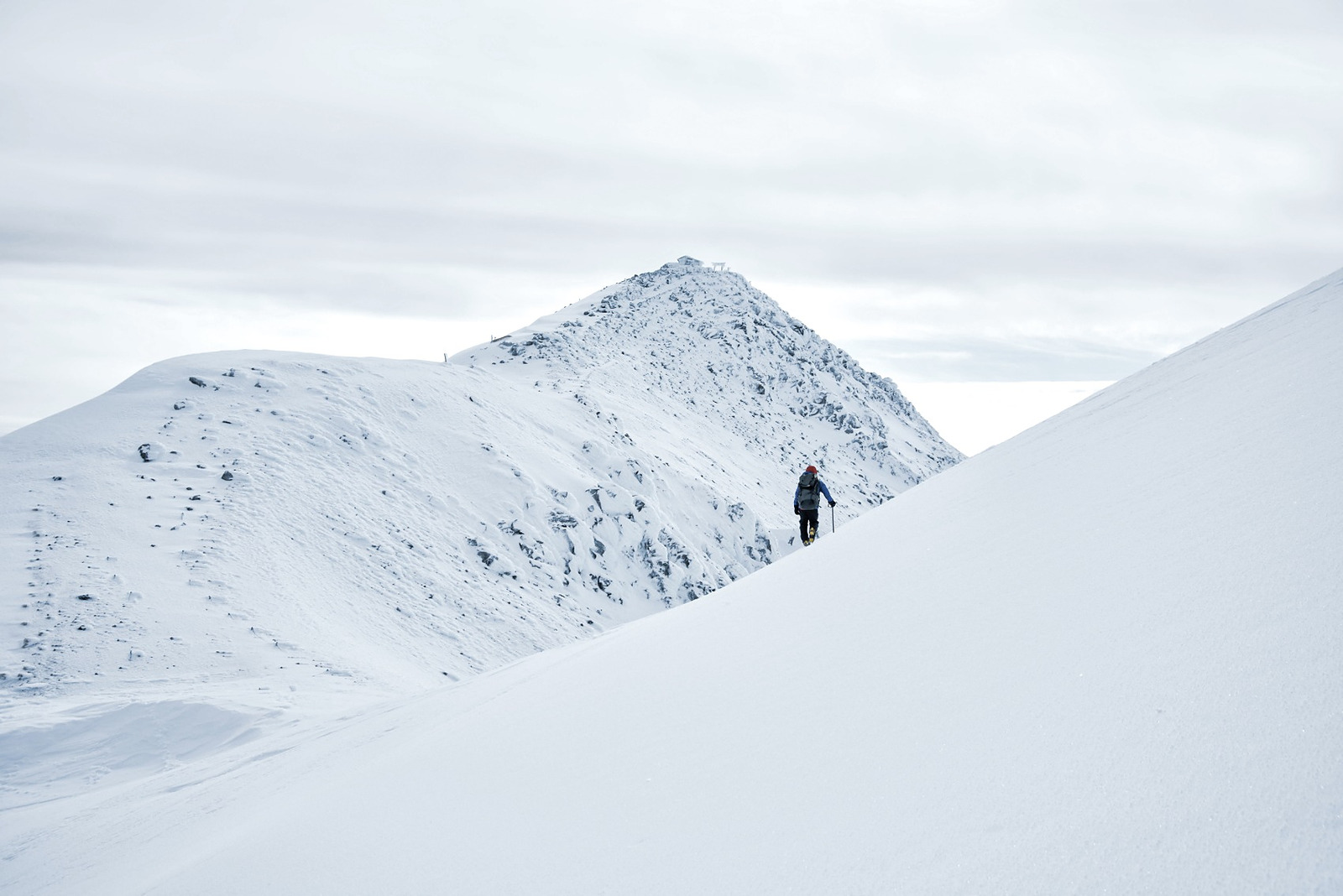
The Komagatake Ropeway climbs in seven and a half minutes to 2,612 m in the Central Alps, where a glacier carved bowl below the rock spires of Hokendake lies under deep snow from December.
千畳敷カール (Senjojiki Cirque) is a U shaped bowl carved by glaciers around 20,000 years ago below Mount Hokendake in the Central Alps, its name meaning a space wide enough for a thousand tatami mats. The Central Alps Komagatake Ropeway runs all year from Shirabidaira to Senjojiki Station at 2,612 m in 7 minutes 30 seconds, climbing the greatest height difference of any ropeway in Japan. Snow can fall from mid October and deep winter sets in by December, when the cirque turns into a sweep of white below the dark rock of the ridge and rime coats the trees around the station. The Komagatake Park Line between Kurokawadaira and Shirabidaira is closed to private cars, so visitors take the route bus from JR Komagane Station or the Suganodai Bus Center, ¥1,660 return from Suganodai, then the ropeway from ¥2,290 return depending on the date. The terrace and café at Hotel Senjojiki look straight across the cirque, and the hotel's 16 Japanese style rooms let you stay the night at the top. The jump in altitude is sudden, so tell staff if you feel unwell, and bring a down jacket, hat, gloves and snow boots. The ropeway can stop in bad weather, so check the operator's site on the day, and remember that walking out into the cirque in winter depends on snow and avalanche conditions.
General information
AddressSenjojiki Station, Komagatake Ropeway, Komagane City, Nagano
AccessRoute bus from JR Komagane Station or Suganodai Bus Center to Shirabidaira, then the Komagatake Ropeway
EntryRopeway return from ¥2,290 depending on date, route bus return from Suganodai ¥1,660
HoursAll year, service can be suspended in bad weather
ParkingAt Suganodai, no private cars between Kurokawadaira and Shirabidaira
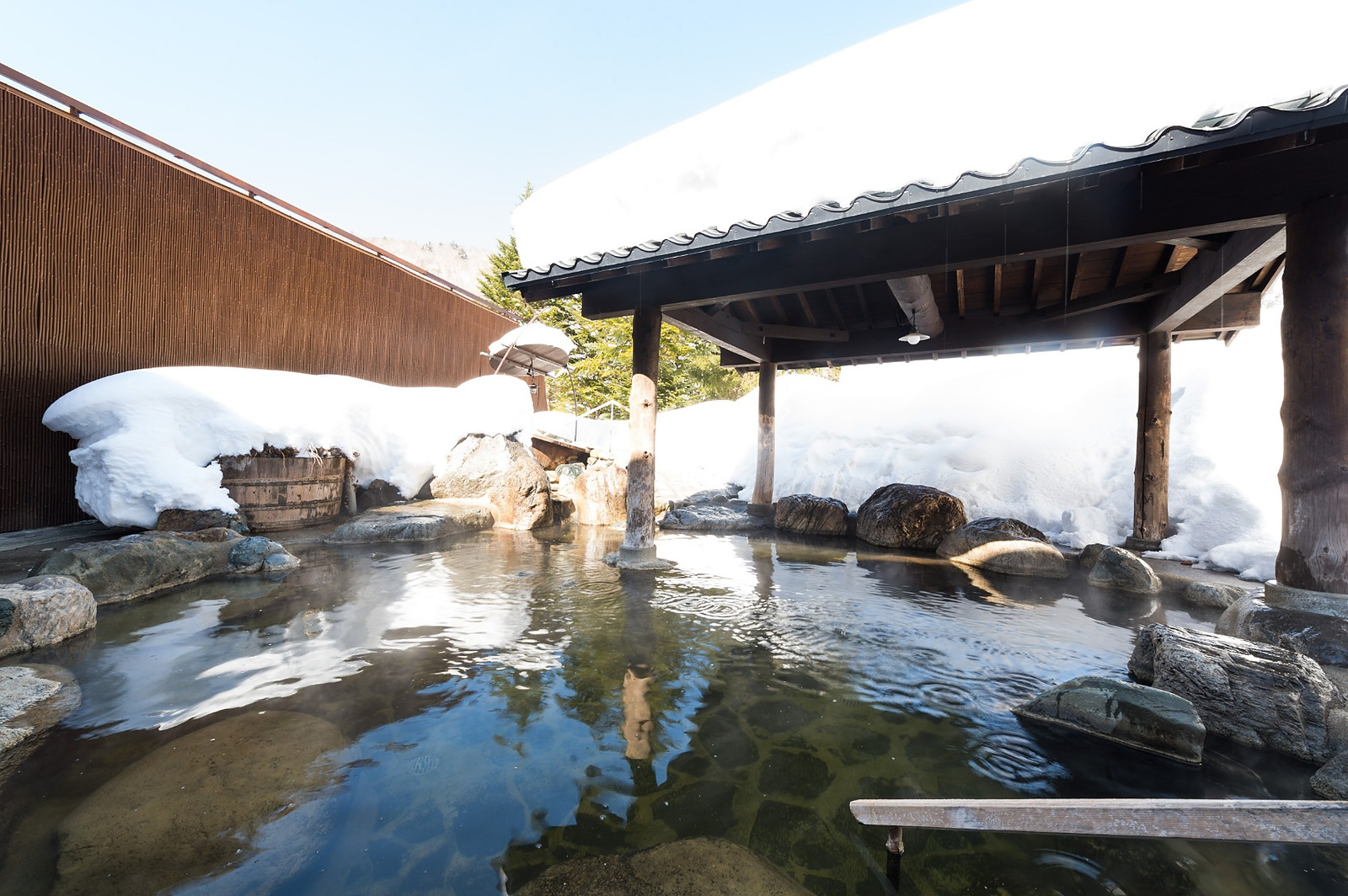
Five hot spring villages at the foot of the Northern Alps, with one of the largest numbers of open air baths in Japan, at their best when snow piles on the rocks and roofs around the steaming pools.
奥飛騨温泉郷 (Okuhida Onsen-go) is a group of five hot spring villages, Hirayu, Fukuji, Shin-Hirayu, Tochio and Shin-Hotaka, in the east of Takayama City in Gifu, sitting at 800 to 1,300 m below the 3,000 m peaks of the Northern Alps on the Nagano border. The area has one of the largest numbers of open air baths in Japan, and in winter the mountains lie under deep snow, with temperatures at Hirayu and Shin-Hotaka falling below minus 10°C, so the outdoor pools steam under snow laden roofs and rocks. The Okuhida Winter Tales events run from late December to the end of February, with the frozen Hirayu Great Falls lit up, kamakura snow huts lit on the snowfields at Nakao and light ups at each of the onsen villages. At the head of the valley the Shin-Hotaka Ropeway runs all year with Japan's only double deck gondola, rising to 2,156 m and a 360° observation deck over the Northern Alps. Nohi Bus runs from the Takayama Nohi Bus Center at JR Takayama Station to Hirayu Onsen in about 50 minutes, with stops at each of the five villages, and bath hours and fees vary from inn to inn.
General information
AddressOkuhida Onsen-go, Takayama City, Gifu
AccessNohi Bus from Takayama Nohi Bus Center (JR Takayama Station), about 50 minutes to Hirayu Onsen
In the mountains of northeast Toyota, spring water sprayed day after day over a wooded slope builds a wall of icicles that changes shape through January and February and is lit after dark.
稲武の氷瀑 (the Inabu ice falls) form in 湧水広場 (Yusui Plaza) beside Oidaira Park in Inabu, in the forested hills at the far northeastern corner of Toyota City, close to the Nagano border and one of the coldest places in Aichi. Spring water is sprayed over timber frames on the slope, and as it freezes night after night it builds into a wall of blue and white icicles and frozen curtains that grows and changes from one day to the next, from early January until it melts in late February. The ice is lit in the evenings from 18:00 to 20:00, when it glows against the dark cedars behind it. It is about a 9 minute walk from the free Oidaira Park car park, which has around 60 spaces, across the Kaze no Tsuribashi suspension bridge, and there are toilets in the park. In 2026 the display was run on a smaller scale than usual, so check with the Inabu Tourist Association before you go. Inabu lies on Route 153 northeast of central Toyota, and the mountain roads freeze easily, so winter tyres are needed to drive up.
General information
Address4 Yokogawato, Inabu-cho, Toyota City, Aichi
AccessBy car via the Sanage Green Road to Chikaraishi IC, then the Iida Highway and Route 153, then a 9 minute walk from Oidaira Park across the Kaze no Tsuribashi bridge
HoursEarly January to late February while the ice lasts, lit 18:00 to 20:00
ParkingFree, about 60 spaces at Oidaira Park, toilets in the park
ContactInabu Tourist Association, 0565-83-3200 (10:00 to 16:00)
Now that you have a sense of how the season runs here, these are the highlights and experiences worth building the trip around.
Prefecture map
Seasonal culture
Seasonal Food & Everyday Atmosphere
Winter in Chubu divides along the same geographic lines that define every other season in the region, but the contrast between the two sides is at its most pronounced in the cold months. The Japan Sea coast facing prefectures of Toyama, Ishikawa, and Fukui receive heavy snowfall and deliver some of the finest winter seafood in Japan, while the mountain interior of Nagano and Gifu settles into a deep, cold stillness that produces its own distinct winter food culture built around warming, slow cooked dishes and the ingredients that the highland communities have sustained themselves through winter on for generations. Nagoya on the Pacific side adds a third dimension with a bold, distinctive food identity that is unlike anywhere else in the region.
ぶり (Buri)
Yellowtail
Wild kan-buri landed at Himi in Toyama, the fish at its fattest in December and January.
Winter yellowtail
寒ぶり (Kan Buri), cold season yellowtail, is the winter fish of Toyama Bay. The fish spend summer feeding in the Japan Sea and are caught on the way south as they pass Toyama in December and January, at which point the fat content is at its highest and the belly cuts are heavily marbled. 氷見 (Himi) is the port, and the fishery there uses 定置網 (teichi-ami), fixed set nets a few kilometres offshore that the boats visit at dawn, so the fish are landed alive and killed and bled on the spot. Himi runs a declaration system, in which the port authority formally announces 氷見の寒ブリ宣言 when the catch reaches the volume and quality standard, and fish landed after that carry the certification. It is eaten as sashimi, as しゃぶしゃぶ swirled through hot dashi, and simmered with daikon as ぶり大根. Kyushu's buri is farmed and reliable. This is wild and declared open by committee.
野沢菜漬け (Nozawana Zuke)
Nozawana pickles
Nagano's leaf pickle, cut after the first frosts and barrelled to come good at the turn of the year.
Nagano, pickled through winter
野沢菜漬け (Nozawana Zuke) is Nagano's winter pickle and it has a traceable origin. A priest from 野沢温泉 (Nozawa Onsen) brought 天王寺蕪 turnip seed back from Kyoto in 1767, and in the cold thin air of the village the plant mutated, putting its growth into enormous leaves and stalks instead of a root. Seed goes in around September, the crop is cut in November after the frosts have been through it, which is what sweetens and softens the leaves, and then comes お菜洗い (onai arai), the custom of washing every leaf by hand, traditionally in hot spring water, before it is packed into large wooden barrels with salt. It is edible in two or three weeks but comes properly good at the turn of the year, by which point the colour has gone amber brown and the flavour has soured. It is eaten chopped with rice, wrapped into おやき (oyaki) dumplings, and once it has gone sour in spring the 古漬け (furuzuke) gets fried with sesame oil and chilli. Every ryokan and soba shop in the region puts a dish of it on the table without being asked.
味噌煮込みうどん (Miso Nikomi Udon)
Miso simmered udon
Firm udon simmered in a dark Hatcho miso broth in a clay pot, a Nagoya winter dish served bubbling with an egg cracked in at the end.
Miso udon hot pot
味噌煮込みうどん (Miso Nikomi Udon) is a Nagoya winter dish and the miso is the whole argument. 八丁味噌 (Hatcho miso) is made in Okazaki from soybeans alone with no rice or barley, aged two years or more in cedar barrels under stacked river stones, and it comes out almost black, thick and bitter edged rather than sweet. Thick firm udon is simmered directly in a broth built on it, in a 土鍋 (donabe) earthenware pot, with chicken, spring onion, aburaage and often a raw egg cracked in at the end, and the pot arrives at the table still boiling. Two things surprise people. The noodles are deliberately undersalted and firm because they cook in the broth rather than in water, and the lid is used as a plate to eat off since the pot is too hot to hold. It is the antidote to a Nagoya winter and it exists in the city in specialist shops that do nothing else.
おでん (Oden)
Simmered winter pot
Daikon, egg, konjac and fishcakes simmered slow in a light dashi broth, the winter standby of izakayas and convenience stores across the region.
Winter simmered pot
Simmered winter pot is a classic Japanese winter dish that takes on distinct regional characteristics across Chubu and is eaten widely through the cold months. The Nagoya version uses Hatcho miso broth rather than the lighter dashi based broths used elsewhere, giving it a deeper, richer colour and flavour that suits the bold food identity of the city. Daikon, konnyaku, boiled eggs, fish cakes, and a range of other ingredients are simmered slowly in the broth until they absorb its flavour completely. It is available at convenience stores, street stalls, and dedicated oden restaurants across the region through winter and is one of those dishes that is best eaten slowly, on a cold night, with something warm to drink alongside it.
たら (Tara)
Cod
A defining fish of the winter coast, moving inshore as the water cools, used through the season in hot pots with its liver and roe a cold month delicacy.
Winter coastal fish
Cod moves into the coastal waters of the Japan Sea facing prefectures through winter as water temperatures drop and is used extensively across the region in hot pots and simmered dishes through the cold months. The liver and roe are considered winter delicacies and the natural umami that cod releases into whatever broth it is cooked in makes it one of the most practical and deeply satisfying winter fish across the Japan Sea coast communities of Chubu.
ほうとう (Houtou)
Yamanashi miso noodle stew
Thick flat wheat noodles dropped straight into a miso broth with pumpkin and root vegetables, the Yamanashi dish that thickens in the pot as it cooks.
Yamanashi winter noodles
Houtou is the everyday winter food of Yamanashi and the dish most closely tied to the prefecture. Flat wheat noodles are cut wide and go into the pot without being boiled separately first, so the flour still on them thickens the miso broth as they cook and the soup ends up clinging to the noodles rather than sitting under them. Kabocha pumpkin is the standard vegetable, joined by whatever root vegetables and mushrooms the season offers, and the pot it was cooked in comes straight to the table. Yamanashi's official tourism guide ties the dish to Takeda Shingen, who is said to have fed it to his troops in the field, and recommends it specifically for the cold months. It is served across the Kofu basin and around the Fuji Five Lakes, and a bowl of it after a winter day outdoors is the whole point of it.
朴葉味噌 (Hoba Miso)
Miso grilled on a magnolia leaf
Sweet Hida miso spread on a dried magnolia leaf and grilled over charcoal at the table, eaten with rice through the Takayama winter.
Hida highland dish
Hoba miso is the table dish of the Hida highlands around Takayama in northern Gifu. A dried hoba magnolia leaf is set over a small charcoal brazier, a mound of miso is spread on it with spring onions and mushrooms, and it is left to bubble and caramelise while you eat, scraped onto bowls of hot rice as it goes. Takayama restaurants blend their own versions, usually on the sweeter side with sake and sugar worked into the miso, and several now serve it with Hida beef on the leaf. It turns up at ryokan breakfasts across the Hida valleys and is exactly the kind of slow, salty, warming thing that suits a Takayama morning with the old town under snow.
ズワイガニ (Zuwaigani)
Snow crab
The defining winter catch of the Chubu Japan Sea coast, landed from November 6th and sold under local brand names along the Fukui and Ishikawa shore.
Japan Sea winter crab
Snow crab is what the Japan Sea coast of Chubu organises its whole cold season around. The season opens on November 6th and the males run through to March 20th, with Fukui selling its catch as Echizen gani and tagging every genuine crab with a yellow band naming the port it was landed at, a system the fishermen introduced in 1997. The smaller female crab, called seiko gani in Fukui, is fished only from November 6th to the end of December and is eaten for its inner and outer roe and its crab miso rather than its leg meat. The coast drops away steeply just offshore, so the crab grounds sit close to the ports and the boats are back the same day, and the standard way to eat it is a full course at a coastal ryokan, boiled, dipped briefly in dashi as kani shabu, grilled, and finished with a rice porridge made from the broth.
水ようかん (Mizu-yokan)
Fukui's cold weather sweet
A soft sheet of chilled red bean jelly eaten under the kotatsu, sold across Fukui only in the cold months rather than in summer.
Fukui winter sweet
Mizu-yokan is a set red bean jelly that most of Japan eats in summer and that Fukui eats in winter. It appears in confectioners and supermarkets across the prefecture once the weather turns, sold in a flat paper box with a small spatula tucked under the lid, and the local way to eat it is sitting under the kotatsu with the heating on, scooping it straight out of the box. The Fukui version is looser, thinner and less sweet than the summer style found elsewhere, and some of the shops making it have been in business since the nineteenth century. It is rarely sold outside the prefecture, which is a large part of why people from Fukui talk about it the way they do, and it is worth picking up a box from any local confectioner on a winter trip.
Plan your trip
Book your stay in Chubu
Search accommodation across Chubu, from Nagano and Hakuba ski lodges to Takayama and Kanazawa ryokan and Nozawa onsen inns. Compare options across the major booking platforms.
Ready to plan your Chubu trip?
Browse itineraries built around Chubu in winter, from the ski slopes and hot springs of Nozawa Onsen to the snow covered streets of old Takayama.