
This page has been translated from Japanese. If anything is unclear, please get in touch.
Winter region guide

Hokkaido in Winter

Next to summer, travelling to Hokkaido in winter is one of those absolute musts when coming to Japan. Needless to say, Hokkaido has some of the best quality snow in the whole country making it ideal for skiing and snowboarding. But even if you’re not into winter sports, Hokkaido in winter has a lot to offer from the winter festivals to the food culture and the snowy landscapes. However, this will be covered in more detail below.

Setting the Scene

General Feeling of the prefecture

If Hokkaido is Japan's wild north in every other season, winter makes that feeling absolute. From December through March the island transforms into one of the most snow covered landscapes in the world, with Sapporo and the surrounding regions receiving some of the heaviest snowfall of any city on earth.
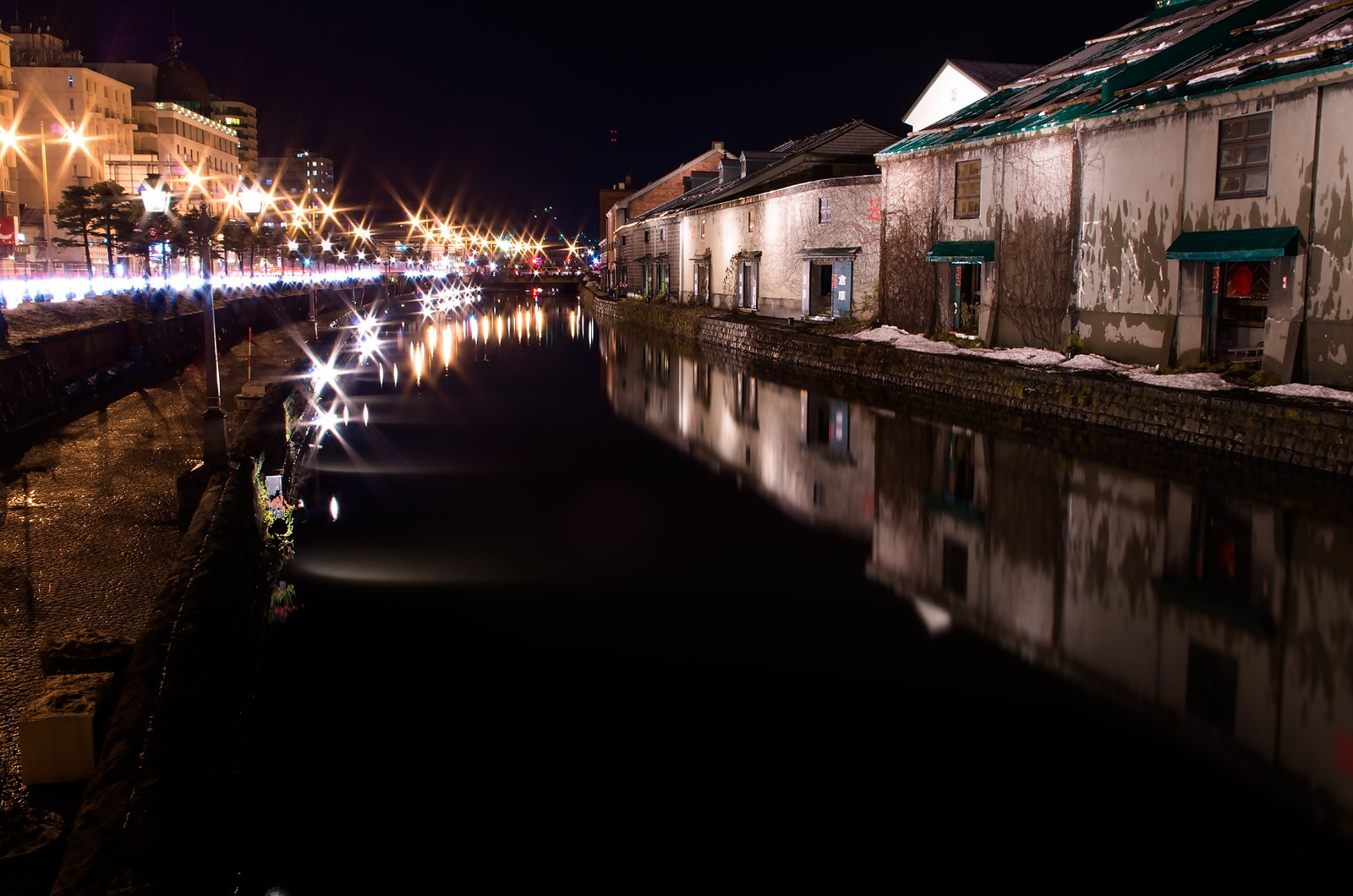
Snow on the stone warehouses along the Otaru Canal at night

Temperatures across most of Hokkaido sit well below zero throughout winter, with inland and elevated areas regularly dropping to minus ten or lower. Sapporo itself is cold but manageable, particularly in the city centre where underground shopping networks and well heated buildings make getting around surprisingly comfortable. Venture further out however and the conditions become significantly more serious. Needless to say, packing for a Hokkaido winter means bringing proper clothes to stay warm and not freeze. A heavy insulated coat, thermal layers, waterproof boots with solid grip, gloves, and a hat are necessities and underestimating the cold is the most common mistake visitors make.

Getting around requires more planning than in other seasons. Snow and ice affect road conditions significantly, and while major routes are well maintained, driving in rural Hokkaido in winter demands experience with icy roads and ideally a vehicle with four wheel drive. For those not comfortable driving in those conditions, leaning on rail connections between major hubs and booking organised transport for more remote excursions would be the smarter thing to do. That said, the roads that are open reveal a version of Hokkaido that feels entirely removed from the rest of the world with snow draped forests, frozen lakes, and landscapes of extraordinary stillness.
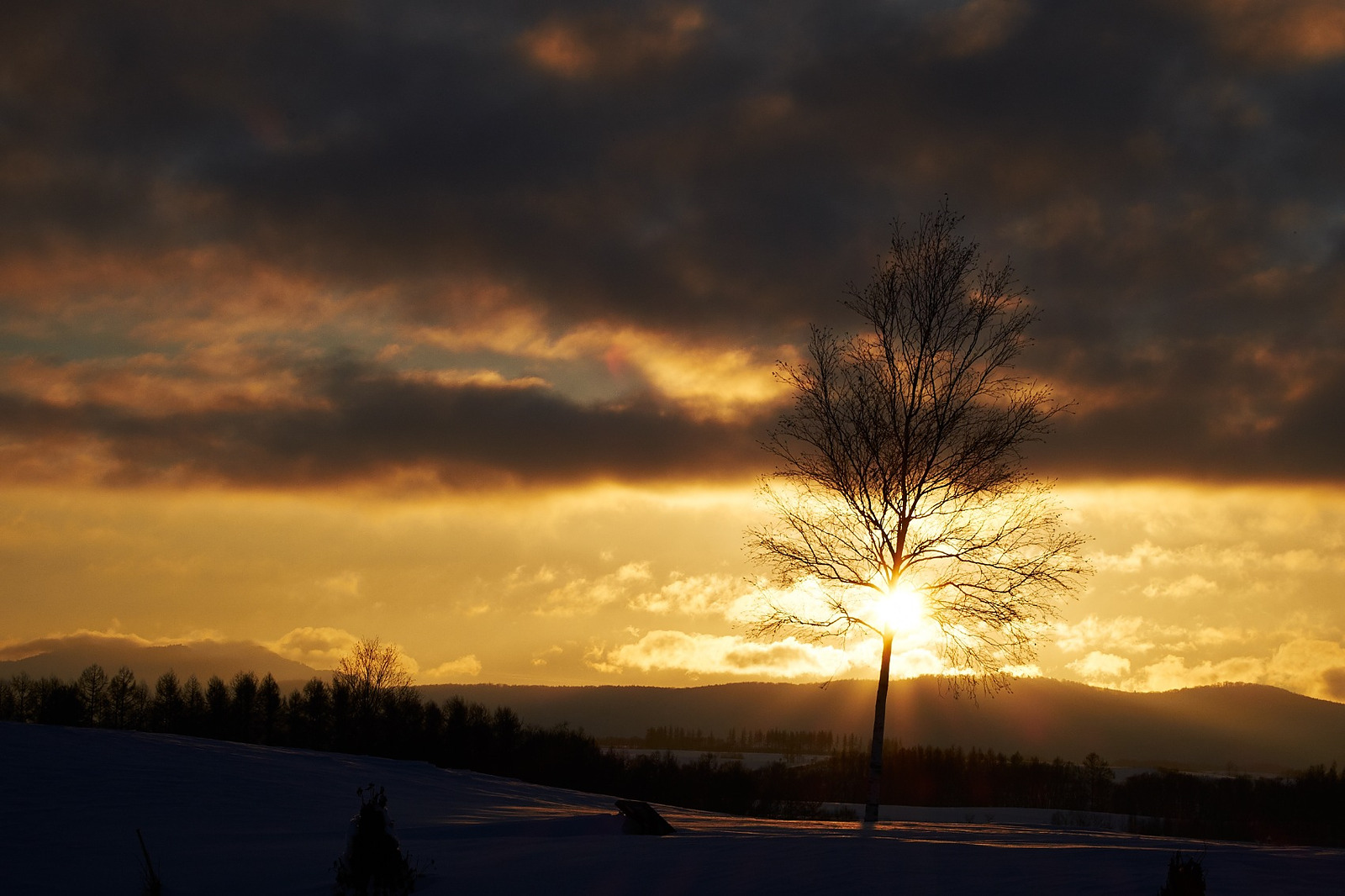
A lone tree on a snowfield at sunset in rural Hokkaido

Winter is not Hokkaido's busiest general tourist season outside of specific events, which works in your favour for accommodation availability and pricing in quieter periods. However around major festivals and ski season peaks, popular areas fill up fast and booking ahead remains important. The ski resorts in particular which draw visitors from all over the world operate at high capacity through January and February.

Beyond the capital

Exploring the Hokkaido Region

Winter in Hokkaido is a season built around snow, ice, and the particular pleasures that come with both. The cold that settles across the island from December through March produces some of the finest powder snow in the world, a coastline locked in drift ice, and a range of experiences that are entirely unavailable at any other time of year. The spots below are worth visiting specifically because of what winter brings to them rather than despite it.

Asahikawa · Hokkaido

Asahiyama Zoo (旭山動物園)

Japan's northernmost zoo, known for its winter penguin walk and behaviour based enclosures that show the animals in motion.

Going to a zoo may not be up at the top of the list of things to see and do for some, but going to Asahiyama Zoo is absolutely worth it, especially in winter. From around the middle of December until the snow goes in mid March the zoo hosts its daily penguin walks, in which a group of king and gentoo penguins are walked along a cleared path through the snow covered grounds by keepers, waddling past visitors who can stand within arm's reach of the animals. The 2025 to 2026 season ran from 18 December to mid March, with a walk at 11am and a second at 2:30pm until the end of February and the morning walk alone from March. The walks happen because the penguins need exercise through the winter months giving you a chance to see one these up so close that otherwise wouldn't be possible normally. But if you that isn't enough to convince you maybe the polar bears, Hokkaido brown bears, and other cold weather animals might, as they're also at their most active through the winter months and the enclosures at Asahiyama are designed to allow close and unobstructed viewing of the animals in a way that many larger and more famous zoos do not manage.

General information
AddressKuranuma, Higashiasahikawa-cho, Asahikawa-shi, Hokkaido 078-8205
AccessApproximately 40 minutes by bus from Asahikawa Station to the Asahiyama Zoo bus stop
Entry¥1,000 for adults, free under 15
Hours9:30 to 17:15, winter hours shorter
ParkingPaid car parks at the gates
Phone+81 166 36 1104
Teshikaga · Hokkaido

Lake Mashu (摩周湖)

A caldera lake in eastern Hokkaido with walls some 300 metres high, its rim coated in rime ice on the coldest mornings.

摩周湖 (Lake Mashu) is a caldera lake in Akan-Mashu National Park, about 7.5 km across, formed by a large eruption around 7,000 years ago. It has no river flowing in or out, and in 1931 its water was measured clear to a depth of 41.6 metres, then a world record. The 第一展望台 (First Observatory) stands about 300 metres above the water and is the only observatory on the lake that stays open through winter, because the road beyond it to the Third Observatory and Kawayu Onsen is closed from early November to late April. On cold, still mornings the birch and larch along the caldera rim are coated in 樹氷 (rime ice), and the view takes in the deep blue water, the small island of カムイシュ島 (Kamuishu), the top of a lava dome rising about 211 metres from the lake floor, and the peak of カムイヌプリ (Kamuinupuri), the god's mountain, on the far shore. The lake can be paired in a day with Lake Kussharo, where whooper swans spend the winter on water kept open by hot springs, and the steaming vents of Mount Io near Kawayu Onsen.

General information
AddressTeshikaga-cho, Kawakami-gun, Hokkaido (First Observatory)
AccessApproximately 25 minutes by car or bus from JR Mashu Station on the Senmo Line
EntryFree
HoursOpen at all times, the First Observatory is the only one reached by road in winter
Parking140 spaces at the First Observatory, free in winter
Niseko · Hokkaido

Niseko Ski Area (ニセコ)

A major ski area on Mount Annupuri, four linked resorts famous for deep, dry powder snow.

Niseko is one of the finest ski destinations in Asia due to the powdered snow that falls here through December, January, and February which is among the driest and lightest in the world. And how this come to be is because of the cold air masses that travel across Siberia and pick up moisture over the Sea of Japan before depositing it as extraordinarily fine powder snow on the ranges of southwestern Hokkaido. Now, that we got that little fun fact out of the way, let's go back to talking more about the area. The Niseko United area brings together four interconnected resorts, Hanazono, Grand Hirafu, Niseko Village, and Annupuri, across the slopes of Mount Niseko Annupuri, and the international community that has built up around the resort over the past two decades has produced a food and accommodation scene that is more sophisticated than most ski towns anywhere in the world manage. On a clear day from the upper slopes the view of Mount Yotei, a dormant volcano of almost perfect conical symmetry that sits across the valley, is one of the finer things winter in Hokkaido puts in front of you.

General information
AddressNiseko-cho and Kutchan-cho, Abuta-gun, Hokkaido
AccessApproximately 2 hours by car from Sapporo, or by train to Niseko Station on the JR Hakodate Main Line followed by shuttle bus to the resort area
EntryLift pass required, varies by resort
HoursLifts around 8:30 to 16:30, night skiing on some
ParkingFree and paid car parks at the bases
Phone+81 136 44 2211
Otaru · Hokkaido

Otaru Canal (小樽運河)

A 1920s canal lined with stone warehouses and gas lamps, at its most atmospheric under snow and the candles of the Snow Light Path in February.

小樽運河 (Otaru Canal) was completed in 1923 so that barges could carry cargo between the ships in Otaru's harbour and the stone warehouses along the shore, at a time when Otaru was one of the busiest ports in Hokkaido. The northern section keeps its original width of 40 metres, and along the rest a stone paved walkway with 63 gas lamps runs past the old warehouses, many of them now restaurants and shops. In winter snow piles up on the warehouse roofs and the canal banks, and when the lamps light at dusk the warehouses and the snow are reflected in the dark water. For about a week in February the 小樽雪あかりの路 (Otaru Snow Light Path), held since 1999, sets around 200 candles inside glass fishing floats on the canal and lines the old Temiya railway line with snow lanterns. In 2026 it ran from 7 to 14 February, 5pm to 9pm, and entry is free. Otaru is about 35 minutes from Sapporo by rapid train, so the canal fits easily into an evening from Sapporo during the Snow Festival.

General information
AddressMinato-machi, Otaru-shi, Hokkaido
AccessApproximately 10 minutes on foot from JR Otaru Station, about 35 minutes from Sapporo by rapid train
EntryFree
HoursOpen at all times, gas lamps lit from dusk
ParkingPaid car parks nearby, none for the Snow Light Path
Winter moments

Seasonal Experiences and Events in Winter

Now that you have a sense of how the season runs here, these are the highlights and experiences worth building the trip around.

Prefecture map

Seasonal culture

Seasonal Food & Everyday Atmosphere

Winter is when Hokkaido's cold water does the work. The crab seasons open, the cod come in heavy with roe and milt, and the cooking turns to the slow, warming pots that the island has always relied on to get through its longest season. Much of this is at its best in the depth of the cold rather than at either end of it.

タラ (Tara)

Cod

The island's everyday winter fish, and the milt, which is what people actually queue for.

Winter cod

Cod is what Hokkaido eats in winter when it is not eating crab. The fish moves inshore as the water cools and goes into 三平汁 (Sanpei Jiru), a salted fish and root vegetable soup that is one of the island's oldest home dishes, as well as into hot pots and simple grills. The part worth going after is the milt, which Hokkaido calls たち (tachi) rather than the mainland's 白子 (shirako). It appears for a few weeks at the peak of the season, is poached briefly and eaten with ponzu or dropped into miso soup, and the texture is closer to custard than to fish. Fish markets in Hakodate and Sapporo sell it by the tray while it lasts. This is not the ingredient people book flights for, but it is the one that turns up on local tables most often through the cold months.

ズワイガニ (Zuwai Gani)

Snow crab

Long legged zuwai with sweet, clean meat, and one of four crabs the island lands in winter.

Winter snow crab

Snow crab is the most delicately flavoured of Hokkaido's winter crabs. The legs are long and thin and the meat inside is sweet and clean rather than rich, which is the opposite of kegani, and it is best boiled and pulled straight out of the shell with nothing on it. What Hokkaido has that other crab regions do not is the full set of ズワイガニ (zuwai), タラバガニ (taraba), 毛ガニ (kegani) and 花咲ガニ (hanasaki), the last found almost only around Nemuro, so a crab restaurant here puts four different animals in front of you rather than variations on one. The San'in coast on the Chugoku page sells the same zuwai under the 松葉ガニ brand with a tag and a grading system attached. Hokkaido sells it by the kilo at the morning markets, which is a different way of buying the same crab.

タラバガニ (Taraba Gani)

King crab

Thick legged taraba, rich and meaty, boiled or grilled over coals through the cold months.

King crab

King crab is the one most people picture when they picture eating crab in Hokkaido. It is not in fact a true crab but a stone crab, which is why it has six visible walking legs rather than eight and why the body is built the way it is. The legs are thick and heavy and the meat is rich and firm rather than delicate, so it takes heat better than snow crab does, whether boiled and pulled from the shell or split and grilled over charcoal until the flesh pulls away from the shell in one piece. Most of what is sold in Japan is imported from Russian and Alaskan waters rather than caught locally, and the honest version of the Hokkaido claim is handling and freshness rather than origin. The morning markets in Hakodate, Sapporo and Wakkanai sell it live out of tanks and will cook it while you wait.

石狩鍋 (Ishikari Nabe)

Ishikari hot pot

A miso hot pot of salmon and winter vegetables named after the Ishikari River, a Hokkaido winter staple.

Salmon hot pot

Named after the Ishikari River where salmon has been fished for centuries, Ishikari hot pot is one of Hokkaido's most recognised regional dishes and a winter staple across the island. Salmon, vegetables, tofu, and konnyaku go into a rich miso broth that is warming and deeply flavoured, and toward the end of cooking a pat of butter is added, which sounds par for the course of dish from Hokkaido, but it does something to the broth that makes the dish feel complete in a way it would not without it. It's nothing fancy, but it is good food for sure. It has been eaten through Hokkaido winters for generations and on a cold night it tastes exactly like what it is, which is the right thing at the right time.

焼き芋 (Yaki Imo)

Roasted sweet potato

Stone roasted sweet potato, a warm winter snack found across Hokkaido in the cold.

Roasted sweet potato

One of the small pleasures of being in Hokkaido in winter is coming across a yakiimo van parked along the street. The sweet potatoes are slow roasted until the flesh is soft, caramelised, and almost custard like inside, and buying one and eating it warm in the cold is the kind of inexpensive and uncomplicated thing that ends up being one of the more memorable parts of a winter trip if you let it. It is street food that is deeply embedded in the cold weather experience across the island and it costs very little. If you see one of the vans, stop and give one a try. Especially if you're a true sweet potato lover.

Plan your trip

Book your stay in Hokkaido

Search accommodation across Hokkaido, from Sapporo city hotels to Niseko ski lodges and Hakodate ryokan. Compare options across the major booking platforms.

AdultsAges 18 or above
2
ChildrenAges 0–17
0
Book with
Pick a site. Your dates and details are carried over so you can check prices and book there.

Ready to plan your Hokkaido trip?

Browse itineraries built around Hokkaido in winter, from the powder slopes of Niseko to the frozen lakes of the east.

View Hokkaido Itineraries →