Kyushu in winter, day to day
Kyushu in winter is milder than most of Japan and that mildness is its most practical selling point for travellers who want to avoid the cold without sacrificing a genuine and varied travel experience. The northern prefectures of Fukuoka and Saga get cold through December and January, properly cold, with temperatures dropping to around five degrees or below on the coldest days, but the further south you travel the more the winter chill softens, and by the time you reach Kagoshima and the islands beyond it the season feels closer to a cool European autumn than a Japanese winter.
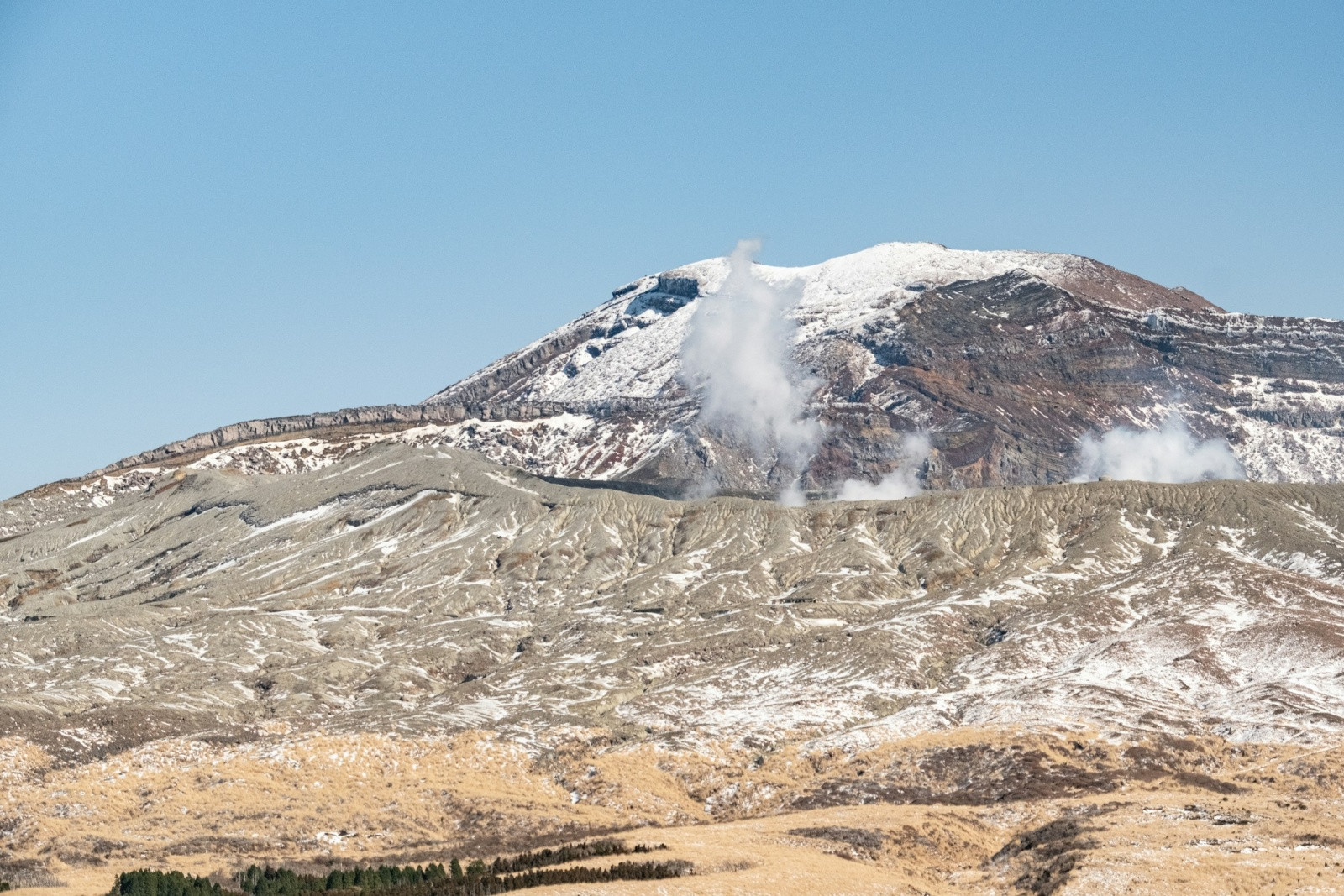
Snow does fall across parts of Kyushu in winter, though the experience varies considerably by location. The mountainous interior around Aso and the highland areas of Oita see genuine snowfall that transforms the volcanic landscape into something striking and relatively unusual for a region more associated with warmth. The coastal lowlands and southern prefectures see little to no snow in most winters, and the Amami islands south of Kagoshima sit in a climate that barely registers the season at all. That range within a single island gives winter Kyushu a flexibility that suits different types of travellers. Those who want mild and accessible conditions have plenty of options, and those who want a more dramatic winter landscape can find it without travelling far.
The hot spring towns of Beppu and Yufuin in Oita are at their most appealing in winter. The combination of cold air and steaming outdoor baths is an easy and enjoyable experience, and both towns are set up well for winter visitors with accommodation that centres around the onsen experience. Yufuin in particular takes on a quiet and atmospheric character in winter that the busier seasons dilute, the mist that rises from the hot spring waters into cold morning air across the valley floor is one of those moments that is difficult to describe without veering into the poetic, so suffice to say it is worth experiencing firsthand.
Packing for Kyushu in winter depends on your itinerary. The northern cities and mountain interior warrant a solid coat and warm layers, while the southern prefectures are manageable in lighter cold weather clothing. A waterproof layer is worth having across the island as winter rain is common, particularly on the western coast which continues to receive weather systems from the Japan Sea through the colder months. Getting around the island in winter is easy on the main routes, with the Shinkansen running reliably and road conditions in the lowland areas presenting few complications outside of the occasional cold snap in the north.
Okinawa in Winter
Winter in Okinawa is unlike winter anywhere else in Japan, and for many travellers that is precisely the point. While the mainland is cold, often grey, and in the northern regions buried under snow, Okinawa maintains a climate that sits in the mid to high teens through December, January, and February, cool by the island's own standards but mild enough that a heavy winter coat feels out of place. It is the season that draws visitors looking to escape the mainland cold without leaving the country, and the islands deliver on that in a simple and uncomplicated way.
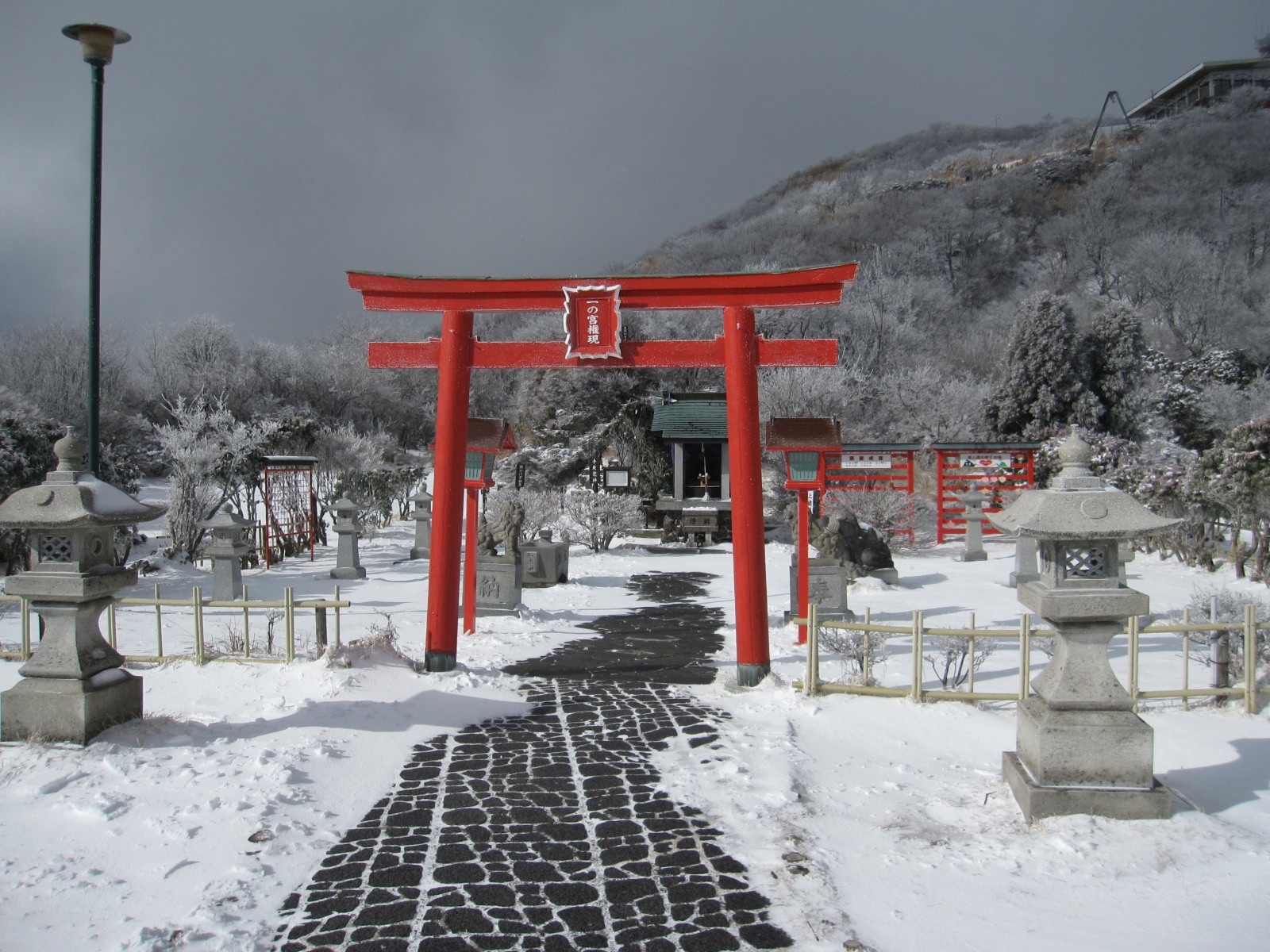
That said, Okinawa's winter is not the beach season that summer is. The water temperature drops enough to make swimming less appealing for most visitors, the skies are more frequently overcast than in other seasons, and the northeast winds that blow across the archipelago through the colder months can make exposed coastal areas feel raw and uncomfortable despite the relatively mild temperatures. The main island handles winter comfortably as a destination focused on culture, food, history, and the distinctive Ryukyuan heritage that sets Okinawa apart from mainland Japan, areas that reward exploration regardless of the weather outside.
The outer islands split in winter much as they do in other seasons. The Kerama Islands and Ishigaki remain accessible and worthwhile through winter for travellers interested in diving, where the water clarity is strong and the marine life including humpback whales that pass through the area from January to March makes the season special beneath the surface. The smaller and more remote Yaeyama islands slow down considerably in winter and some accommodation and services operate on reduced schedules, worth checking before committing to a specific itinerary in the more far flung parts of the archipelago.
Packing for Okinawa in winter is lighter than anywhere else in Japan at the same time of year. A mid weight jacket, a couple of warmer layers, and comfortable casual clothing covers most situations on the main island and the more accessible outer islands. The wind chill on exposed coastal areas warrants a windproof outer layer that might not be necessary further inland, and a compact rain layer remains useful given that winter brings more overcast and occasionally wet days than the clearer seasons. Accommodation is at its most available and affordable across the archipelago in winter, and the main island in particular is easy to move around in without the crowds and booking pressure that define the summer months.
Exploring Kyushu
Beppu Onsen (別府温泉)
The most prolific hot spring city in Japan, its eight Beppu Hatto districts wreathed in steam that thickens against the cold winter air, the bath hopping circuit most rewarding in the cold.
Beppu Onsen (別府温泉) in Beppu in Oita is the most prolific hot spring city in Japan with around 2,832 sources across eight bathing districts known together as Beppu Hatto, and the cold winter months from December through February produce the most dramatic version of the steam filled cityscape with the contrast between the cold air and the hot volcanic water condensing the steam into thick plumes that drift across the streets and hillsides. The winter conditions also make the bath hopping circuit that is the central reason to visit Beppu more comfortable than the same exercise in the humid Kyushu summer, with less need to cool off between baths and the contrast with the hot water at each soak sharper. The Kannawa district is the most atmospheric in winter with steam pouring from drainage vents and rooftops along its stone paved streets and the Mushiyu (蒸湯) traditional steam bath in operation since 1276, and the Takegawara Onsen in central Beppu established in 1879 with the current wooden building, under a karahafu roof, dating from 1938 has both a regular indoor bath at ¥100 and the Beppu Sunayu (砂湯) sand bath at around ¥1,500 where attendants bury bathers in yukata in hot volcanic sand. Kannawa is also where the 地獄蒸し (jigoku mushi) tradition of hell steaming is easiest to try for yourself, cooking food in the raw steam coming off the vents, which is at its best in winter when the steam is thickest and a hot lunch is most welcome. At the Jigokumushi Kobo Kannawa, which the city runs on Ideyu-zaka, you hire a steamer and cook your own, at ¥400 for up to 15 minutes and ¥200 for each further 10 minutes, or ¥600 and ¥300 on the large steamers, and you can bring your own ingredients as well as buy them on site. It opens from 10:00 to 19:00 with last orders at 18:00 and closes on the third Wednesday of the month, around 20 minutes by car from JR Beppu Station or a short walk from the Kannawa bus stop. There is no Beppu winter festival as such. The city's two set pieces are the Beppu Hatto Onsen Matsuri around 1 April and the Kannawa Yuami Matsuri in September, so winter here is about the baths, the steam and the food rather than a fixed event in the calendar. Above the city, the summit of 鶴見岳 (Mount Tsurumi), reached by the Beppu Ropeway, is often coated in rime ice on cold mornings, and the Beppu Christmas Fantasia sends fireworks up over Beppu Bay around Christmas. The Hells of Beppu Tour through the seven main jigoku in the Kannawa area is ¥2,400 for a two day pass. From Hakata Station in Fukuoka the JR Limited Express Sonic runs to Beppu Station in around 1 hour 51 minutes.
Ebino Kogen in Snow (えびの高原)
A volcanic plateau at about 1,200 metres in the Kirishima mountains, where rime ice coats the trees on cold winter mornings and snow settles below Mount Karakuni, the highest peak of the range.
えびの高原 (Ebino Kogen) is a high plateau at about 1,200 metres on the Miyazaki side of the Kirishima mountains, inside Kirishima Kinkowan National Park, and one of the few places in southern Kyushu where winter brings real snow. On clear, cold mornings from December to February the trees around the plateau are coated in 霧氷 (muhyo, rime ice), and the slopes of 韓国岳 (Mount Karakuni), at 1,700 metres the highest peak of the Kirishima range, turn white above the brown winter grass. Walking paths lead from the Ebino Kogen Ecomuseum Centre to the crater lakes and to the start of the Karakuni climb, and an outdoor skating rink opens in the coldest weeks. Prefectural Route 1, the main road up, can be restricted to vehicles with chains after snow and buses are infrequent, so check road conditions before driving up and dress for temperatures far below those on the coast. The plateau is about 30 minutes by car from the Ebino interchange on the Kyushu Expressway.
Izumi's Wintering Cranes (出水のツル)
At sunrise more than 10,000 cranes lift off together from Izumi's rice fields, the largest wintering flock in Japan.
Every winter more than 10,000 cranes fly in from Siberia to the rice fields of 出水 (Izumi) in northern Kagoshima, about 80 to 90% of the population of these species. In the 2024 to 2025 season about 15,000 came, mostly ナベヅル (hooded cranes) with about 3,000 マナヅル (white naped cranes) and a few rarer species. They have come since the Edo period, when the Satsuma domain ordered people to protect them as birds of good fortune and long life, and farmers still harvest early so the fields are ready as roosts. The area became a Ramsar wetland in 2021.
Go for dawn. Birdwatchers gather at the Crane Observation Center to watch the flocks rise off the roost against the morning sun, and the calls carry right across the plain. Through the day the birds feed, preen and dance in the fields. The centre's second floor deck looks straight over the roost, and binoculars and cameras can be borrowed. Guided eco tours explain the birds and the other species that winter here.
From 1 November 2026 to 14 March 2027 the wintering area is open 6:30 to 16:30 for ¥1,000 per car a day, paid at the centre. After a short briefing drive the set route to the hide at the East Reclamation, or ride the slow guided vehicle つるのしん号 (Tsurunoshin). Do not stop on the roadside, and on crane count mornings (14 and 15 November, 5, 6 and 19 December, 16 and 17 January) the area stays closed until 9:00.
Finish at 出水市ツル博物館クレインパーク出水 (Crane Park Izumi), which covers the birds and their migration in 30 to 60 minutes (¥330, open daily November to March).
Exploring Okinawa
Nago Central Park Cherry Blossoms (名護中央公園の桜)
The deep pink Ryukyu kanhizakura open on the hill of the old Nago Castle site from late January, the start of the cherry season in Japan, with the city's cherry festival on the last weekend of the month.
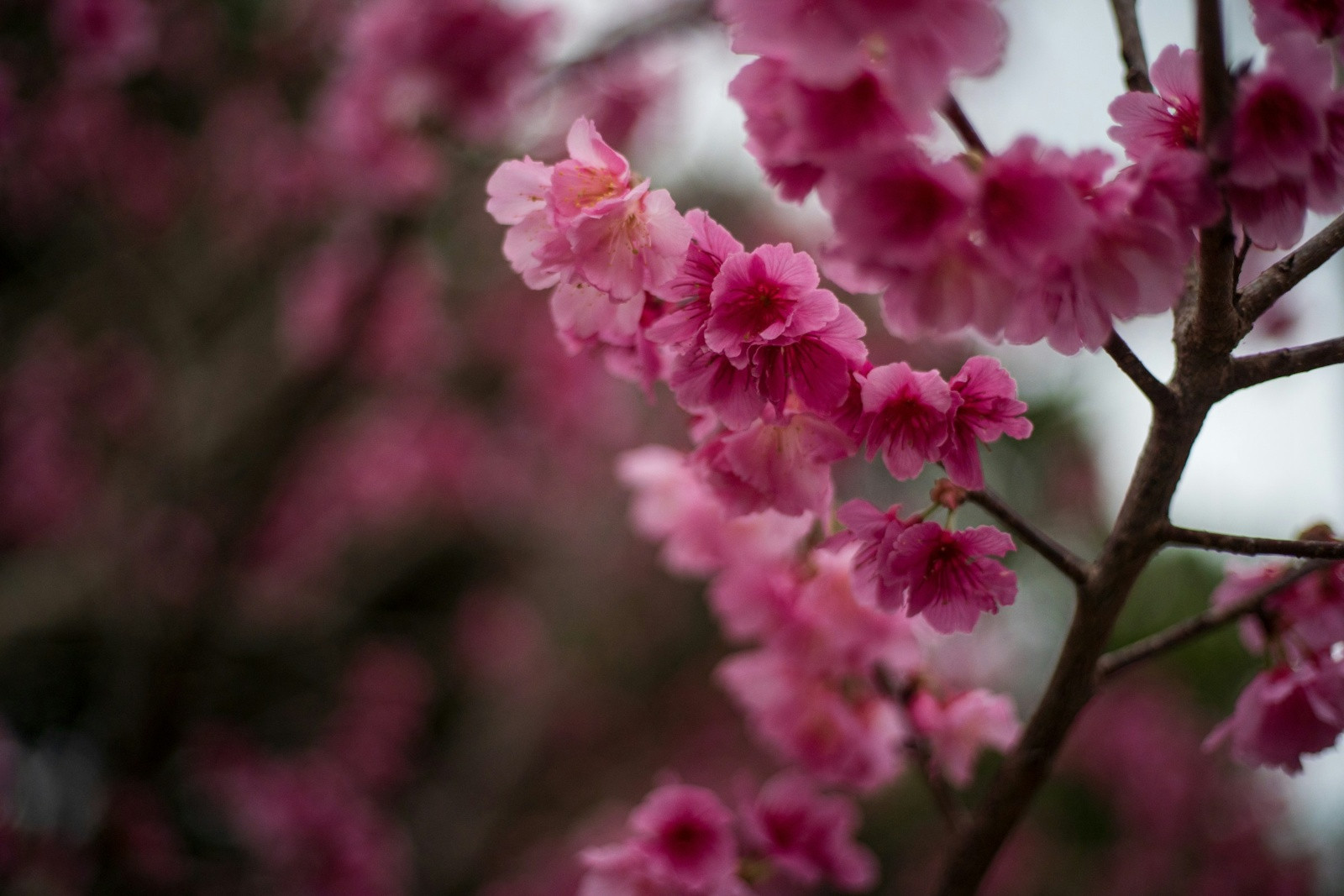
名護中央公園 (Nago Central Park) covers the hill of the old 名護城 (Nago Castle) site above the city of Nago in northern Okinawa, and about 20,000 cherry trees are planted across the park and the area around it. They are 琉球寒緋桜 (Ryukyu kanhizakura), a deep pink cherry that flowers in winter, usually from late January to mid February, weeks before the first blossom on the mainland, with flowers that hang in small bell shaped clusters rather than opening flat. A path of about 2 km climbs through the trees to the castle site, with views over the city to the East China Sea, and the Japanese white eyes that feed on the nectar are almost as much of a sight as the flowers. On the last weekend of January the 名護さくら祭り (Nago Cherry Blossom Festival) fills the park and the main street below it with food stalls, a festival stage and a parade of school brass bands and costumed groups. The 2026 festival, the 63rd, was held on 31 January and 1 February from 13:00 to 20:30, with the main street closed to traffic and parking at Nago Fishing Port. Nago is about 1 hour 30 minutes by car from Naha on the Okinawa Expressway, or a little longer by expressway bus.
Winter Cherries at Nakijin Castle (今帰仁城跡の桜)
Deep pink cherry blossoms hang from the stone walls of a 13th century castle on a hill above the sea, weeks before mainland Japan sees a single flower.
今帰仁城跡 (Nakijin Castle Ruins) stand about 100 m up on the Motobu Peninsula and date to the 13th century, when the castle guarded the Yanbaru region of northern Okinawa. After its last king, Hanantichi, fell to the Chuzan army, officials were posted here until 1665, and after that it was kept as a place of ritual. It is now a World Heritage site.
Walk in through the 平郎門 (Heiro Gate), restored in 1962. The outer wall is low, about 2 m, and winds for several hundred metres across the hill, while the Oo enclosure has taller, heavier walls. 御内原 (Ucchibaru) on the north side looks out over the sea, and the クバの御嶽 (Kuba Utaki) to the west is a sacred site. Entry includes the village history and culture centre.
In winter 寒緋桜 (kanhizakura) line the approach, the grounds and the stone stairs inside the walls. They bloom from mid January to mid February, the first in Japan, with dark pink bell shaped flowers that drop whole rather than shedding petals. White eyes come for the nectar and fruit bats sometimes at dusk. The 今帰仁グスク桜まつり (Nakijin Gusuku Cherry Blossom Festival) is set for 30 January to 7 February 2027.
For more blossom, the road up Yaedake near Motobu is lined with over 7,000 cherry trees. The castle ruins take uneven paths and steps, so wear comfortable shoes.
Mount Yaedake's Winter Cherries (八重岳の桜)
About 7,000 deep pink cherry trees line the winding road up Mount Yaedake, blooming from mid January, earlier than almost anywhere in Japan.
On 八重岳 (Mount Yaedake), on the Motobu Peninsula, about 7,000 寒緋桜 (kanhizakura) trees line the road from the foot of the mountain up towards its 453 m summit. These are Okinawa's deep pink cherries, which flower from mid January to early February, and Motobu bills the 本部八重岳桜まつり (Motobu Yaedake Cherry Blossom Festival) as the earliest cherry festival in Japan. Past seasons have drawn around 180,000 visitors.
The way to see it is on foot under the trees, following the bends of the road uphill so the view changes as you climb. The festival centre is 八重岳桜の森公園 (Yaedake Sakura no Mori Park).
Cherry season overlaps with the local たんかん (tankan) citrus harvest, so look for it on sale nearby. Pair the mountain with other Motobu sights such as the Bise Fukugi tree lined lanes or Ocean Expo Park, a short drive away.
Entry and parking are free. The road is a working road and gets busy at weekends, so use the car parks and watch for traffic when walking.
Experiences in Kyushu
Now that you have a sense of how the season runs here, these are the highlights and experiences worth building the trip around.
Experiences in Okinawa
Now that you have a sense of how the season runs here, these are the highlights and experiences worth building the trip around.
Prefecture map
Food in Kyushu
Offal hot pot
Fukuoka's motsu nabe, offal simmered with cabbage and garlic chives, and the dish the city's izakayas are built on.
もつ鍋 (Motsu Nabe) is Fukuoka's, and specifically Hakata's. Beef offal, mostly small intestine, is simmered in a soy or miso broth with a mound of cabbage and 二ラ (nira) garlic chives piled on top, with garlic and sliced chilli, and the fat rendering out of the offal is what builds the broth as the pot cooks down. It came out of post war Hakata as cheap food made from cuts nobody else wanted, eaten out of aluminium pots, and went national in a boom in the early 1990s, which is why it turns up in Tokyo izakayas that have no other connection to it. The ending matters here. Once the offal and vegetables are gone, ちゃんぽん麺 (champon noodles) go into the remaining broth, which is the part regulars order first. Winter is when it is eaten hardest, and the specialist shops in Nakasu and Tenjin do nothing else.
Pickled mustard greens
Takana harvested and barrelled through the cold months, then eaten with everything from ramen to rice balls.
高菜漬け (Takana Zuke) is the pickle Kyushu runs on. 高菜 (takana) is a large leaved mustard green, harvested from late winter into early spring, salted and weighted in barrels until it ferments into something sharp, sour and faintly mustardy. Two regional versions matter, 三池高菜 (Miike Takana) from the Fukuoka and Kumamoto border, which is the standard, and 阿蘇高菜 (Aso Takana) grown on the volcanic slopes of Aso, a thinner stemmed plant picked by hand by twisting rather than cutting and pickled with less salt so it stays crisp. It is chopped and fried with sesame oil and chilli as a side, mixed into fried rice, folded into 高菜めし, wrapped around rice balls, and put on the counter of every Hakata ramen shop for customers to add themselves. It is the counterweight to a fatty tonkotsu broth, which is why the two are never far apart.
Yellowtail
Kagoshima and Oita farm more yellowtail than anywhere else, and winter is when the fish is fattest.
Kyushu's relationship with ぶり (Buri) is a farming one. Kagoshima and Oita are the largest producers of farmed yellowtail in the country, raised in pens in the sheltered bays of the Satsuma peninsula, Shibushi and the Bungo channel, and the fish are grown to a consistent size and fat content rather than caught on a run. That makes the eating reliable in a way wild fish is not. The marbling is predictable, the supply does not depend on whether the shoal came past, and the prefectures brand their output, with 鹿児島のかんぱち and Oita's 豊後ぶり sold under prefectural marks. Winter is still when it is best, since the fat peaks in the cold through December and January. It is eaten as sashimi, as しゃぶしゃぶ, and simmered with daikon as ぶり大根. Toyama's kan-buri on the Chubu page is wild, seasonal and unpredictable, which is the opposite proposition.
Flat wheat dumpling soup
Hand pulled ribbons of wheat dough simmered with root vegetables and pork in a miso broth, the winter bowl of an Oita upland that grew wheat rather than rice.
Flat wheat dumpling soup is the everyday winter food of Oita and the clearest expression of a flour based cooking tradition that the agriculture ministry traces to the prefecture's uplands, where the plateaus suited wheat rather than paddy and most of the grain went to the mill. When rice was short, dangojiru stood in for it as a daily meal. The dough is nothing more than wheat flour, salt and water, kneaded and left to rest for about an hour, then torn into pieces and pulled by hand into flat ribbons rather than rolled into balls, a shape that took hold because the broth soaks into a flat strip far better than into a round one. The ribbons are boiled and then dropped into a miso broth, usually built on dried sardine and kombu, with daikon, carrot, burdock, taro, shiitake and pork alongside them, and the mix varies from one part of the prefecture to the next. It is filling, cheap and hot all the way down, which is why it belongs to the cold half of the year, and it is the sort of thing handed down from grandmother to mother to child rather than learned from a book. The sweet relation is yaseuma, the same dough pulled wider, boiled and dusted with sweetened soybean flour, and the two are often served together in Oita.
Food in Okinawa
Sakurajima daikon
Kagoshima's giant radish, grown only in the volcanic ash around the volcano, harvested December to February.
桜島大根 (Sakurajima Daikon) is a winter radish the shape of a beach ball rather than a baton, and it grows only on and around 桜島 (Sakurajima), the active volcano across the bay from Kagoshima City, because it needs the drainage of deep volcanic ash soil. Harvest runs December to February with the peak from mid January to early February. An average one weighs around 10 kilograms and specimens reach 20 to 30, and it holds the Guinness World Record for the heaviest radish. Size is not the point of eating it, though. The flesh is finer grained and sweeter than an ordinary daikon and it does not fall apart when cooked for a long time, so it is simmered in 煮物, pickled, and served as 桜島大根の千枚漬け. Restaurants in the city put it on the menu through the season and the ferry terminal shops sell it cut into wedges because a whole one is unliftable.
Tankan citrus
Okinawa's winter citrus, picked in January and February in the Yanbaru hills of the north.
タンカン (Tankan) is Okinawa's winter fruit, a natural cross between a mandarin and a sweet orange, and its window is short. Harvest runs through January and February and then it is gone. It is grown in the north of the main island, in 名護市 (Nago), 国頭村 (Kunigami) and 本部町 (Motobu), the 山原 (Yanbaru) district, where the acidic red soil suits it. The skin is thin, tight and slightly rough and it does not peel as cleanly as a mikan, but the flesh inside is markedly sweeter and more heavily perfumed, with a high juice content and a deep orange colour. Okinawa and Amami Oshima are effectively the only places in Japan that grow it in quantity. Pick your own orchards around Motobu open through the season, the roadside stands sell it by the netted bag, and the surplus goes into juice and jam sold across the island.
Field taro
Okinawa's paddy grown taro, lifted through the winter and cooked for New Year as a symbol of a growing family.
田芋 (Tāumu) is a taro grown in standing water in paddies rather than in dry soil, and it is the Okinawan celebration food. Harvest runs December to April, with a second lift in December, from the north and centre of the main island and around 宜野湾 (Ginowan) and 金武 (Kin). It appears at New Year and at 盆 (Obon) because the parent tuber puts out a ring of offspring around itself, which is read as 子孫繁栄, a family multiplying, so serving it is a wish rather than just a dish. The eating versions are ドゥルワカシー (duru wakashi), the tuber and its stems mashed and cooked down with pork and shiitake into a thick savoury paste, ドゥル天 (duru ten), the same mixture shaped and deep fried, and 田芋でんがく, sweetened with brown sugar as a dessert. The texture is stickier and denser than mainland satoimo and the flavour is nuttier.
Steamed brown sugar mochi
Brown sugar mochi wrapped in a shell ginger leaf and steamed, made across Okinawa on the eighth day of the twelfth lunar month, which lands in the coldest weeks of the island winter.
Steamed brown sugar mochi is rice flour dough sweetened with brown sugar, wrapped in a sannin (shell ginger) leaf and steamed for about half an hour, which leaves the cake carrying a clean herbal scent from the leaf. It is made for the eighth day of the twelfth lunar month, offered at the household altar to ward off misfortune and eaten to pray for the family's health, and in 2026 that date fell on January 26. The cold snap that arrives around it has its own name here, muuchii biisa, the muchi cold, and it is about as close as these islands come to a proper winter. Supermarkets and confectioners across the prefecture stack the leaf wrapped parcels in the days beforehand, so it is easy to try if you are on the islands in January, with purple sweet potato and plain white sugar versions sold alongside the brown sugar original.