
White water rafting in Japan
Japan is a country of steep mountains and heavy weather, which is the short explanation for why it has such good rivers. Snow piles up on the ranges through winter and comes off them in spring as meltwater, the rainy season and the typhoons top the rivers up again through summer and autumn, and the water runs off those mountains fast and cold through gorges cut into the rock. What that produces is a set of rivers with genuine grade three and four water, in scenery that is the point as much as the rapids are.
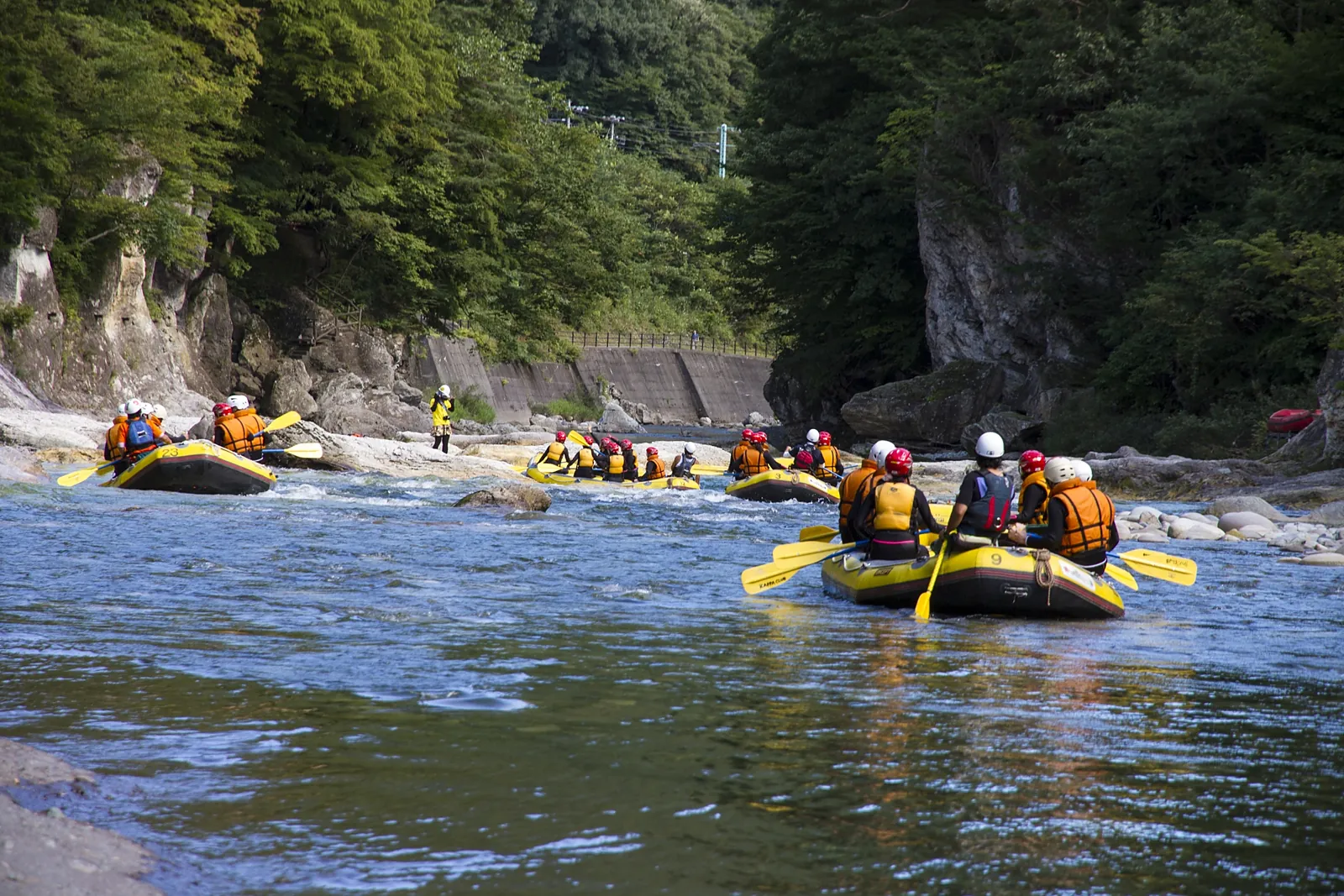
It is also, and this is the part that surprises people, an easy thing to arrange as a visitor. The rafting centres are organised, the gear is provided down to the wetsuit and the shoes, the guides are used to visitors and many speak English, and a half day trip asks nothing of you except that you can swim and follow instructions. You do not need any experience for the standard trips, even the lively ones, because you are in a boat with a guide who has run that water hundreds of times. What you do need is to pick the right river and the right month, because the same stretch can be a family float in August and a serious piece of water in May.
Where to raft
Three areas carry the reputation, one within easy reach of Tokyo, one in Shikoku that has hosted a world championship, and one in the Hokkaido snow country. Each has a different character and a different season.
Open a river for its season, its water and how to reach it.
The Tone River, Minakami
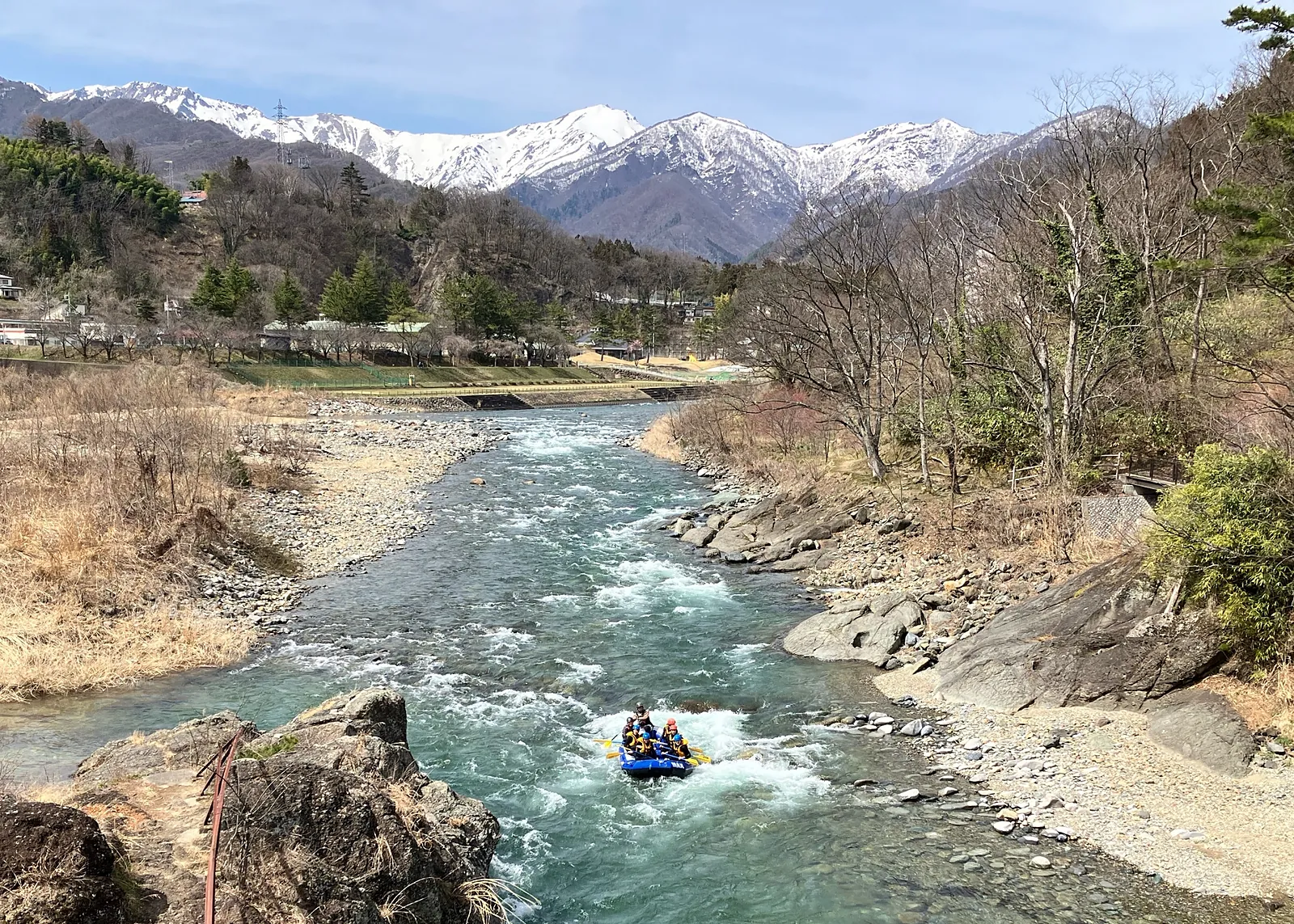
Minakami is an outdoor town in the mountains of northern Gunma, and Gunma's own tourism office calls the Tone one of Japan's top white water destinations, known to rafting enthusiasts worldwide. The season runs from around May to early November depending on the operator, and the water changes completely across it. In spring the rapids sit between levels three and four, and even then no experience is needed because a guide runs the boat. Come in summer instead and the same river is far more mellow, which is the trip to book with children or nervous friends. Courses are sold as a half day of about 12 kilometres or a full day of about 25. What makes Minakami the easiest of the three is what surrounds it. It is a shinkansen ride from Tokyo or Ueno to Jomo-Kogen and then a local bus, and the town is full of onsen, including Takaragawa Onsen Osenkaku, which Gunma describes as Japan's largest open air bath. A morning on the river and an afternoon in an outdoor bath is a very good day. Details on Gunma's official page.
The Yoshino River, Oboke and Koboke
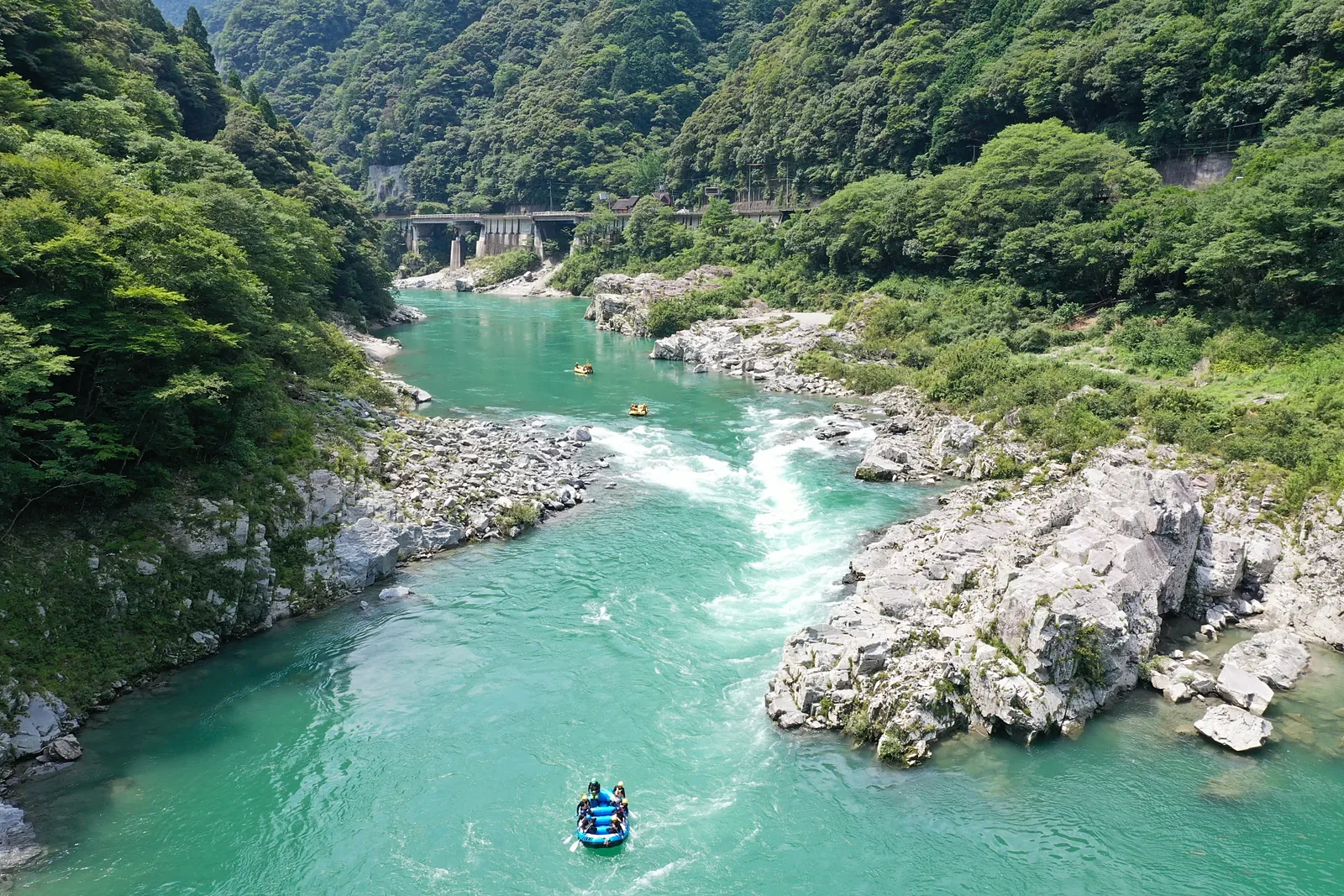
This is the one the rafting world knows. The Yoshino cuts through two gorges in the middle of Shikoku, Oboke and Koboke, and those middle stretches are the ones people come for, praised by rafters for the volume, power and depth of the water and the shape of the terrain it runs through, with an emerald green surface you can see the bottom through. The International Rafting Federation held its World Rafting Championships here in 2017. Trips run daily from March to October across class three and class four rapids, with courses arranged to suit beginners through to experienced paddlers, and the Koboke stretch is the fiercer of the two gorges. Getting there is a proper journey and worth it. From Shin-Osaka take the shinkansen to Okayama in 45 minutes, then the Nanpu limited express to Oboke Station in an hour and a half. The gorge is also the gateway to the Iya Valley, so it pairs with a couple of days in one of the remotest corners of the country. JNTO's Tokushima rafting page has more.
The Shiribetsu River, Niseko
Niseko is known for snow, and the snow is exactly why the rafting works. When the melt comes off the mountains in spring the Shiribetsu rises by two metres, which turns a clear mountain river into a short, excellent white water season on the stretch between Hirafu and Niseko stations. It is one of the clearest rivers in the country, and the run through the green season is gentler, closer to a scenic float with rapids in it, on water that finishes near Kutchan with the mountains standing over you. If you are in Niseko in spring for the last of the skiing, this is the thing to do on the day the snow turns to slush. JNTO's Niseko rafting page covers it.
Elsewhere
Rafting runs on rivers all over the country and these three are simply the ones with the deepest reputation. The Hozugawa near Kyoto is worth knowing for a different reason. The traditional boat ride down it, poled and steered by boatmen, is a gentler and far older way of running the same kind of water, and it suits a family or a day when nobody wants to get soaked. Kinugawa in Tochigi, the rivers around Hakuba in Nagano and several in Kyushu all run commercial trips. If you are already somewhere with mountains and a river, ask locally, because the odds are good.
Season, and why the month matters more than the river
Rafting in Japan is a spring to autumn activity, roughly March to November depending on where you are, and within that the month decides what kind of day you get. Spring is snowmelt. The rivers are high, fast and very cold, the rapids step up a grade or two, and this is when the serious trips run. Summer is the family season, with lower, warmer water, mellower rapids and the widest choice of trips, which is why it is also the busiest. Autumn brings the colour on the gorge walls and settled water, and is arguably the loveliest time to be on a river here.
Rain is the other variable and it works both ways. A wet week lifts the water and makes the rapids better, right up to the point where it makes them unrunnable and the trip is cancelled. Typhoon season overlaps the back half of the rafting season, and an operator who calls off your trip because the river came up overnight is doing exactly what you want them to do. Build a spare day into the plan if the river is the reason you travelled somewhere, and take the refund or the reschedule gracefully when it happens.
What a trip is actually like
Book ahead, especially in summer
Half day trips usually run morning and afternoon, full days once. Summer weekends and the August holidays fill, and so does the spring snowmelt fortnight in Niseko. Book online before you travel rather than hoping on the day.
Turn up with swimwear and a towel
The operator supplies the wetsuit, the buoyancy aid, the helmet and usually the shoes. You bring swimwear to go underneath, a towel, and a full change of clothes for afterwards. Leave anything you cannot afford to lose in the locker, including your phone unless you have a strap and a case you trust.
Listen to the safety briefing properly
Every trip starts with the same talk on how to hold the paddle, how to sit, the commands the guide will shout, what to do if you go in and how to get back on. It takes ten minutes and it is the only part of the day where paying attention matters. Say up front if you are a weak swimmer.
Paddle when you are told
The guide steers from the back and calls the strokes, and a boat that paddles together goes where it is pointed. Between the rapids there are long quiet stretches for looking at the gorge, and on warm days most guides will let people swim.
Finish in the bath
Centres have hot showers and most have photographs of your boat for sale afterwards. In Minakami in particular, the correct end to the day is an onsen, and the town has some of the country’s better known baths.
Choosing an operator
Rivers are run by lots of small companies rather than by the river itself, so the operator is the decision that matters. There is no single official register to point you at, which means the checks below are worth making yourself before you pay.
Match the trip to the weakest person in your group
Grades, minimum ages and minimum heights vary by operator and by season on the same river. Read the trip description rather than the river's reputation, and if you are bringing children, book the course written for them.
Check what English support really means
An English booking page is not the same as an English speaking guide in your boat. If that matters to you, ask directly when you book, because the safety briefing is the part you need to understand.
Read the weather and cancellation policy first
Find out who decides, when they decide, and what happens to your money if the river is too high or too low. A clear policy is a sign of an operator who cancels when they should.
Ask what is included and what is extra
Wetsuit, shoes, lockers, shower, photographs, lunch on a full day and transport from the station are sometimes in the price and sometimes not. The cheapest listed trip is not always the cheapest day.
Declare medical conditions and pregnancy
Operators exclude some conditions and most exclude pregnancy, and they need to know before you arrive rather than at the riverbank. The same goes for recent injuries and shoulder problems, because paddling is a shoulder sport.
Fitting it into a trip
From Tokyo: Minakami, overnight
Shinkansen to Jomo-Kogen, raft in the morning, onsen in the afternoon, stay the night and come back the next day. It is the easiest rafting in Japan to reach, and it rewards being paired with something else.
In Shikoku: Oboke, with the Iya Valley
The gorge is the entrance to the Iya Valley and its vine bridges, so give it two or three days and make the rafting one morning of a wider trip rather than a long journey for a single ride.
In Hokkaido: Niseko in spring
Late in the ski season the snowmelt makes the river and the slopes go soft in the afternoon. That overlap is a few weeks long and it is the one time you can ski and raft on the same trip.
Keep a spare day
Weather cancels trips. If the rafting is the reason you went somewhere, give yourself a second chance at it rather than one shot on a fixed date.
Common questions
Do I need any experience?
No. Standard trips are run by a guide in every boat and are built for people who have never held a paddle. You do need to be able to swim and to follow instructions.
What should I bring?
Swimwear, a towel and dry clothes. The operator provides the wetsuit, buoyancy aid, helmet and usually shoes. Leave valuables in the locker.
Can children go?
Often yes, on summer trips written for families, but minimum ages differ by operator and by season. Book the course that states an age rather than assuming.
What happens if it rains?
Rain alone rarely stops a trip and often improves it. A river that has risen too far does stop one, and a good operator cancels rather than runs it. Check the refund policy when you book.