What a touge is, and what it is not
Touge is simply the Japanese word for a mountain pass, and the country has thousands of them, narrow roads that climb out of a valley in a stack of hairpins, cross a ridge and drop down the other side. A handful became famous for reasons that have nothing to do with the scenery. In the nineties a manga called Initial D took the real street racing scene of the Gunma mountains and turned it into a story, the story became an anime and then a run of video games, and a generation of people around the world learned the names Akina, Irohazaka and Hakone before they could have found Gunma on a map. Akina is a made up name for a real mountain, Haruna, and the others are exactly what they are called. All of them are roads you can drive.
The thing to have straight before you rent a car is what that means. These are public roads with speed limits, buses, cyclists, tour coaches in autumn and families in kei cars, and the police know precisely why some visitors come. Racing or drifting on them is a criminal matter in Japan and is policed as one, and a few of the passes have been fitted with rumble strips and lowered limits specifically to make sure nobody tries. None of that takes anything away from the drive. These roads are extraordinary at a sensible pace, the hairpins are still hairpins, the views are the point, and a rental car on a quiet weekday morning will give you the whole experience and a licence to come home with.
The roads
Four to plan around, all within a few hours of Tokyo, and all different. Two of them you could do by bus if you had to, which is worth knowing if the licence section below rules you out.
Open a road for what it is like and how it works.
Irohazaka, Nikko
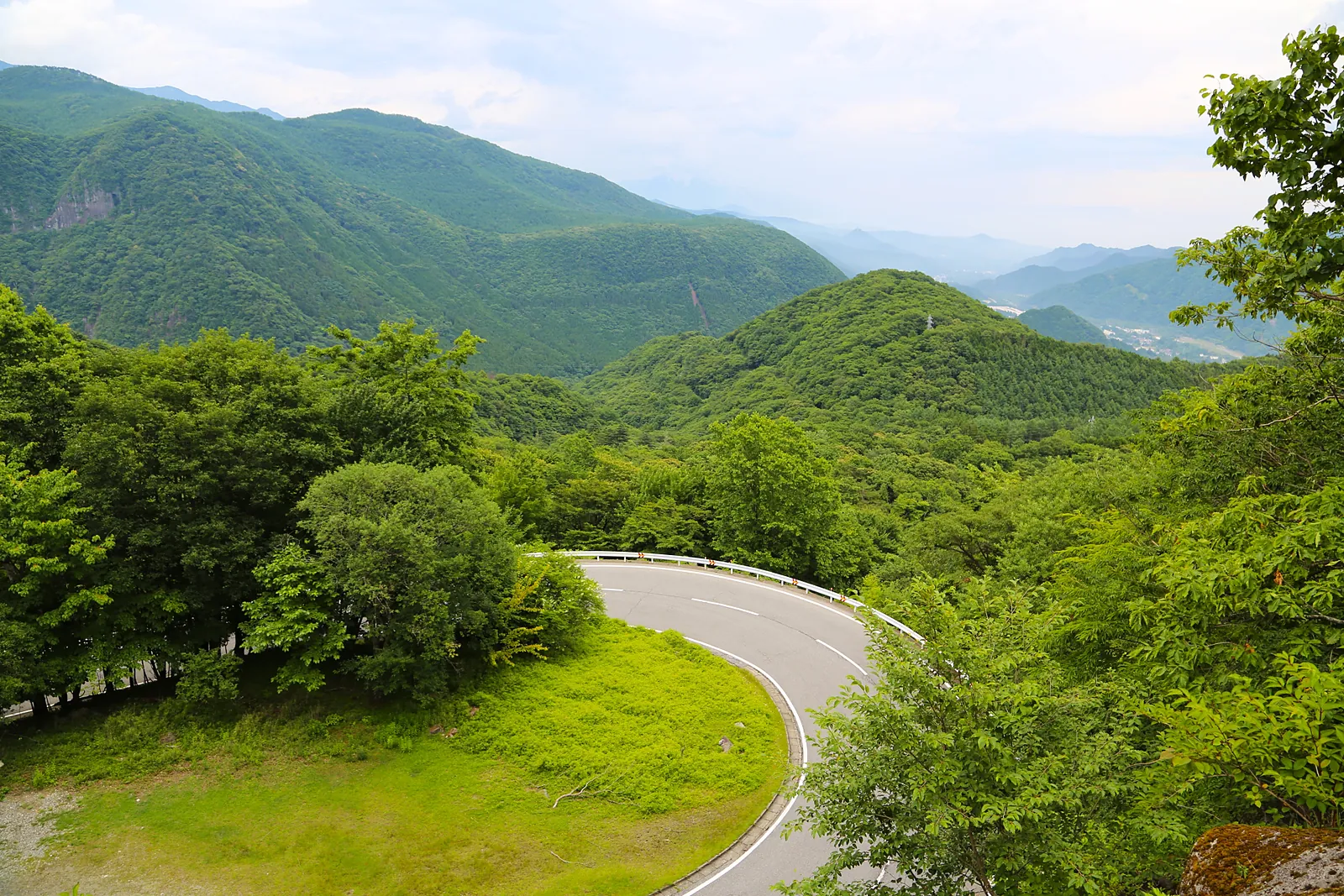
Irohazaka connects the town of Nikko to Lake Chuzenji up in the mountains and it does it with 48 hairpin turns, one for each character of the old Japanese syllabary, which is where the name comes from. What makes it unusual among the famous passes is that it is two roads, one for going up and one for coming down, each one way, so there is nothing coming the other way around any of the bends and you can concentrate on the road. The Akechidaira observatory sits on the descending road and is the place to stop. It is the most visited autumn colour spot in Nikko and the traffic in late October and early November reflects that, so if it is the drive rather than the leaves you want, come outside the peak or come early. Buses run the same road to the lake, so it is the one pass on this page you can experience from a seat. Details on Tochigi's official site.
Hakone Turnpike
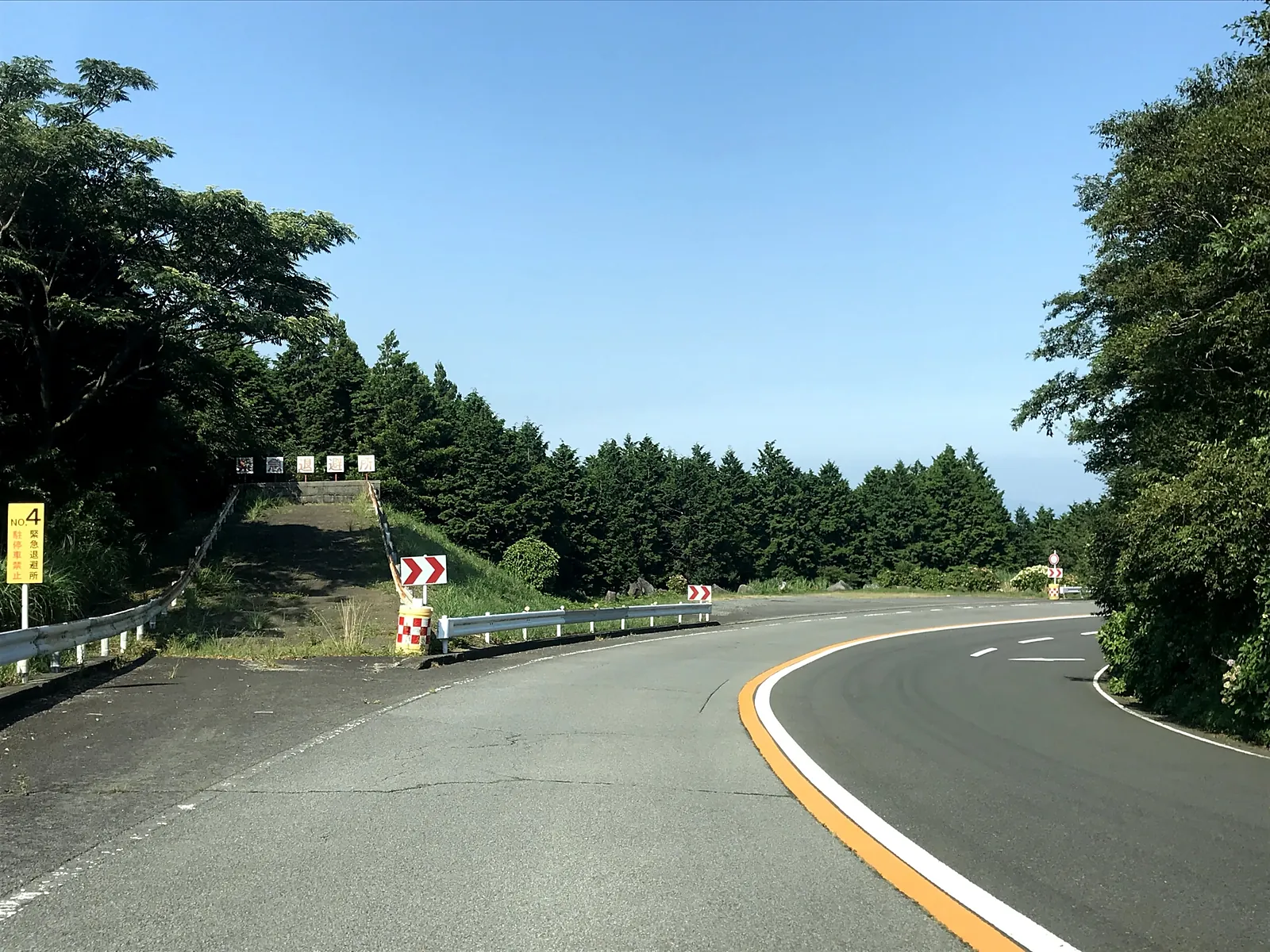
Officially the Anest Iwata Turnpike Hakone, this is the odd one out because it is a private toll road rather than a public pass, and that changes everything about it. The main line runs 13.8 km from Odawara up to the Hakone ridge, with a 1.7 km connecting line towards Izu, it opens from 5:30 in the morning to 10:30 at night, and the toll is ¥900 for a car and ¥650 for a motorcycle over 125cc on the main line. The road is wide, well surfaced and properly cambered, which is why car manufacturers use it for launches and events, and at the top the Taikanzan viewpoint and its Sky Lounge sit at around 1,000 metres with a full circle of Mount Fuji, Lake Ashinoko, the Hakone mountains, Sagami Bay and the Izu Peninsula. It is the road to take a rental car on if you want a proper mountain drive with none of the hairpin nerves. Tolls and hours are on the Tourism Road Association's guide.
Mount Haruna, Gunma
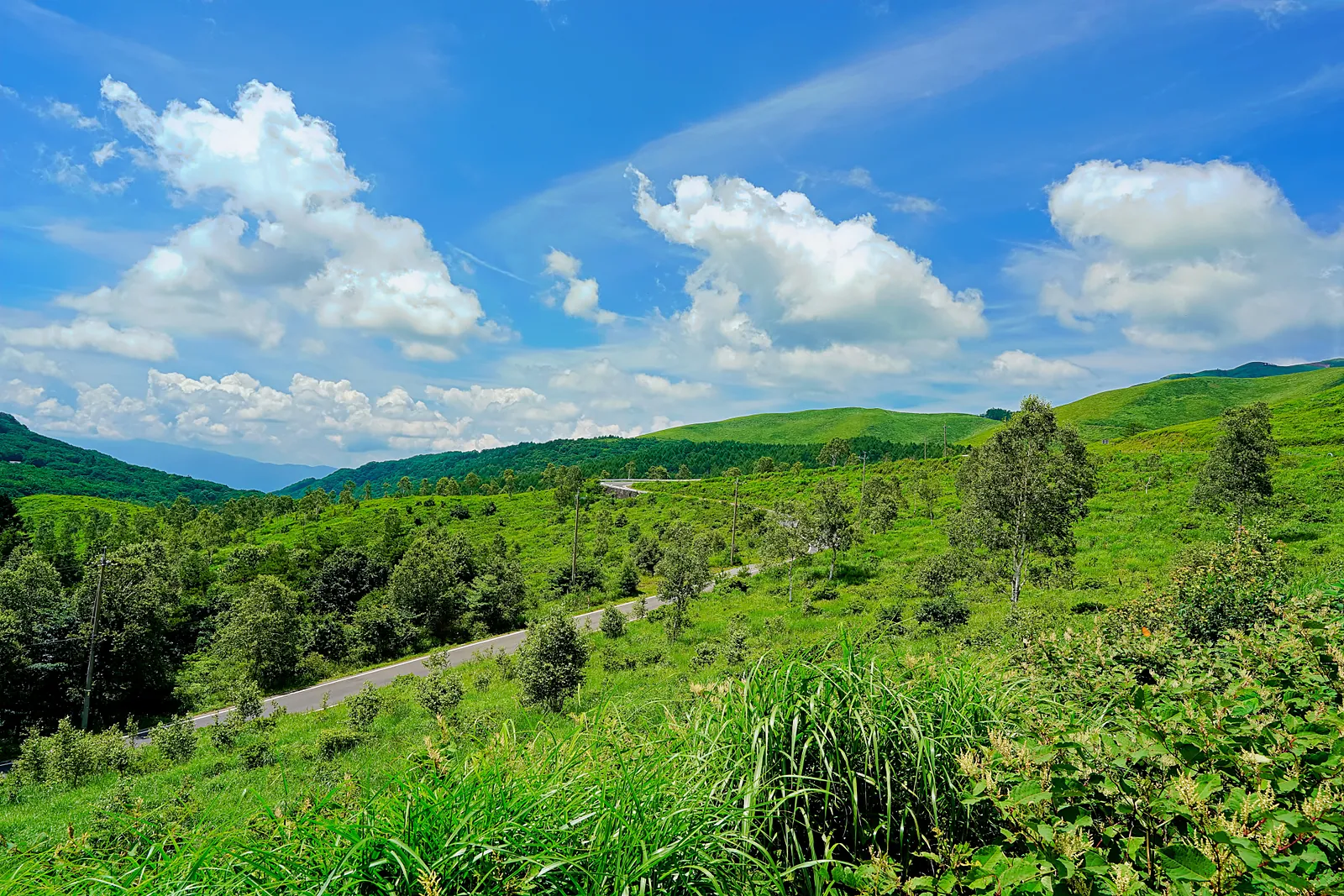
This is the one the fans come for, and it is a lovely place in its own right. Lake Haruna sits at 1,100 metres in the caldera of a long dormant volcano, with Mount Haruna rising to 1,449 metres beside it, and the road up from the Takasaki side is the run of hairpins that the manga drew. At the top there is a lake with boats, a small resort strip, camping and horse riding in summer and ice fishing when it freezes, which is a good reminder that the road exists to get people to all of that. A bus runs from the west exit of Takasaki Station in about 90 minutes, so you can see the road without driving it. If you do drive it, know that this is the pass the police watch most closely, for obvious reasons. Lake details on JNTO's page.
Akagi and the Usui Pass, Gunma
Mount Akagi is the other Gunma mountain in Initial D and has its own climb to a crater lake, and the old Usui Pass road between Gunma and Nagano is a long procession of bends through forest that was the main route west before the expressway and the Shinkansen took the traffic away. Neither has the profile of Haruna or Irohazaka, which is the appeal, because they are quieter. Base yourself in Takasaki or Maebashi and you can do Haruna one day and Akagi the next without much driving in between.
Papers first
Whether you can drive in Japan at all comes down to what your home country issues, and it is worth settling before you book a car rather than at the rental counter. Most visitors need an International Driving Permit, and it has to be one issued under the 1949 Geneva Convention, which is what Australia, the United Kingdom, the United States, Canada and New Zealand issue. A permit from a country that only signed the later Vienna Convention is not valid here, whatever it says on the cover. The permit lets you drive for one year from the date you enter Japan, and you carry it with your home licence, because the permit is a translation of that licence and not a licence on its own.
Six countries are handled differently. If your licence is from Switzerland, Germany, France, Belgium, Monaco or Taiwan, you drive on that licence with an official Japanese translation attached, which the Japan Automobile Federation issues online only for ¥6,600 and takes five to ten business days to turn around, so it is not something to leave until the week before. The JAF page is the one to read for your own country, and a rental company will refuse a car to anyone whose paperwork does not fit one of these two patterns, politely and without exception.
The rules that actually bite
Left side, and slower than you think
Japan drives on the left, and the posted limits on mountain roads are low, often 30 or 40 km/h through the bends. That is not a suggestion. Speed cameras and patrols are common on the famous passes and the fines follow you to the rental desk.
No alcohol at all
Japan's drink driving law is effectively zero tolerance and it applies to a single beer with lunch. If a drive and a meal are on the same day, plan a driver who is not drinking for the whole outing, not just the return leg.
Read the rental agreement for the mountains
Ask about permitted roads, snow equipment, an additional driver, insurance excess and roadside assistance before you sign. Some agreements exclude certain routes or require winter tyres in season, and a toll road like the Turnpike is fine where a circuit never is.
Budget the whole day, not the fuel
Tolls, parking at the viewpoints, fuel and any one way rental fee add up faster than people expect. Ask how toll payment and an ETC card work for your car rather than assuming they are built in.
Stop where you are meant to
Use the proper viewpoints and parking areas for photographs. A car stopped on a hairpin for a photo is the single most dangerous thing on these roads, and the passes with the most fans have the most signs telling you so.
When to go
Autumn is the spectacle and the traffic, in that order. Irohazaka in late October is one of the finest drives in the country and one of the slowest, with coaches nose to tail through the hairpins, and the same is true of Hakone. If the leaves are the point, go and accept the queue. If the road is the point, go in May or June when the greenery is new and the roads are empty, or in early autumn before the colour peaks. Winter closes a lot of mountain roads outright and puts snow on the ones that stay open, so a winter trip means checking closures before you leave the city and having the tyres for it. Whatever the month, a weekday morning is a different road from a Sunday afternoon.
Hakone has one more variable, which is fog. The ridge sits in cloud for hours at a time and the Turnpike's famous view vanishes with it, so look at the weather before you pay the toll and be ready to have driven up for the road alone.
Common questions
Can I drift on a touge like in Initial D?
No. It is illegal on a public road, it is policed on exactly these roads, and it will end your trip. If sliding a car is the dream, Fuji Speedway rents the cars and the tarmac for it.
Do I need a manual sports car?
Not at all. A small automatic rental gives you every one of these roads and fits the parking spaces at the top. The road is the experience, not the car.
Is Irohazaka really one way?
Yes. It is a pair of roads, one up and one down, each one way. You drive up one and come back down the other, and there is no traffic coming towards you on either.
Can I see these roads without driving?
Irohazaka and Haruna both have regular buses, from Nikko and from Takasaki. The Turnpike is a toll road for vehicles only, and Akagi and Usui are easier with a car.