
What a temple stay is
A shukubo is a lodging inside a working Buddhist temple. The word means priests' quarters, and that is roughly what you get, with a tatami room in a wing of the temple, a futon laid out for you in the evening, a communal bath, dinner and breakfast cooked by the temple kitchen, and a morning service in the main hall that starts before most hotels have put the coffee on. It is not a hotel with a theme. The monks live there, the temple has its own day, and for one night you are folded into it.
That is the appeal and also the thing to be honest about before you book. Evenings are early and quiet, the food is vegetarian by rule rather than by request, the rooms can be cold in winter because temples were built for a different century, and there is nothing to do after dinner except walk, read and sleep, which is exactly what most people find they wanted. It suits anyone who is curious and willing to keep the temple's hours. It does not suit anyone who wants a late dinner and a lie in. If you are somewhere in between, one night is the right amount, and Koyasan is the place to do it.
Koyasan, the mountain built for it
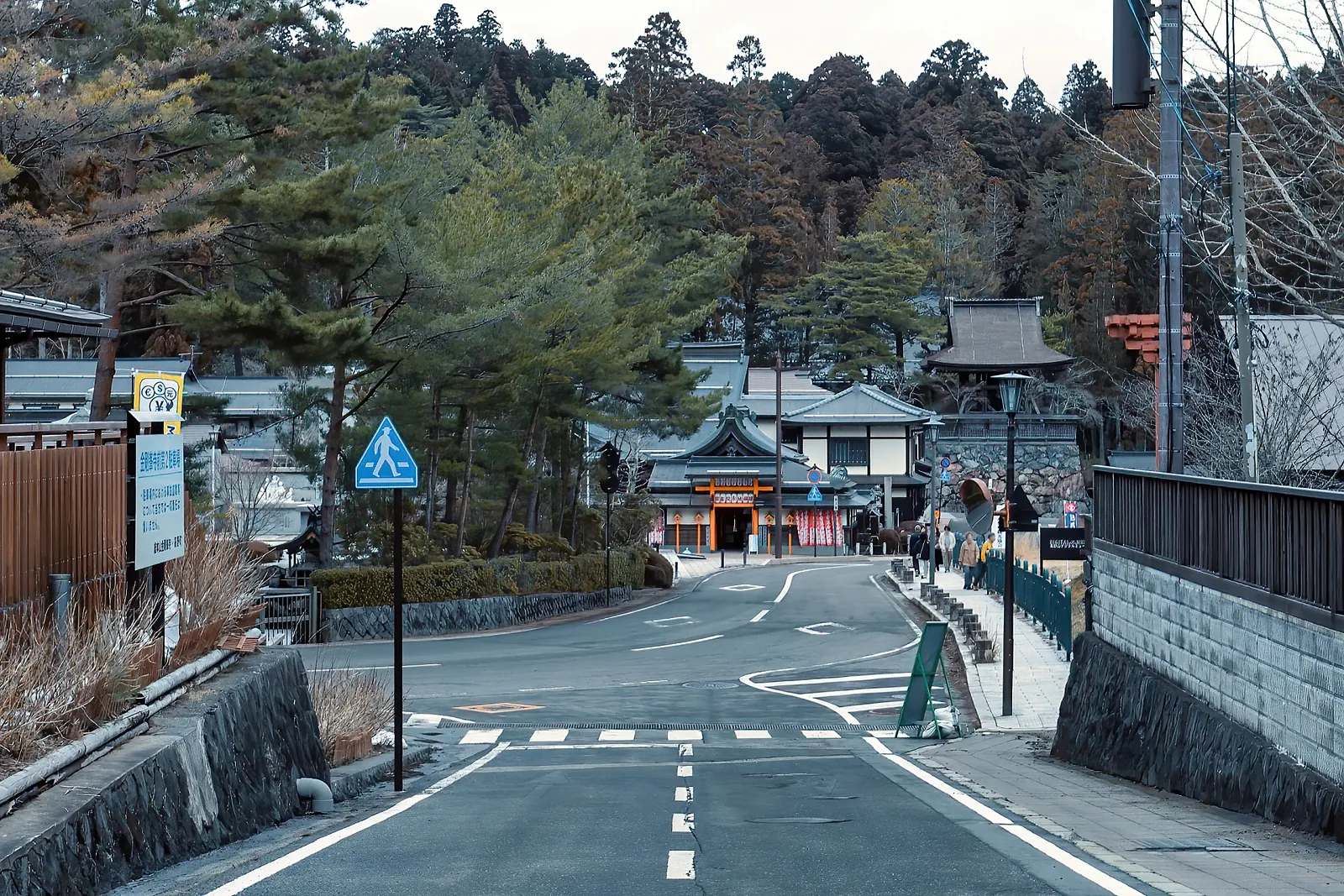
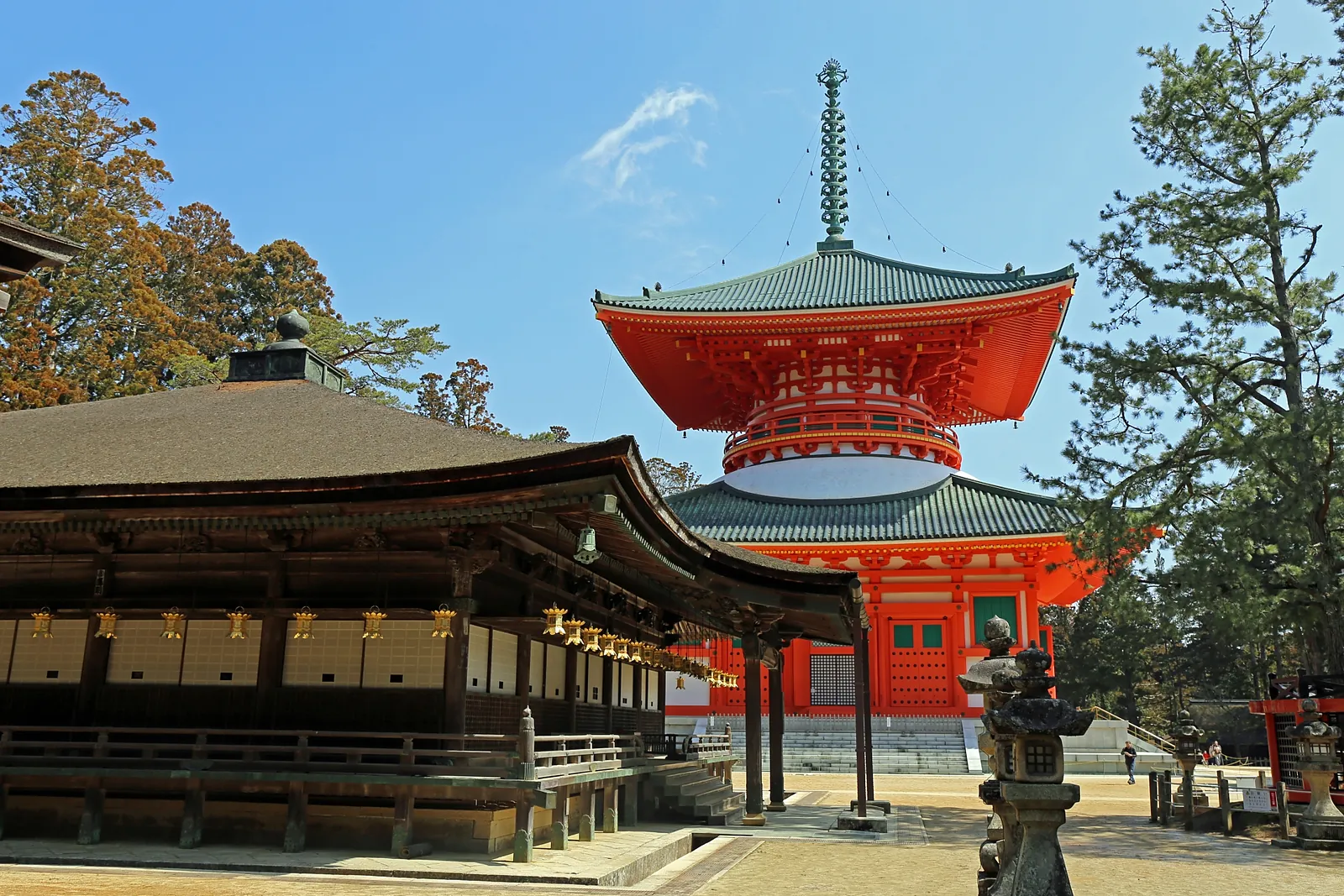
Koyasan is a monastery town on a mountaintop in Wakayama, founded in 816 by Kobo Daishi, the monk who brought Shingon Buddhism to Japan, and it has been a place of pilgrimage ever since. There are 117 temples up there in a complex that is now a World Heritage Site, with Kongobu-ji, the head temple of the whole sect, at its centre, and 51 of the temples take guests. That is what makes it the natural first temple stay. It is a whole town of shukubo rather than a single temple in a city, the lodging is organised, English is understood, and everything you would want to see is a short walk from your room.
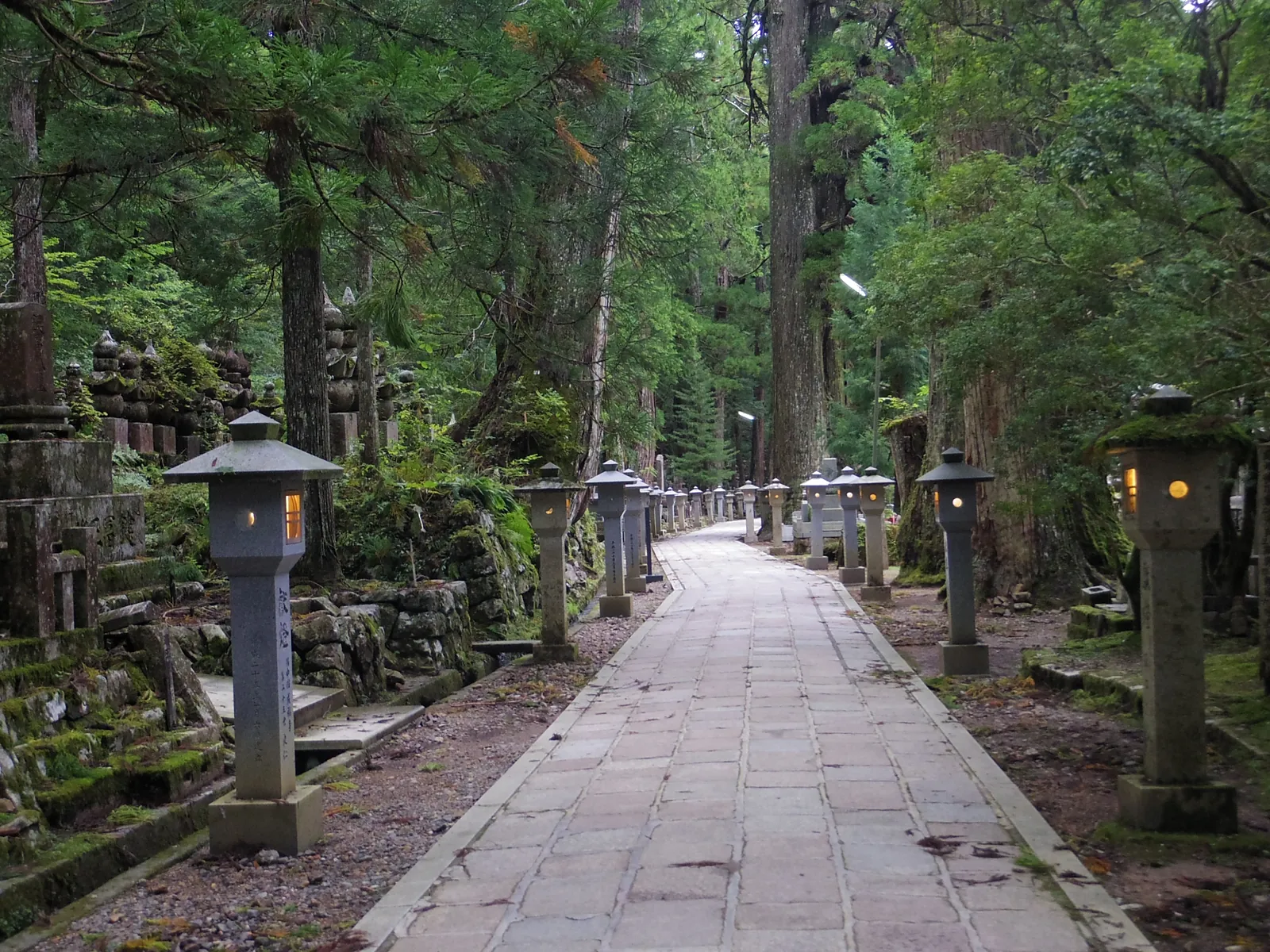
The thing you walk to is Okunoin, the cemetery and mausoleum of Kobo Daishi, where the path runs for two kilometres under enormous cedars past more than 200,000 monuments and graves, from feudal lords to modern companies, to the Torodo, the lantern hall, where thousands of donated lanterns burn in front of the mausoleum. It is quiet in the daytime and something else entirely at night, and staying on the mountain is the only way to see it at dusk or at dawn, which is the whole argument for a night here. An English night tour leaves Ekoin temple at 7:00 pm daily, and on the 20th of each month there is a lantern procession that is free and needs no booking.
How a night runs
Arrive before the gate closes
Temples close their gates in the early evening and expect guests well before dinner, so aim for mid afternoon, leave the luggage, and use the last of the light in Okunoin or the Garan. Ask the exact check in and gate times when you book, because each temple sets its own.
Dinner, early and vegetarian
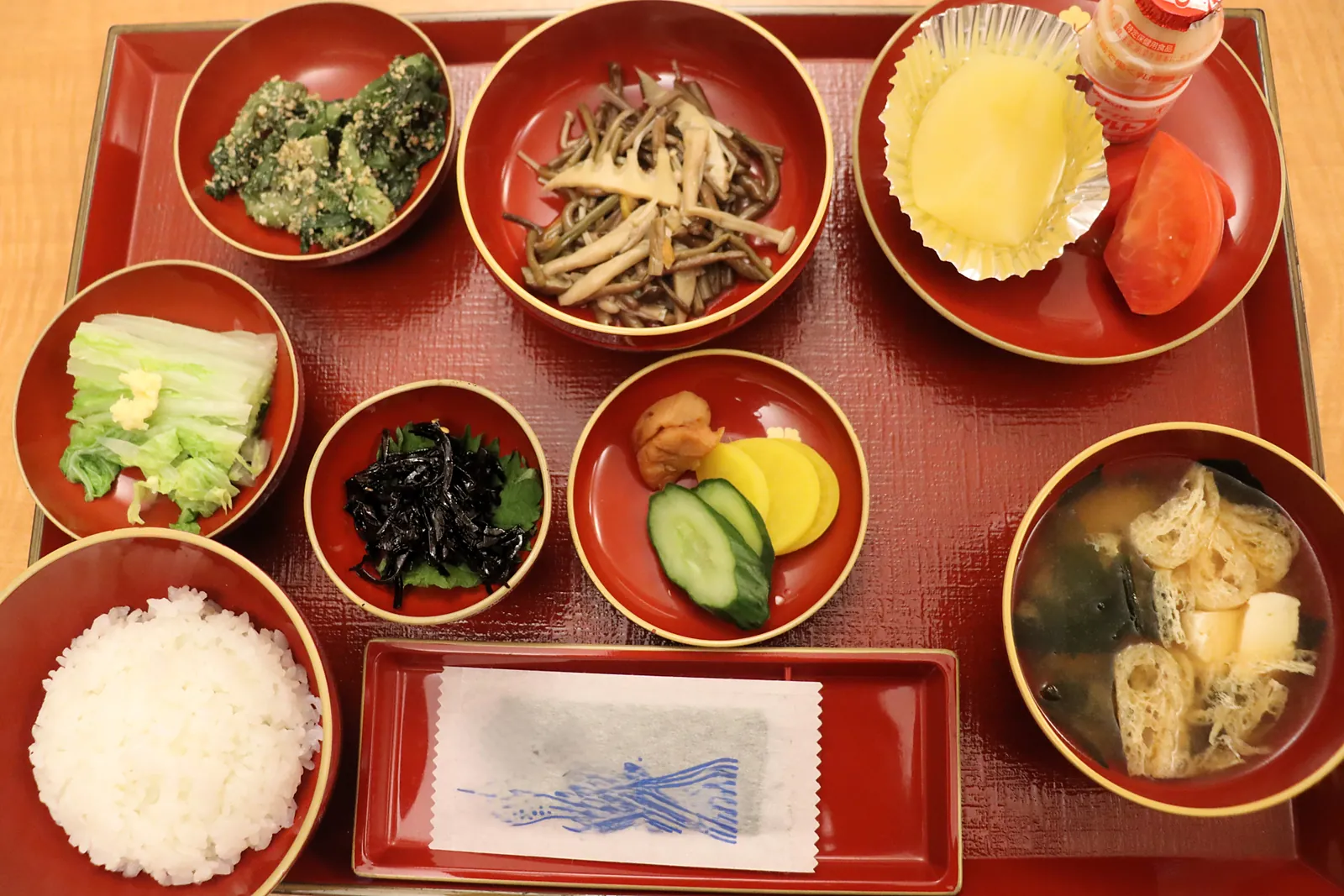
Shojin ryori is Buddhist cuisine, no meat, no fish, and in the strict form no onion or garlic either, built instead on tofu, sesame, mountain vegetables, pickles and the freeze dried tofu the mountain is known for, koya dofu. It arrives on a tray in your room or in a dining hall, at a time the temple decides, and it is far better than the word vegetarian leads people to expect.
Bath, futon, silence
The bath is communal and works like an onsen bath, wash first, then soak. Your futon is laid out while you eat. After that the temple is quiet, and the corridors and the garden are yours if you want them.
The morning service
Early, before breakfast, the monks gather in the main hall for otsutome, the morning chanting, and guests are welcome to sit at the back. Nobody expects you to know what to do. Sit, listen, and if there is a fire ritual, watch it. It lasts under an hour and it is the reason you came.
Breakfast, then the mountain
Breakfast is the same cuisine at a smaller scale, and then you have Koyasan in the morning light with the day trippers still on the train up. Check out is mid morning. If you can stay a second night, do.
What you can take part in
Beyond the morning service, many temples offer ajikan, the Shingon form of seated meditation focused on a single character, taught in a short session to anyone who asks. Shakyo is sutra copying, tracing faintly printed characters with a brush, which turns out to be absorbing whether or not you can read a word of it. Both are usually arranged when you book or on arrival and both are short. A shojin ryori lunch is also served at some temples to visitors who are not staying, from around ¥3,000 a person, which is the way to try the food if a night is not possible.
Guests of every faith and none stay in shukubo and have for centuries. What is asked of you is ordinary respect, meaning quiet in the halls, shoes where they belong, no photographs during the service unless the temple says so, and turning up on time to the things you said you would attend.
Booking one
Use the association's site or book direct
The Koyasan Shukubo Association runs an official English booking site covering the temples that take guests, and most temples also take bookings directly. Both are more reliable than a third party listing, and both tell you what the temple actually offers.
Expect dinner and breakfast in the price
Almost every plan includes both meals. Rooms run from simple shared bathroom tatami to private rooms with their own bath and garden view, and prices vary widely with that, so read what the room is before comparing numbers.
Book ahead for spring and autumn
The mountain fills for the cherry blossom and the autumn colour, and 51 temples is fewer beds than it sounds. Winter is cold, quiet and often snowy, and the easiest time to get the room you want.
Tell them about allergies, not preferences
The food is vegetarian by definition, so there is nothing to request there. Allergies are a different matter and the kitchen needs to know in advance.
Beyond Koyasan
Koyasan is the place to start, but shukubo exist wherever there are pilgrims. Mount Mitake, an hour and a bit west of central Tokyo, has a small village of shukubo around its shrine that makes a temple night possible on a Tokyo trip. Zenkoji in Nagano has lodgings around the temple and a dawn service in one of the country's great halls. The three sacred mountains of Dewa in Yamagata have pilgrim lodges run by mountain ascetics, and Eiheiji in Fukui, a Zen training monastery, takes guests into a far stricter routine than anything on Koyasan. Each is a different tradition and a different pace, and none is as easy to arrange as Koyasan, which is why the mountain comes first.
Getting there and planning the stay
From Osaka, on the Nankai line
Take the Nankai Koya Line from Namba to Gokurakubashi, around 90 minutes on the express, then the cable car up to Koyasan Station and a bus into town. From Kyoto, get to Namba first. It is a proper journey and it is part of the experience, because the mountain should feel far away.
One night is the minimum, two is better
One night gives you Okunoin at dusk and the morning service. Two gives you the second day without a bag to carry and the second morning, which people who have done both say is the one that lands.
Pack for the mountain
Koyasan sits high and is colder than the cities below it in every season. Warm layers for the morning service, which is held in an unheated hall, and something easy to slip on and off at doors.
Leave the evening empty
Do not plan anything after dinner except the walk to Okunoin. That is the evening, and it is enough.
Common questions
Do I have to attend the morning service?
No, it is an invitation. But it is early, short, and the heart of the stay, so set the alarm.
Is the food vegan?
Shojin ryori uses no meat or fish, and in its strict form no pungent vegetables either. Dashi is usually kelp rather than fish. If you need it to be strictly vegan, ask the temple when you book.
Are the rooms private?
Yes, though the bathroom often is not. Private bath rooms exist at some temples for a higher price, and every room is a tatami room with a futon rather than a bed.
Can I do it as a day trip instead?
You can see Koyasan in a day and eat a shojin ryori lunch, and it is worth it. You cannot see Okunoin after dark or join the morning service, and those are the two things the night is for.